REVIEW · LANGKAWI
Birdwatching Tour in Langkawi
Book on Viator →Operated by JungleWalla Tours · Bookable on Viator
Hornbills hide in plain sight. This Langkawi birdwatching tour takes you through bird-rich habitats, from village ponds to higher ground, with a local guide and a tidy 4-hour schedule. You can go in the morning or the afternoon, so it fits well around beach time.
I love the expert local spotting—guides such as Sham and Afie call out birds that you’d otherwise miss from the trail. I also love the Birdlife-style no-tricks approach, meaning the tour promises not to use feeding, bait, or bird calls to pull birds closer.
One consideration: even with a good guide, birds can stay far up in trees or at a distance, so you should expect a fair amount of time scanning through binoculars.
In This Review
- Key things to know before you go
- A practical Langkawi birding tour that actually helps you see birds
- Route overview: ponds, rainforest, and that uphill birding rhythm
- The one trade-off: it’s not a guaranteed close-up show
- Stop by stop: what each stage is good for
- Stop 1: JungleWalla and the start of the search
- Pond-to-forest movement: waterbirds first, then mountain rainforest
- Higher ground and hornbill odds
- The guides are the secret sauce: Sham, Afie, Ikram, and the spotting skill
- Birds you might actually see (and how to set expectations)
- Photos: doable, but don’t plan on perfect framing
- Gear and clothing: what to wear so you enjoy the hunt
- Price and value: is $82 a fair deal?
- Logistics that affect your comfort (not just paperwork)
- Who should book this birdwatching tour in Langkawi?
- Should you book this JungleWalla Langkawi birdwatching tour?
- FAQ
- What’s the duration of the birdwatching tour in Langkawi?
- Do they offer morning and afternoon departures?
- What is included in the tour price?
- Is food included?
- Will I get help with wildlife spotting and bird identification?
- Are binoculars and a scope provided?
- How large is the group?
- What happens if weather is bad?
Key things to know before you go
- Small group size (max 8): you get more attention when birds pop up.
- Morning or afternoon departure: start at 7:30 am for the morning option, with an afternoon alternative available.
- Real wildlife rules: no feeding, no bait, and no bird-call callouts, following Birdlife International Best Practices.
- Binoculars and scope provided: useful when birds are distant, and you’re also welcome to bring your own.
- Route targets different habitats: waterbirds on the pond circuit plus rainforest birds on higher ground.
- Educational guide approach: you’re not just ticking boxes—you learn why habitats like mangroves matter.
A practical Langkawi birding tour that actually helps you see birds
Langkawi is famous for its beaches, but it’s also a strong place for birdwatching—if you go where the birds live. This tour is built around that idea: you spend a focused 4 hours moving through habitats that attract both waterbirds and rainforest species. The pacing is friendly enough for most people with moderate fitness, and it’s family friendly, too.
The biggest win is how much easier it becomes to notice wildlife once you have a guide who works the terrain. With a good spotter, you don’t just stumble across birds—you learn how to find them. That includes learning what to scan for in flight, what to look for around a pond edge, and how to read the small details that signal a bird is near.
And because JungleWalla offers round-trip hotel transport and a mobile ticket, the logistics are straightforward. You’re not fighting with transit schedules or hunting down a meeting point the night before.
You can also read our reviews of more tours and experiences in Langkawi.


Route overview: ponds, rainforest, and that uphill birding rhythm
The tour is designed to shift you between habitats so you’re not locked into one type of scenery. You start with waterbird country—think village pond areas where wading birds and duck-like waterbirds feed and rest. Then you move toward higher, hill-rainforest areas where different species show up, including hornbills.
One stop is clearly named: Stop 1: JungleWalla. From there, the experience follows a route concept that includes moving from pond edges to viewpoints near Langkawi’s highest peak area. That uphill, lookout-style rhythm matters. A birding morning or afternoon often turns on two things: light and elevation. Higher vantage points can help you spot birds silhouetted against the canopy, and it also changes the kinds of species you’re likely to encounter.
What to expect in practice:
- You’ll pause often to scan—this is normal birding time.
- You’ll use supplied binoculars and possibly a scope to check distant movement.
- You’ll likely see more birds when you keep your eyes up and your body calm while the guide works the area.
The one trade-off: it’s not a guaranteed close-up show
Birdwatching isn’t theme-park wildlife. Even with the best effort, some birds stay high in branches. That’s why the binoculars and scope matter—and why you’ll want good sun protection and patience. If your goal is selfies with birds close to the ground, you might feel like you’re waiting a lot. If your goal is quality viewing and real learning, this format works.
Stop by stop: what each stage is good for
Stop 1: JungleWalla and the start of the search
The named start point, JungleWalla, is where your guide gets you into birding mode. This stage is about setting expectations fast: where to look, how to read bird behavior, and how to position yourself for scanning. It also helps you get oriented before you move into heavier habitat time.
If you’ve never birdwatched before, this first segment is a confidence builder. You start learning how birds announce themselves—by silhouette, by movement, or by the way they hop through understory instead of just sitting in plain sight.

Pond-to-forest movement: waterbirds first, then mountain rainforest
The tour focuses on waterbirds such as whistling ducks, egrets, and herons, then shifts toward rainforest species. In Langkawi birding, that habitat switch is huge. A pond attracts birds that feed in open or semi-open areas, while forest species tend to be scattered through trees, sometimes visible only as quick flashes or short calls.
On routes like this, you should be ready for a mix:
- Birds that you spot immediately because they’re out in the open
- Birds that require guided “look-under” checking in dense foliage
- Birds that show up briefly, then vanish as they reposition
Higher ground and hornbill odds
Great hornbills (and other hornbill types) are a major reason people book. The experience description specifically notes mountain rainforest species, including great hornbills, and the route concept includes time up toward higher ground near the highest peak area.
This is also where the guide’s skill really shows. You can’t force a hornbill to appear. You can only improve your odds by being in the right place at the right time and scanning the right parts of the canopy. A strong guide helps you do that.
The guides are the secret sauce: Sham, Afie, Ikram, and the spotting skill
This is one of those tours where the guide isn’t an accessory—they’re the main event. I like that JungleWalla uses local bird enthusiasts and English-speaking nature guides. The difference you feel is in how quickly they find birds and how clearly they teach you what you’re seeing.
Specific guide names that stand out in the experience record include:
- Sham, who shares context about protecting habitats like mangroves
- Afie (also appearing as Affie in some notes), who helps you pick out birds by guiding your line of sight in detail
- Ikram, described as knowledgeable and caring, with extra attention to plants and the overall setting
The best kind of guide moment is when a bird is there but you’re just not seeing it. Good spotting is partly luck, but it’s also technique—like knowing where to look in the branches, and checking a second or lower layer of foliage rather than only scanning top branches.
And there’s a practical bonus: when you share binoculars within a small group, it becomes easier to keep everyone viewing rather than one person getting all the sightings.
Birds you might actually see (and how to set expectations)
This tour targets waterbirds and rainforest birds, so your bird list can be wide for such a short day. Based on the sightings tied to this experience format, you should realistically expect a chance at:
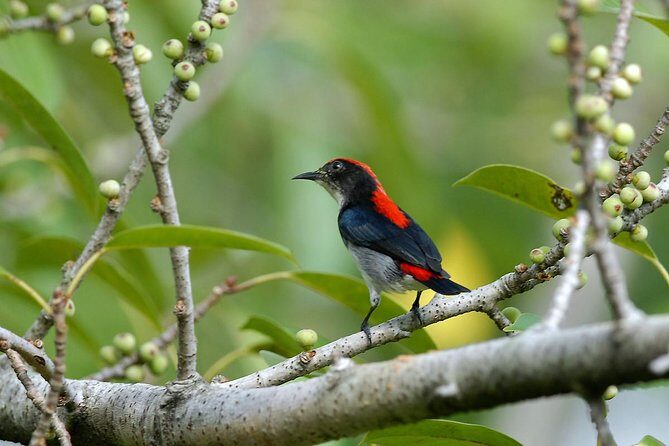
- Hornbills: including great hornbill, pied hornbill, and oriental hornbill
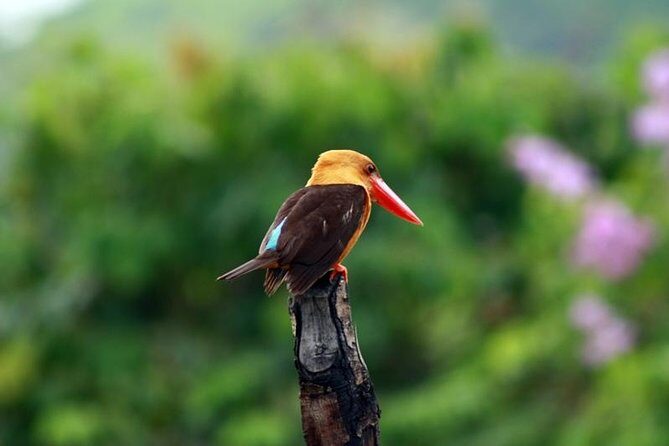
- Kingfishers: including common kingfisher moments, sometimes with fish
- Egrets and herons: often in visible numbers around pond edges
- Birds of prey: including a mountain hawk eagle possibility
- More forest action: including other hornbill-related calaos and assorted smaller birds
You may also see smaller, fast-moving birds that you might otherwise overlook—especially if the guide helps you scan movement rather than only searching for still shapes.
Photos: doable, but don’t plan on perfect framing
Langkawi bird photography is often limited by distance and dense leaves. Even when you spot a bird, you might not get a close view. That’s why the scope and the habit of scanning slowly matter. Your best photos often come from patient waiting, not from sprinting after a sighting.
A good mindset:
- Use the binoculars first to confirm and understand behavior.
- Then adjust your camera plan for what you’re actually seeing, not what you hope is there.
Gear and clothing: what to wear so you enjoy the hunt
Birding is half wildlife, half comfort. This tour gives you binoculars (and advises bringing your own), plus bottled water. You still need to dress for sun, humidity, and walking.
Recommended attire:
- Long sleeve shirts and long pants
- Walking shoes
- A hat and good sun protection
- Earth tones like green, brown, or black
- Avoid bright colors like red, yellow, and white
That color advice isn’t just for style. Birds and wildlife tend to react to sudden contrasts. Darker, earth-colored clothing helps you blend while still keeping you cool enough.
Bring if you can:
- Your own binoculars, if you prefer your exact fit and focus style
- A light rain layer, because persistence matters in birding (and rain can still come)
Price and value: is $82 a fair deal?
At $82 per person for about 4 hours, the value comes down to what’s included and how much it reduces friction for you.
You’re getting:
- Return transfers from Langkawi hotels
- An English-speaking nature guide
- Binoculars to use (plus a scope mentioned as part of the bonus equipment)
- Bottled water
- A small group cap of 8
- A mobile ticket
What you’re not getting: food and drinks. So if you’re booking a morning slot, you’ll likely want breakfast sorted before pickup. For afternoon tours, plan an easy lunch earlier.
When this price feels especially fair is when you compare it to doing it alone. Without a guide, you’d need to know where to go for waterbirds and where to hike for rainforest targets. You’d also likely miss the small cues that lead to good sightings.
In short: $82 buys time, focus, and a guide who helps you see more than you would on your own.
Logistics that affect your comfort (not just paperwork)
This tour offers pickup, works with a mobile ticket, and runs on a clear time window. The morning start time is listed as 7:30 am, and there’s a choice between morning or afternoon departures.
A few practical details that matter:
- Group size max 8 means the guide can keep an eye on spotting and sharing viewing gear.
- You’ll want a moderate fitness level, since you’re walking and moving between viewpoints and habitat areas.
- Confirmation is received at booking time, and a minimum of 2 people per booking is required, so don’t assume it always runs at any date no matter what.
Weather also plays a role. The activity requires good weather, and if it’s canceled due to weather, you’ll be offered a different date or a refund. That’s normal for nature tours, but it’s worth building a little flexibility into your Langkawi schedule.
Who should book this birdwatching tour in Langkawi?
Book this if you want:
- A structured 4-hour wildlife window without taking over your whole day
- A guide-led experience that helps you add birds to your list
- A mix of pond species and rainforest species, including hornbill odds
- Family-friendly nature time with learning built in
You might want to think twice if:
- You only care about up-close wildlife photos and don’t want to scan from a distance
- You get impatient with binocular time and frequent stops
Should you book this JungleWalla Langkawi birdwatching tour?
If you like birdwatching, or you want to try it without the guesswork, I think this tour is a strong pick. The combination of small group size, hotel pickup, and a local guide focused on real viewing rules makes it easier to have a satisfying bird day.
I’d book it if your priority is: hornbills as a target, kingfishers and pond birds as bonuses, and a guide who helps you see what you’d otherwise miss. And if you go in with the right mindset—patient scanning, neutral clothing, and good sun protection—you’re much more likely to leave feeling like you spent your time well.
That’s the value here. Not just the birds, but the way the guide turns a forest walk into actual birdwatching.
FAQ
What’s the duration of the birdwatching tour in Langkawi?
It runs for about 4 hours.
Do they offer morning and afternoon departures?
Yes. You can choose either a morning or afternoon departure. The start time listed for the morning option is 7:30 am.
What is included in the tour price?
Round-trip hotel transfers, an English-speaking nature guide, binoculars to use (and they advise bringing your own), and bottled water are included.
Is food included?
No. Food and drinks are not included.
Will I get help with wildlife spotting and bird identification?
Yes. The tour is led by a local bird-watching enthusiast/nature guide, and you’ll be observing birds in their natural habitat.
Are binoculars and a scope provided?
Binoculars are provided, and the tour description also mentions binoculars and scope as a bonus. You may also bring your own binoculars.
How large is the group?
The tour has a maximum of 8 travelers.
What happens if weather is bad?
The experience requires good weather. If it’s canceled due to poor weather, you’ll be offered a different date or a full refund.