REVIEW · KUALA LUMPUR
Full-Day Malacca City Tour from Kuala Lumpur
Book on Viator →Operated by MALAYSIAN TOURS RIYAS · Bookable on Viator
Malacca history feels close-up and practical. This full-day private tour from Kuala Lumpur strings together Portuguese, Dutch, and British landmarks without wasting your time. I especially like the hotel pickup-and-drop setup and the way an English-speaking driver handles the logistics for you.
You’ll get a tight walk through major sights, but still with enough variety to keep it interesting—Stadthuys and the Red Square, the surviving gate at A Famosa, and church stops like St Paul’s Hill. I also like that the day isn’t only colonial architecture; you’ll also see active places of worship like Cheng Hoon Teng Temple and the Kampung Kling Mosque.
One consideration: it’s listed as not wheelchair accessible, and the meal details are a bit messy (a set lunch is mentioned, but the tour notes also say meals may not be included). If you have mobility needs or strict food plans, check before you go.
In This Review
- Key things I’d plan around
- From Kuala Lumpur to Malacca: how the day flows
- Stadthuys and the Red Square: the Dutch city hall vibe
- A Famosa Fort: the Portuguese link that still survives
- St. Paul’s Hill and Church: old church buildings, big place
- Mini Malaysia & ASEAN Cultural Park: a controlled break, not a waste
- Cheng Hoon Teng Temple: three doctrines, lived-in worship
- Kampung Kling Mosque: the harmony street cluster
- Malacca River: trade routes and a big makeover
- Melaka Warrior Monument and Hang Tuah’s Well: two very different stories
- Middleburg Bastion: defenses at the river mouth
- Jonker Street: shopping and people-watching in old Chinatown
- Christ Church: the Anglican side of the story
- Price and value: what $55 buys in real time
- Lunch and meals: plan for a possible gap
- Who should book this Malacca day trip?
- Should you book it?
- FAQ
- How long is the full-day Malacca City Tour?
- Does the tour include hotel pickup and drop-off in Kuala Lumpur?
- Is this tour private?
- Is admission included for all stops?
- Is lunch included?
- What transportation will I use?
- Will I have an English-speaking guide or driver?
- Is the tour wheelchair accessible?
- What is the price per person?
- What is the cancellation policy?
- What company runs the tour?
Key things I’d plan around
- Hotel pickup and drop-off make the long day easier than DIY bus-hopping
- Most stops are free-entry, with Mini Malaysia admission not included
- English-speaking driver helps you move efficiently through clustered old-town sights
- Faith and culture mix: Dutch-Portuguese sites plus Cheng Hoon Teng and Kampung Kling
- River + bastion combo gives you the defense/trade story in one stretch
- Jonker Street timing matters since the highlight shopping street is daytime here
From Kuala Lumpur to Malacca: how the day flows
This tour runs about 7 to 8 hours, and it’s built like a classic “see the must-dos” route. You’re picked up from your hotel in Kuala Lumpur and transferred by air-conditioned vehicle, which matters because Malacca can be warm and humid, especially mid-day.
The tour is also private, meaning it’s just your group. That can feel calmer than big shared groups when you’re moving between historical sites that are close together. Add in group discounts and a mobile ticket, and you’ve basically got fewer moving parts to worry about.
One thing to remember: many of the stops are short—often 15 minutes—so this is best if you enjoy quick look-and-learn sightseeing. If you’re the type who likes to linger for photos and reading, you’ll want to arrive with a plan for which places you want extra time at.
You can also read our reviews of more city tours in Kuala Lumpur
Stadthuys and the Red Square: the Dutch city hall vibe
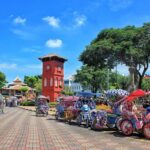
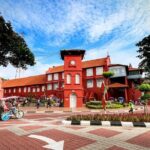
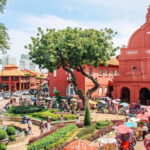
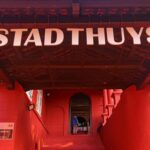
You start at the Stadthuys area in the Red Square. The building is known for its red exterior, with a nearby red clocktower that helps you orient fast. It was built by the Dutch in 1650 as the office of the Dutch governor and deputy governor, so even before you start walking, you’re in a “power center” setting.
This stop is listed as 15 minutes with free admission. That’s a good length for photos, a quick orientation, and letting your driver point out why the Dutch chose this spot as the administrative heart.
Why it’s worth the stop: Stadthuys isn’t just a pretty facade. It’s the anchor for the whole old-town layout, which makes the rest of the day easier to understand. You’ll recognize the area better once you’ve seen this starting point.
A Famosa Fort: the Portuguese link that still survives
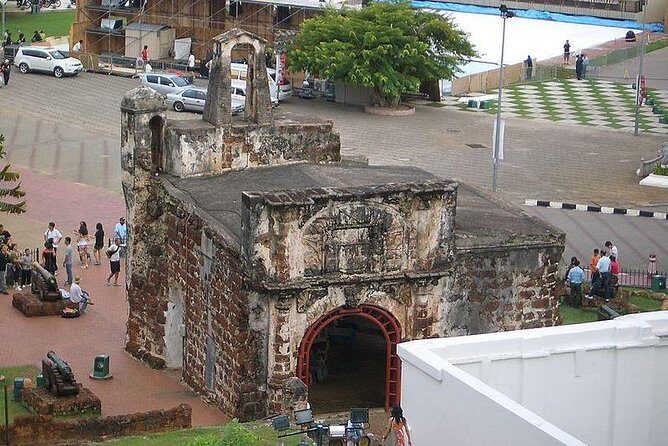
Next is A Famosa Fort, specifically the Porta de Santiago gate house, which is the only part that still remains. A Famosa is a former Portuguese fortress, and it’s noted as one of the oldest surviving European architectural remains in Southeast Asia and the Far East.
It’s also listed as 15 minutes and free to enter. Don’t expect a full fortress ruin you can roam like a theme park. Instead, think of this as a “what remained” moment—one small surviving piece that connects you to the 1500s Portuguese presence.
Quick reality check: if you’re expecting a huge structure, you might feel a little underwhelmed at first. But the value here is in context—seeing how the Portuguese fortress era fed into later Dutch and British layers across the city.
St. Paul’s Hill and Church: old church buildings, big place
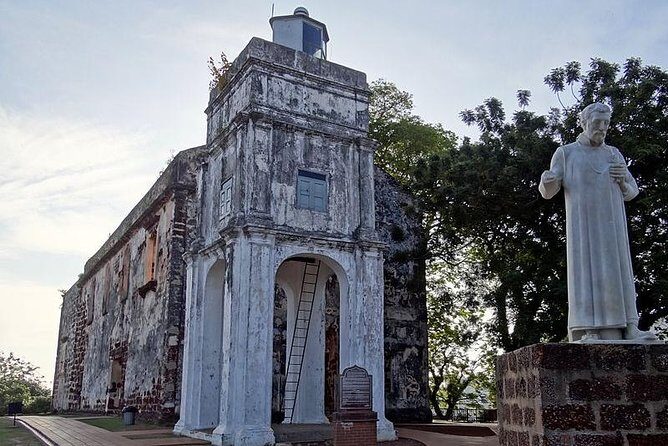
After A Famosa, you head to St. Paul’s Hill & Church (Bukit St. Paul). This stop is one of the most historically specific on the route. St. Paul’s Church dates to 1521, and it’s described as the oldest church building in Malaysia and Southeast Asia.
The original structure began as a simple chapel dedicated to the Virgin Mary, called Nossa Senhora da Annunciada (Our Lady of the Annunciation). Portuguese fidalgo (nobleman) Duarte Coelho is connected to the chapel’s story—built as gratitude after his escape from a storm in the South China Sea.
You’ll typically get 15 minutes and free admission. The time is short, but St. Paul’s Hill is the kind of place where even a brief visit can help you “place” the colonial religious story across the city.
How to get more out of it in 15 minutes: focus on how the hill location changes the feel of the place. Even if you can’t read every plaque, you’ll notice how the site sits above the rest of Malacca and why it mattered.
Mini Malaysia & ASEAN Cultural Park: a controlled break, not a waste
Then comes Mini Malaysia & ASEAN Cultural Park in Ayer Keroh. This is a theme park built to show traditional houses from Malaysian states and from ASEAN countries. It’s listed for 30 minutes, and admission is not included, so it’s one of the few spots where you may need to plan extra money.
If you like model parks, it can be a fun, low-effort way to refresh before returning to the old-town streets. If you’re not into theme parks, you can treat it as a quick cultural snapshot rather than a full-day attraction.
Why it still belongs on a city tour: Malacca’s core is walkable and historic. This stop gives you a different angle—architecture as a quick comparison tool—so you don’t just travel from church to mosque to fort all day.
A few more Kuala Lumpur tours and experiences worth a look



Cheng Hoon Teng Temple: three doctrines, lived-in worship
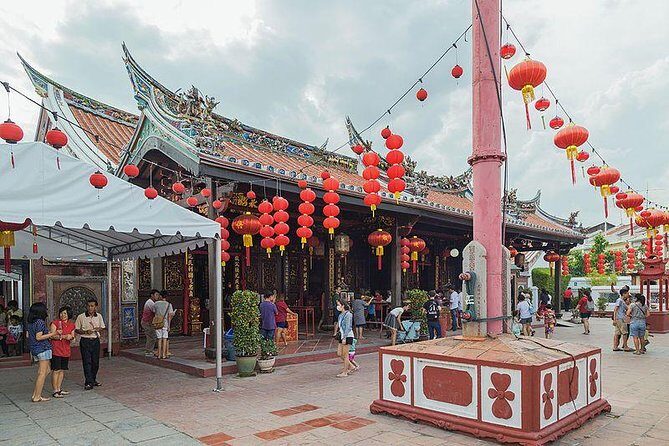
Mid-afternoon you visit Cheng Hoon Teng Temple (Temple of Green Cloud). This is an active Chinese temple practicing the Three Doctrinal Systems of Buddhism, Confucianism, and Taoism, and it’s described as the oldest functioning temple in Malaysia.
The temple site dates back to 1645, founded during the Dutch Malacca era by Chinese Kapitan Tay Kie Ki @ Tay Hong Yong. Later structures were built in 1673 under Kapitan Li Wei King @ Koon Chang, with materials imported from China.
This stop is listed as 15 minutes with free admission. With that kind of timing, you’ll want to keep it simple: look at the entrance details, take in the overall temple layout, and then pause for the atmosphere rather than trying to read everything.
Why it hits differently than the forts: Forts and churches tell you about rulers and conversions. Cheng Hoon Teng shows local community life—belief systems tied to people who stayed and built institutions.
Kampung Kling Mosque: the harmony street cluster
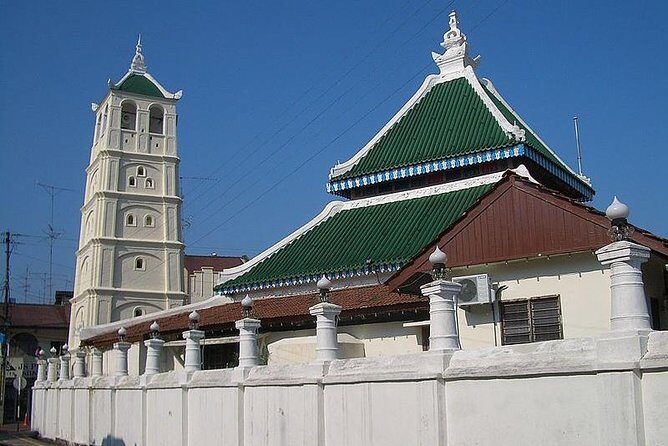
After the temple, you walk to Kampung Kling Mosque, located on Jalan Tukang Emas, also called Harmony Street. It’s positioned near Sri Poyatha Moorthi Temple and Cheng Hoon Teng Temple, which is why this stop works well right after Cheng Hoon Teng.
This mosque’s origins are described as 1748, when it was a wooden building built by Indian Muslim traders. In 1872 it was rebuilt in brick. The design is noted as a mix: cross between Sumatran, Chinese, Hindu, and Malacca Malay influences.
Again, expect 15 minutes and free admission. The time is short, but the architecture is the point here—how a community created a place of worship that reflects multiple influences.
Practical note: treat it like a functioning religious site. Dress a bit respectfully and keep your pacing gentle, especially if you see worshippers.
Malacca River: trade routes and a big makeover
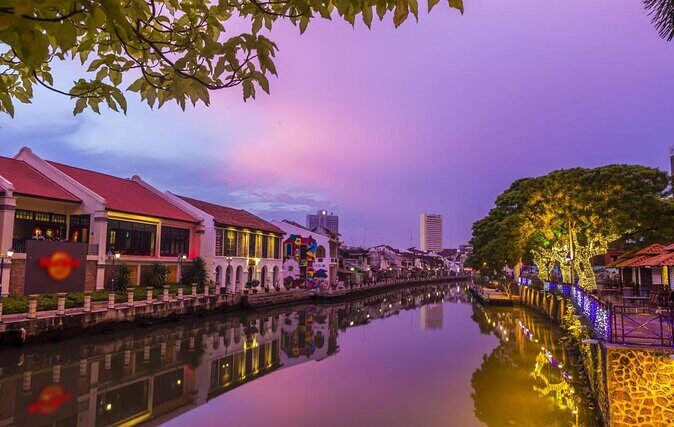
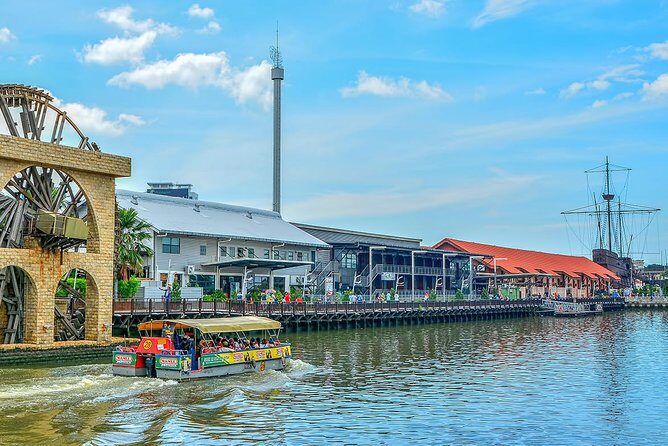
Next you’ll head to Malacca River (Sungai Melaka), which runs through the middle of Malacca City. The river was a vital trade route during the heyday of the Malacca Sultanate in the 15th century, feeding into the Strait of Malacca.
This stop is listed for 30 minutes, and admission is not included. You’ll see modern river restoration work tied to a USD 100 million (RM350 million) project. The details provided include a tidal barrage, restoration of buildings and bridges, dredging, and concrete riverbanks with river walkways. Land reclamation has also extended the river mouth further into the straits.
This is a “stand and connect dots” moment. You’re not just looking at water—you’re seeing how a historic trade corridor is being reshaped for visitors and city life.
Melaka Warrior Monument and Hang Tuah’s Well: two very different stories
After the river, you’ll stop at the Melaka Warrior Monument. This one is a solemn marker built to commemorate Chinese victims of the Japanese occupation of Malacca during World War II. It was constructed in 1948, with major renovation in 1972.
It’s 15 minutes and free. Even with quick timing, the value is emotional clarity: this is Malacca’s 20th-century history, not just its Portuguese and Dutch eras.
Then you’ll visit Hang Tuah’s Well (Perigi Hang Tuah), located in Kampung Duyong. The well is described as being dug by Hang Tuah for his own use. It was declared a historical monument under the Antiquities Act on 29 September 1977.
This is also 15 minutes and free. If you like local legend and named places, this will feel personal. If you’re only chasing big monuments, you might notice this is more of a quiet stop—but it adds a local cultural anchor to the day.
Middleburg Bastion: defenses at the river mouth
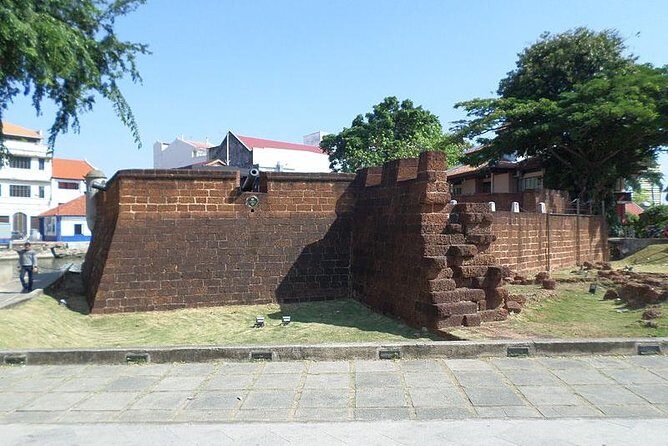
The next piece of the puzzle is Middleburg Bastion, located at the mouth of the Malacca River. After the Portuguese fell to the Dutch in 1641, the Dutch fortified the city defenses. The bastion was built as part of those measures, with construction noted as 1660.
This stop is 15 minutes and free. It’s a quick lesson in how geography drives defense: controlling river entry mattered, because trade and attacks both moved along water.
Why I think this works on a city day tour: By now you’ve seen the river and the major colonial sites. Middleburg Bastion turns that understanding into one clear location—where defense met commerce.
Jonker Street: shopping and people-watching in old Chinatown
Then you’ll reach Jonker Street (Jonker Walk), Malacca’s Chinatown street on Jalan Hang Jebat. The road starts across the Malacca River near the Stadthuys area. It’s filled with historical houses dating back to the 17th century, plus plenty of shops.
The list includes antiques, textiles, foods, handicrafts, and souvenirs. This stop is 30 minutes and free entry.
How to use that half hour well: decide what you want before you start walking. If you’re hunting snacks or small gifts, start by scanning the stalls first. If you’re shopping seriously, look for price comparisons right away—there’s lots to see along the street, but the time window is tight.
Also, Jonker Street is often the big nighttime draw in Malacca. In this tour format, you’re doing it during the day, which is still enjoyable, but it changes the energy.
Christ Church: the Anglican side of the story
Finally, you’ll visit Christ Church Malacca, an 18th-century Anglican church. It’s described as the oldest functioning Protestant church in Malaysia.
This stop connects directly to the colonial religious shifts. After the Dutch conquest of Malacca from the Portuguese in 1641, Roman Catholicism was proscribed, and churches were converted for Dutch Reformed use. St. Paul’s Church on St. Paul Hill was renamed the Bovenkerk (Upper Church) and used as the main parish church of the Dutch community. Christ Church represents the Anglican thread that comes later.
This is 15 minutes and free admission. Even if you only get a brief look, it’s a fitting end point: the tour moves through Portuguese and Dutch-era influences and lands on a church still used today.
Price and value: what $55 buys in real time
The price is $55.00 per person for a full day about 7 to 8 hours. For that amount, you’re getting hotel pickup and drop-off, transport in an air-conditioned vehicle, and an English-speaking driver.
Most of the listed sights are free admission stops (Stadthuys, A Famosa, St. Paul’s Hill & Church, Cheng Hoon Teng, Kampung Kling Mosque, Malacca River viewing, Melaka Warrior Monument, Hang Tuah’s Well, Middleburg Bastion, Jonker Street, and Christ Church). The one named exception is Mini Malaysia & ASEAN Cultural Park, where admission is noted as not included.
So what you’re really paying for is time, routing, and someone to handle the order of sites. If you’re short on time in Kuala Lumpur or you don’t want to coordinate transport between dispersed locations, this price can feel fair. If you enjoy independent planning and are comfortable navigating on your own, the value depends on how much you value that driver-led convenience.
Lunch and meals: plan for a possible gap
The tour summary mentions a set lunch to keep you energized. But the highlights also include a note that meals are not included, which makes the meal picture inconsistent.
Here’s how I’d handle it: assume you may need to buy your own food unless the operator confirms what’s covered for your specific booking. Bring a simple snack if you have dietary needs or if you’re the type who gets cranky after long gaps between meals.
This is especially relevant because the route includes quick 15-minute stops and a 30-minute stop at Mini Malaysia. You don’t want to spend that time searching for food.
Who should book this Malacca day trip?
This tour suits you if:
- You want a first-time Malacca introduction with major sights packed into one day
- You like seeing how Portuguese, Dutch, and British influences show up in real buildings
- You enjoy a mix of temples, mosques, and churches, not just forts
It may not be ideal if:
- You need wheelchair accessibility (it’s listed as not wheelchair accessible)
- You want long visits or deep museum-style reading time at each stop
- You expect everything to be fully inclusive on food without confirming details
Should you book it?
If you want an efficient, guided taste of Malacca with pickup, transport, and an English-speaking driver, I think this is a solid way to spend a day. The biggest reason to book is simplicity: you get clustered historic landmarks, plus a river-and-defense story and a proper shopping street at the end.
Before you pay, do two quick checks: confirm what your booking includes for meals, and check any timing preferences for Jonker Street. If you’re okay with shorter stop durations and you like moving at a steady pace, this tour is an easy yes.
FAQ
How long is the full-day Malacca City Tour?
It runs about 7 to 8 hours.
Does the tour include hotel pickup and drop-off in Kuala Lumpur?
Yes. Hotel/apartment pickup and drop-off are included.
Is this tour private?
Yes. It’s listed as a private tour/activity, so only your group participates.
Is admission included for all stops?
Most stops are listed as free admission tickets. Mini Malaysia & ASEAN Cultural Park has admission ticket not included.
Is lunch included?
The information notes a set lunch is part of the experience, but it also includes a note that meals are not included. You should confirm what is covered for your specific booking.
What transportation will I use?
You’ll travel by an air-conditioned vehicle, with transport included.
Will I have an English-speaking guide or driver?
You’ll have an English speaking driver.
Is the tour wheelchair accessible?
No. It is noted as not wheelchair accessible.
What is the price per person?
The price is $55.00 per person.
What is the cancellation policy?
You can cancel for free up to 24 hours in advance for a full refund.
What company runs the tour?
The provider is MALAYSIAN TOURS RIYAS.