REVIEW · LANGKAWI
Mangrove Kayaking Tour from Langkawi
Book on Viator →Operated by JungleWalla Tours · Bookable on Viator
Kayak through mangroves feels like time travel. This is a tide-driven paddle through Langkawi’s mangrove maze, led by a real local naturalist like Masyi who points out what’s happening in the ecosystem as you go. You’re not just passing scenery. You’re learning how mangroves work as a living coastline.
What I liked most is the wildlife focus, from easy-to-see birds to the weird-but-real creatures hiding in the roots. You’ll also get the combo day effect: a cave stop with bats, plus an easy, satisfying lunch on the water. Even with busy Langkawi routes nearby, this tour stays calm and grounded.
One thing to plan around: the tide affects how far you can paddle into the mangroves. On a strong tide schedule you’ll go farther, but if timing is a little awkward you may have shorter stretches on the water. That’s normal here, just don’t expect full control.
In This Review
- Key highlights worth your time
- Arriving at Kubang Badak: Why the meeting point matters
- Kayaking the mangrove river maze: tide, current, and an easy rhythm
- Wildlife spotting that feels real, not performative
- The limestone cave stop: Gua Pinang and bat spotting
- Ancient Charcoal Factory: a human story layered onto nature
- Lunch on a floating restaurant: the reward that actually fits the day
- What to bring (and what to plan for with kayaking in the tropics)
- Price and value: is $60.49 a good deal?
- Who this tour suits best (and who should rethink it)
- Should you book the Mangrove Kayaking Tour from Langkawi?
- FAQ
- Where does the tour start and what time?
- What’s included in the Mangrove Kayaking Tour?
- Is there a vegetarian lunch option?
- What should I wear or bring?
- How physically demanding is it?
- Can I get a full refund if I cancel?
Key highlights worth your time
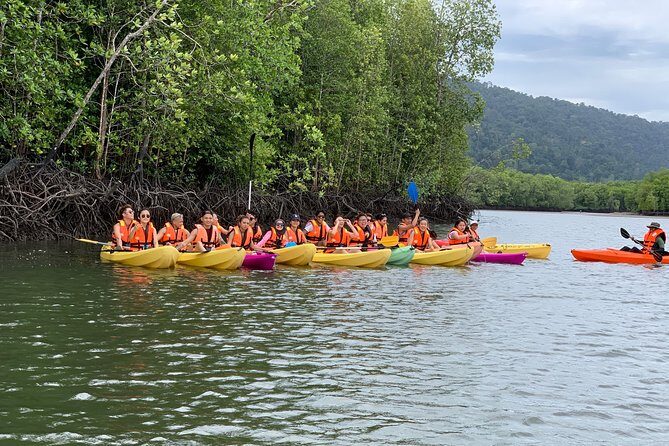
- Tidal kayaking route that shapes how the river maze feels and where you can paddle
- Wildlife spotting with a nature guide, including birds and smaller coastal creatures
- Gua Pinang limestone cave visit, known for bats
- Ancient Charcoal Factory stop, adding a human story to the ecology
- Home-style lunch at a floating restaurant, a rare meal setting in Langkawi
Arriving at Kubang Badak: Why the meeting point matters
Your tour starts at Kubang Badak Mangrove Tour & Kayaking on Jalan Teluk Yu, in Kampung Kelubi (07000 Langkawi). Start time is 9:30 am, and the activity ends back at the same meeting point, so you won’t have to figure out a second transfer later.
This matters more than it sounds. A mangrove kayaking outing is timed to nature, not convenience. When you start on schedule, you’re more likely to ride the currents well and hit the day’s cave and lunch stops without rushing or waiting around. It also helps keep the group size manageable.
Also note the cap: the tour runs with a maximum of 16 travelers. That’s big enough to have a friendly group energy, but small enough that a guide can still keep an eye on everyone in the water and during short walks.
A few more Langkawi tours and experiences worth a look

Kayaking the mangrove river maze: tide, current, and an easy rhythm
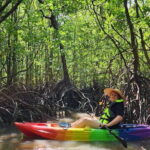
The core experience is kayaking through the mangrove forest, following twists and turns shaped by tidal currents. Mangroves are not like a lake or a scenic canal. The roots, channels, and shallow areas create a real sense of moving through a living system.
The best part is that the route isn’t random. Your guide is guiding you along the flow, so you feel the environment steering you. You’re also more likely to notice the details that make mangroves special—things like where birds prefer to perch and how the waterline changes what you can see.
In practice, kayaking here works for a lot of people because it’s paced. The reviews I read described it as interesting without being overly hard, and the included safety boat adds confidence if conditions change. Still, it’s kayaking. You’ll want a moderate fitness level and the ability to manage a paddle for a couple of hours.
One more practical point: the tide can affect how far you paddle. That’s the trade-off. Don’t treat a “shorter stretch” as failure. It’s just the water doing what it does.
Wildlife spotting that feels real, not performative
This is a nature tour with a strong bird-and-coast focus. Your guide is there to help you notice wildlife in context, not just spot it and move on.
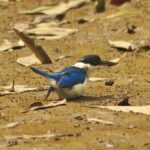
You can expect the guide to point out birds such as kingfishers, sea eagles, and herons. You may also see smaller coastal life around the mangrove edges. In past outings, people have reported mudskippers, monkeys, mini blue crabs, and even a baby viper—wildlife encounters that remind you the mangroves are active habitat, not a theme park.
What I like about this setup is that it teaches you how to look. When someone like Masyi (or other guides such as Shafwan, Afie, and Fitri in different outings) explains what to watch for, your eyes change. You start scanning for movement at root level, listening for calls, and watching where birds pause between flights. That’s when the trip starts to feel like you’re actually part of the coastline story.
Tip for your camera: keep it handy but not obsessive. Quick pauses are often more valuable than trying to document every second.
The limestone cave stop: Gua Pinang and bat spotting
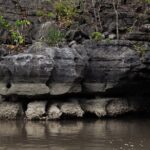
A big highlight is the visit to the Limestone Cave Complex Gua Pinang. This is where the day widens beyond water.
Cave time is always a different mood: cooler air, darker surroundings, and that uneasy curiosity you feel right before you realize bats are involved. In the feedback, people specifically called out loads of bats, and that cave stop is one of the moments that people remember long after they’ve forgotten the rest of their schedule.
What makes it valuable is the pairing. You’re not just doing a cave. You’ve spent time earlier watching the mangrove ecosystem. Then you step into a limestone environment where bats are part of the natural cycle of the area. It adds variety without breaking the theme of ecology.
Wear what’s comfortable for walking. You’re not told to bring special footwear, but you are kayaking and doing short hikes as part of the outing, so sport shoes or sandals with grip (plus the towel and a change of clothes) make sense.
Ancient Charcoal Factory: a human story layered onto nature
Langkawi isn’t only about beaches and limestone cliffs. The tour also includes a visit or discussion connected to the Ancient Charcoal Factory, which helps you understand how people once used local resources and how that history fits into what you’re seeing today.
Why I think this works: it prevents the day from becoming one long “look at animals” session. The mangroves are ecological infrastructure, and the island’s resource use is part of the larger picture of how landscapes get shaped over time. Even if you only catch the high points, it gives you context when you’re later driving or exploring on your own.
This stop also breaks the rhythm. After paddling and cave time, switching to a more grounded, story-based segment helps the trip stay enjoyable instead of tiring.

Lunch on a floating restaurant: the reward that actually fits the day
By the time you reach lunch, you’ve likely used up your energy and your focus. That’s where the floating restaurant helps. You’ll have a set lunch served in a floating restaurant setting, which is both scenic and practical.
A few important details:
- Lunch is included.
- You should advise the operator of dietary restrictions.
- A vegetarian option is available if you book it in advance.
- Bottled water is provided.
In the feedback, people repeatedly described the meal as delicious and home-cooked. That matters because “included lunch” on tours can sometimes mean bland, fast, and forgettable. Here, it seems to land as a real payoff after the water and cave time.
Practical move: plan to eat like you still have a few active hours ahead. I’d keep snacks light and save your appetite for the set meal.
What to bring (and what to plan for with kayaking in the tropics)
This tour gives you a clear attire list, and it’s worth following. You’ll want:
- Hat, t-shirt, shorts
- Swimwear
- Sun protection
- Towel
- Sandals or sport shoes
- A change of clothes
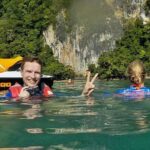
I’d treat this as your “moving kit,” because you’ll likely get wet or damp during the day—either from kayaking water splash, cave humidity, or the day’s swim time (many groups add a short swim on a nearby desert island/private beach area).
Also remember:
- You’ll receive a mobile ticket.
- You’ll have a safety boat on hand.
- It’s an English-speaking nature guide experience.
- Children must be accompanied by an adult.
If you’re serious about photos, use a basic waterproof pouch for your phone or camera. Not because the tour says you must, but because mangrove days have a habit of turning “safe” into “splashed.”
Price and value: is $60.49 a good deal?
At $60.49 per person, the price is positioned as a half-day eco experience with multiple components: kayaking gear and equipment usage, a nature guide, bottled water, safety coverage, and an included lunch at the end.
You’re paying for more than paddling time. You’re buying:
- Professional local guiding and wildlife interpretation
- Access to a cave stop (including bat spotting)
- A cultural/eco context element via the Ancient Charcoal Factory
- A meal setting that isn’t typical tourist lunch fare
The main value question is whether you want an experience that mixes activity, learning, and a real sense of place. If you only want a short paddle and no cave or history, you might prefer something simpler. But if you want one morning that covers mangroves, limestone caves, and lunch by the water, this is a strong way to spend your time in Langkawi.
One more value note: transportation to and from attractions is not included. That can affect your true cost if you’re far from the meeting point, so check your logistics early.
Who this tour suits best (and who should rethink it)
This outing fits best if you:
- Like wildlife and birdwatching without needing expert gear
- Enjoy guided learning rather than aimless wandering
- Want an active morning that’s still not brutal
- Can handle short hikes and a moderate fitness level
It may be less ideal if you’re:
- Very sensitive to uneven terrain and short walks
- Not comfortable with kayaking as a steady effort
- Hoping for guaranteed long paddling distance regardless of tide
The tide factor is the big “consideration.” It’s not a trick. It’s the nature of mangroves, and a good guide plans around it.
Should you book the Mangrove Kayaking Tour from Langkawi?
If you want a Langkawi morning that feels off the crowded loop, I’d book it. The combination is the winning formula: tide-driven kayaking, strong wildlife interpretation, a cave stop at Gua Pinang with bats, and lunch on a floating restaurant.
Choose it especially if you’re the type who enjoys small details—how guides like Masyi or Shafwan help you notice what’s living in the mangrove roots. Just go in with realistic expectations about the tide and bring the towel, swimwear, and a change of clothes.
If that all sounds like your kind of day, this is a very reasonable price for an experience that actually uses your time.
FAQ
Where does the tour start and what time?
It starts at Kubang Badak Mangrove Tour & Kayaking on Jalan Teluk Yu, Kampung Kelubi (07000 Langkawi) with a start time of 9:30 am, and it ends back at the same meeting point.
What’s included in the Mangrove Kayaking Tour?
The tour includes an English-speaking nature guide, kayaks and equipment usage, a set lunch, bottled water, and a safety boat.
Is there a vegetarian lunch option?
Yes. A vegetarian option is available if you advise the provider at the time of booking.
What should I wear or bring?
Wear a hat and t-shirt, plus shorts and swimwear. Bring sun protection, a towel, and sandals or sport shoes, along with a change of clothes.
How physically demanding is it?
It’s designed for people with a moderate physical fitness level. The day includes kayaking and a hike, so it’s not a fully sedentary activity.
Can I get a full refund if I cancel?
Yes, you can cancel for a full refund if you cancel at least 24 hours before the experience’s start time. The experience also requires good weather, and if it’s canceled due to poor weather you’ll be offered a different date or a full refund.