REVIEW · KUCHING
Semenggoh Orangutan Centre from Kuching
Book on Viator →Operated by Magunatip Holidays Sdn Bhd · Bookable on Viator
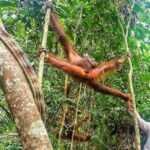
A trip to Semenggoh can turn a normal morning into orangutan close-up time. From Kuching, you’re driven about 30 minutes to a rehab center where orangutans you’d never see elsewhere return to life in the rainforest. The main event is watching rehabilitated, semi-wild orangutans come in during feeding time.
I love two things most. First, the hotel pickup and drop-off plus air-conditioned transport makes this easy even if you’re not a big planner. Second, you get a guided walk through the forest to the feeding platform, and you’ll learn how the program works instead of just snapping photos.
One thing to keep your expectations grounded: orangutan sightings can be hit-or-miss, and sometimes they may be farther away than you want. Semenggoh is “semi-wild,” so the day’s results depend on the animals and timing, not your camera skills.
In This Review
- Key Things You’ll Care About
- Semenggoh Orangutan Centre: a rehab story you can see up close
- The 3-hour half-day rhythm from Kuching (pickup to drop-off)
- The short rainforest walk to the feeding platform
- Watching orangutans during feeding time (what you’ll actually see)
- The rescue, rehab, release mission (and why Semenggoh feels different)
- Price and value: what $66 gets you, and what to watch for
- Who this tour fits best (and who should rethink it)
- A few practical tips to improve your odds
- Should you book Semenggoh Orangutan Centre from Kuching?
- FAQ
- How long is the Semenggoh Orangutan Centre tour?
- Where is the tour located?
- Is hotel pickup and drop-off included?
- How do you get to the center?
- Is the entrance fee included in the price?
- What is the group size limit?
- Is there a minimum number of people required?
- What should I wear?
- Is the ticket mobile?
- When can you see orangutans?
- Is free cancellation available?
Key Things You’ll Care About
- Hotel pickup + drop-off from Kuching means you lose less time to logistics
- Max 15 people keeps the group easier to manage near the feeding area
- Short rainforest walk gets you to the platform before the feeding window
- Rehab-to-release focus explains why you’re seeing these orangutans at all
- One-hour feeding platform window shapes the pacing of the visit
Semenggoh Orangutan Centre: a rehab story you can see up close
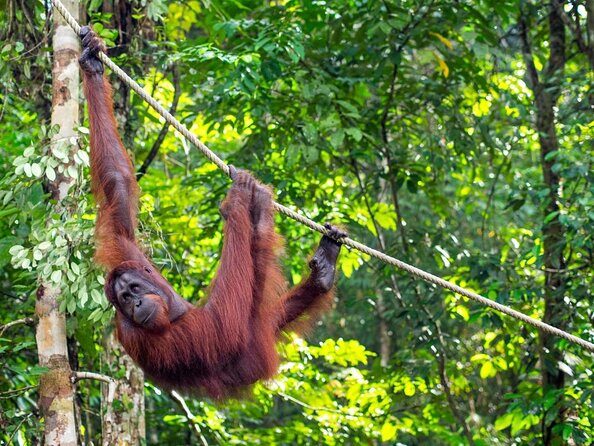
Semenggoh is built around a simple goal: rescue, rehabilitate, and release. You’ll be watching orangutans that are being re-adapted to life in the jungle, not performing animals on a schedule. That context matters, because it makes the experience feel purposeful, not just entertaining.
What makes this special is that the center doesn’t only take in injured or orphaned orangutans. It also supports a wider population living in the surrounding forest, and you may hear how many of these animals came to Semenggoh after serious life disruptions. Seeing them during feeding time gives you a real sense of how “semi-wild” works in practice.
And yes, you’ll still get that wow moment. Even when you don’t catch every animal you hope for, the orangutans can look like they’re thinking, not posing.
You can also read our reviews of more tours and experiences in Kuching.

The 3-hour half-day rhythm from Kuching (pickup to drop-off)
This is designed as a half-day tour, about 3 hours total. You’re picked up and returned to your hotel, and travel is by air-conditioned minivan, with one complimentary mineral water per person. For many people, that combo is the real value: you’re not coordinating rides, arguing over schedules, or hunting down the center on your own.
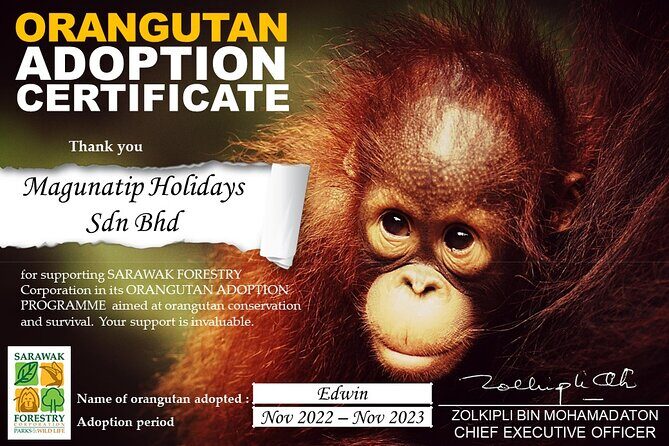
The operator also uses mobile tickets, and you’ll receive confirmation at booking. In at least some cases, people reported getting clear WhatsApp instructions from the organizer (name mentioned: Edwin), which is helpful if you’re traveling with kids or trying to keep the day calm.
Group size is capped at 15. That tends to make the guide’s job easier and your experience more comfortable, especially when everyone is trying to look up at the same time.
The short rainforest walk to the feeding platform
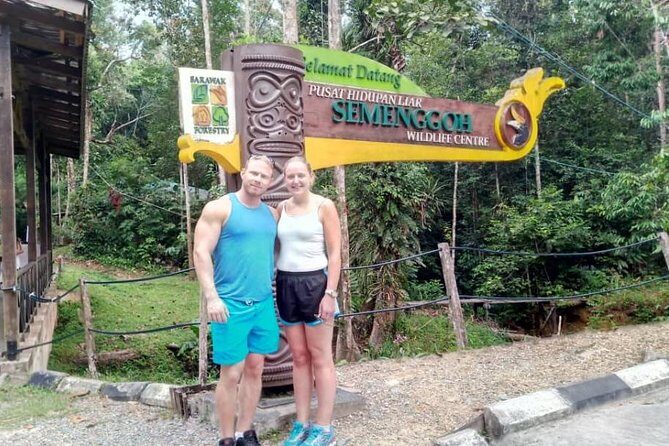
Before you reach the main viewing area, you’ll walk through the rainforest. This isn’t a long trek, but it does get you into the setting, so when you arrive at the platform you’re already in the right mood and mindset.
Comfort footwear matters here. The tour advises comfortable walking shoes, and I agree. The forest path and the waiting area can be uneven, and you’ll want your footing more than your best “vacation shoes” that only work on flat sidewalks.
One practical tip: keep your attention steady during the walk. If your group is chatting loudly or moving nonstop, it’s harder for the animals to feel like the area is calm, and you may find the viewing gets less effective. This matters because semiwild sightings depend on the animals’ choices more than on human timing.
Watching orangutans during feeding time (what you’ll actually see)
Feeding time is the headline. You’ll be headed toward a platform where orangutans come in when the fruit buffet is served. In past visits, the morning feeding timing was referenced as 9:00 AM, and one tip that came up strongly was to pick the 8:00 departure so you arrive with time to settle in before the buffet.
A key detail: the center allows about one hour at the feeding platform. That keeps the experience focused. You’re not wandering around for hours wondering when anything will happen—you’re there for a defined window.
Still, you need to accept the nature of the situation. Orangutans might arrive early, late, or not at all during your window. One person described it as lucky to see multiple orangutans, and that’s the honest reality here. You’re visiting a wildlife rehab area, not a guaranteed show.
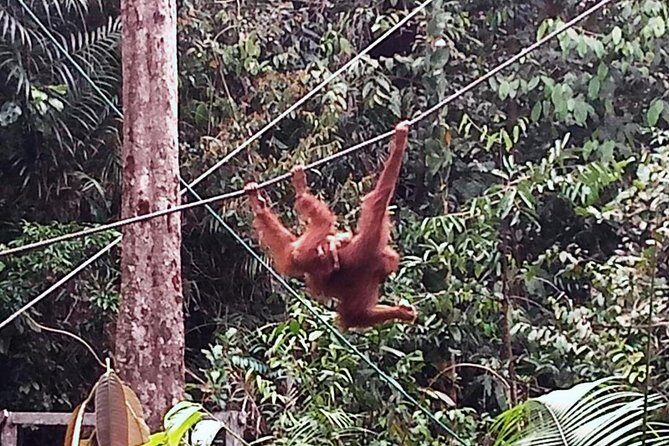
Distance can also be a factor. In at least one account, the orangutans were visible but farther away than expected. So if you’re hoping for frame-filling shots, consider bringing a camera you can zoom with, and don’t assume every sighting will be close.
The rescue, rehab, release mission (and why Semenggoh feels different)
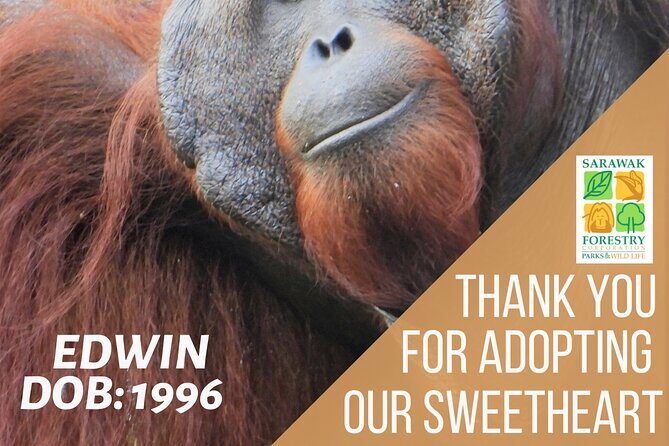
Semenggoh isn’t just a place to watch orangutans. It’s a rehab center where rangers work on a long-term goal: helping animals re-adapt to the wild. You’ll learn that the orangutans around the forest include roughly 20 individuals, many of them arriving injured or orphaned.
That detail changes how you interpret what you see. When you watch an adolescent or adult orangutan come in for food, you’re seeing a step in a larger process. The center’s role has shifted over time toward study and adaptation support, but the rehab mission stays central.
A particularly meaningful piece of context: Semenggoh has baby orangutans born in the wild to rehabilitated mothers. That’s not just a feel-good story. It’s evidence that the program supports more than survival—it supports long-term behavior that can lead to reproduction in the surrounding forest.
This is also where your guide’s explanation earns its keep. People have praised guides for being good at explaining Sarawak history and tying it into what you’re seeing at the center. Even if you’re not a “lecture person,” having that guidance helps you understand why the sightings work the way they do.

Price and value: what $66 gets you, and what to watch for
At $66 per person, this is not a budget activity—but it often feels fair because you’re paying for convenience plus guided access. You’re getting hotel pickup and drop-off, air-conditioned transport, a tour guide, and entrance fee is listed as included.
One wrinkle: the itinerary notes Admission Ticket Not Included, while the included section says entrance fee is included. That mismatch happens with a lot of tour listings, and it’s worth checking during booking so there are no surprises at the gate. If you confirm exactly what’s covered, you’ll feel better about the cost.
The other value factor is the wildlife variable. Because sightings are not guaranteed, you’re not just buying a ticket—you’re buying a chance during a feeding window. That’s true for most wildlife encounters, but at Semenggoh the rehab context adds meaning. Still, if you come in expecting certainty, you might leave frustrated.
My advice for value: plan your morning so you’re rested and ready to wait quietly at the platform. Your attitude affects your experience more than you’d think. If you can stay calm and alert, you’ll usually get more from the time you have there.
Who this tour fits best (and who should rethink it)
This is a good fit for animal lovers who want something more responsible than a basic zoo stop. It works well for mixed ages too. One family mentioned a wide range—an infant, younger adults, and grandparents—and still felt the tour was worth it.
It’s also a solid choice if you don’t want to figure out local transport. With pickup, drop-off, and a guided route to the feeding platform, the logistics are handled for you.
If you’re dealing with mobility limits, the good news is that the tour says most travelers can participate. Still, you should expect a short hike and standing around for the feeding window. If you know you struggle with uneven ground or longer standing times, this is something to weigh carefully.
A few practical tips to improve your odds
These come straight from how Semenggoh works in real life—wild animals set the pace, and your choices affect how much you notice.
- Choose the morning slot if you can. One strong tip was booking the 8:00 departure to be at the platform for 9:00 feeding.
- Wear shoes you trust. The tour advises comfortable walking shoes for the forest part.
- Keep noise down. One account pointed out that chatter and noise reduced the chance of orangutan sightings during their window.
- Use patience as your strategy. Even when sightings are fewer, sitting quietly during the one-hour feeding period gives you the best chance at a surprise.
Should you book Semenggoh Orangutan Centre from Kuching?
I’d book it if you want a wildlife experience with a purpose, not just a checklist stop. The combo of guided rainforest walk, hotel convenience, and the chance to see rehabilitated orangutans during feeding time makes it one of the most satisfying half-day options from Kuching.
I’d think twice if you’re the type who needs guaranteed results or very close-up views. Semenggoh is semi-wild, and you might get distance sightings or fewer orangutans on a given day. Also confirm what’s covered in the $66 price, especially given the note about admission tickets versus included entrance fee.
If you can handle some waiting and you care about conservation outcomes, this is a day that can leave you with lasting memories—and a better understanding of why the center exists.
FAQ
How long is the Semenggoh Orangutan Centre tour?
It’s about 3 hours (approx.).
Where is the tour located?
It’s in Kuching, Malaysia, with travel to Semenggoh Orangutan Rehabilitation Centre.
Is hotel pickup and drop-off included?
Yes. Hotel pickup and drop-off are included.
How do you get to the center?
You travel by an air-conditioned minivan.
Is the entrance fee included in the price?
The tour lists entrance fee as included, but it also notes Admission Ticket Not Included. It’s smart to confirm exactly what the $66 covers when you book.
What is the group size limit?
The tour allows a maximum of 15 people per booking.
Is there a minimum number of people required?
Yes. A minimum of 2 people per booking is required.
What should I wear?
Wear comfortable walking shoes since there’s a short hike/walk through the rainforest.
Is the ticket mobile?
Yes. The tour offers a mobile ticket.
When can you see orangutans?
You see orangutans during the feeding time at the center.
Is free cancellation available?
Yes. You can cancel up to 24 hours in advance for a full refund.