REVIEW · KOTA KINABALU
Half-Day Mari Mari Cultural Village from Kota Kinabalu
Book on Viator →Operated by Magunatip Holidays Sdn Bhd · Bookable on Viator
A cultural village trip beats museum boredom fast. This half-day outing gets you out into the countryside for an open-air look at Sabah’s ethnic groups, with short, guided stops that explain day-to-day life in longhouses and beyond. Two things I like a lot are the hands-on-feeling culture demonstrations (not just talking) and the way the tour keeps moving so you see several communities in one tidy block of time.
I also really appreciate that the tour bakes in food at the right moment. You’ll get the smell of bamboo cooking before your meal break, plus a live Borneo cultural dance performance, so it feels like a full cultural afternoon, not a quick drop-in and out.
One possible drawback: the whole thing runs about 4 hours, and each stop is relatively short. If you’re on a tight schedule (like a cruise day), you’ll need to be ready for a brisk pace, even though the operation is designed to handle limited time.
In This Review
- Quick hits before you go
- Leaving Kota Kinabalu: pickup, transport, and timing that actually matters
- Mari Mari Cultural Village: what the open-air setting changes
- Stop-by-stop: Dusun and the farming rhythms you can picture
- Rungus longhouse design: why the structure is part of the story
- Lundayeh, Bajau, and Murut: food, water, and hunting
- Blowpipes, fire starting, and tattoo symbolism: why demos feel different here
- The meal and dance portion: bamboo cooking, lunch, and a real break
- Price and value: what $90 is really buying you
- Who this tour is best for (and who should pick something else)
- Tips to make the 4-hour loop feel unrushed
- Should you book Mari Mari Cultural Village from Kota Kinabalu?
- FAQ
- How long is the Half-Day Mari Mari Cultural Village tour?
- What is included in the tour from Kota Kinabalu hotels?
- Which cultures will I learn about during the tour?
- Are cultural demonstrations included?
- What kind of food should I expect?
- Do I need to pay for admission?
- Is pickup available for everyone?
- What if I’m a cruise passenger?
- How many people are on the tour?
Quick hits before you go
- Open-air longhouses that help you understand how daily routines worked, not just what people wore
- Blowpipe and fire-starting demos that turn “history” into something you can watch and ask about
- Bamboo cooking aroma before lunch or hi tea, so the break feels built into the experience
- Live cultural dance as a clear centerpiece, not background noise
- Multiple ethnic groups in one loop: Dusun, Rungus, Lundayeh, Bajau, and Murut
- Smaller maximum group size (up to 15) that helps the guide keep it interactive
Leaving Kota Kinabalu: pickup, transport, and timing that actually matters
The biggest practical win here is the hotel pickup and drop-off from Kota Kinabalu. You don’t have to sort taxis, timing, or where the countryside starts. The transport is handled by the operator in an air-conditioned minivan for groups of 6 or more, or an Innova style vehicle for smaller groups—so everyone stays comfortable even when you’re heading away from the city.
The tour runs for about 4 hours, which is a good length for people who want culture without committing a full day. It’s also why the pacing feels purposeful: you’re not stuck in one area for hours. You’ll move through a set route, with short visits that keep the story flowing from group to group.
If you’re doing a cruise, note the fixed session start times: the morning session starts at 10:00am and the afternoon session at 2:00pm. That matters because your “buffer time” is limited once you’re on the island schedule—so plan to be ready to go when pickup happens.
You can also read our reviews of more tours and experiences in Kota Kinabalu.

Mari Mari Cultural Village: what the open-air setting changes
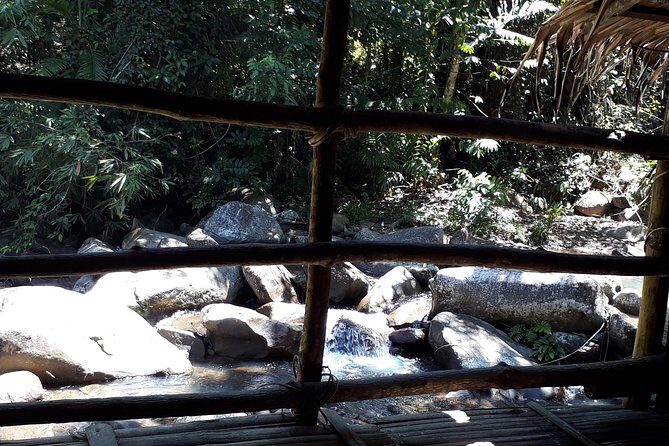
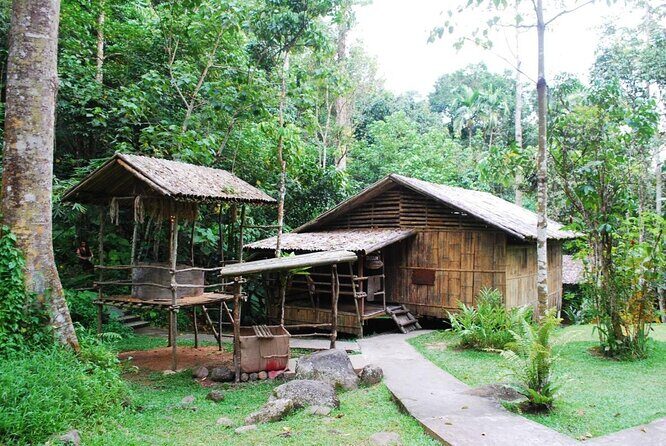
Mari Mari Cultural Village works because it isn’t just a room of exhibits. You’re walking through an open-air museum in the countryside, where longhouses and setups are arranged in a way that makes daily life feel more visible. When you visit traditional-style buildings and see how communities organized living space, the explanations land differently than they would in a standard museum.
At the main village stop, you’ll get the admission ticket included and a guided look at the preserved culture focus of the site. Even when the visits are short, the layout is meant to connect history, culture, and the “why” behind practices—so your guide can link what you’re seeing to what you’re hearing.
A small but important detail: the tour is built around demonstrations and meal moments, not just walking. That helps if you get tired easily with heat and humidity outside, because your schedule has natural pauses.
Stop-by-stop: Dusun and the farming rhythms you can picture
One of the first culture threads you’ll hear is about the Kadazandusun, traditionally known as paddy cultivators. The explanation you get is practical: how farming changes with where people live. Coastal plains and valleys lean toward the wet paddy type, while those in hills and further inland more often cultivate dry paddy.
This stop is short, but it’s valuable because it gives you a mental model. You can then “place” later stories about hunting, trade, and subsistence. When you understand that land and water shape food systems, the culture doesn’t feel like separate trivia points—it feels connected.
What to watch for: listen for how the guide connects environment to daily routine. Even with limited time, those links are usually the difference between a tour that’s just sights and one that actually teaches.
Rungus longhouse design: why the structure is part of the story
Next comes a Rungus longhouse look, and this is one of the most visually clear stops. You’ll hear how a longhouse can include 7 to 15 family apartments, built from materials like wood, bamboo, and atap (palm leaves). The structure is also described with a clear reason: the house is lifted to help avoid flood and reduce encounters with wildlife such as snakes.
That “lifted living” detail is more than architecture. It shows how people built around risk—water and animals are part of the living equation in much of Borneo. When your guide points out these choices, the village stops feeling like set dressing and starts feeling like a working adaptation.
Drawback consideration here: because the stop is short, you won’t get a deep architectural tour. If you’re the type who loves floor plans and construction methods, you may wish you had more time. Still, the basics you get are enough to understand why longhouses look the way they do.
Lundayeh, Bajau, and Murut: food, water, and hunting
After Rungus, the tour shifts into communities whose livelihoods connect strongly to agriculture, waterways, and hunting.
For the Lun Bawang, you’ll get a picture of people traditionally described as agriculturalists, with animals like poultry, pigs, and buffaloes in the mix. You’ll also hear they were hunters and fishermen, and that meat and fish were brined or pickled and stored in storage spaces. Even if the exact storage details aren’t fully laid out in the time you have, the key takeaway is that food preservation is part of survival planning.
Then comes the Bajau, often called sea gypsies. You’ll learn there are two commonly described groups—east coast and west coast Bajau. The west coast group is described as more settled, with learning to live on land in addition to seafaring roots. This is another stop where you get a quick but meaningful contrast: people’s relationship with the sea can shape where they live and how they build community.
Finally, the Murut stop brings in a different historical thread. The Murut are described as the last ethnic group in Sabah to renounce headhunting. You’ll also hear they were shifting cultivators and supplemented diets with blowpipe hunting and some fishing.
For me, the Murut explanation is the one that benefits most from listening carefully to your guide’s framing. Because the subject is sensitive and tied to violence, your tour value depends on how clearly the guide provides context rather than sensationalizing it. If you want to ask a question, this is a good time—your guide can usually explain what practices meant and what changed over time.


Blowpipes, fire starting, and tattoo symbolism: why demos feel different here
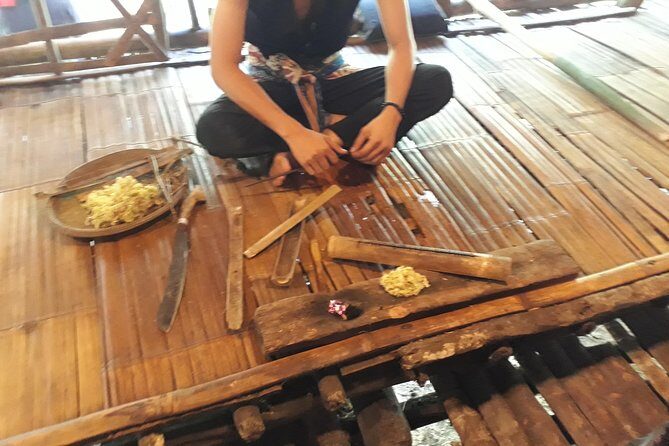
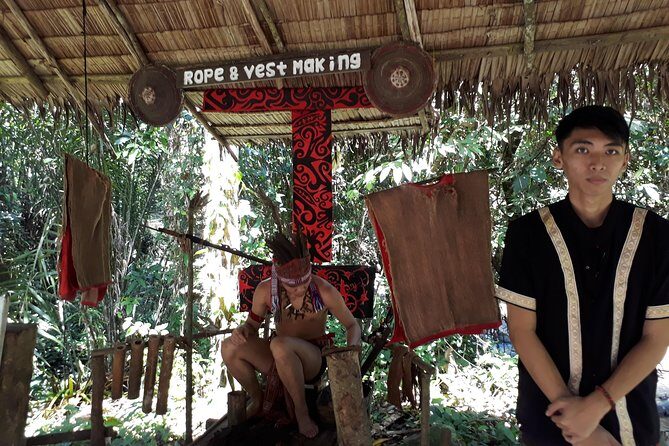
The tour doesn’t stop at viewing. It includes cultural demonstrations built to show craft and symbolism. You’ll see blowpipe making, fire starting, and tattooing explanations as part of the guided story. The point isn’t just to watch skilled hands; it’s to learn the mystical or symbolic meanings tied to these practices.
Watching someone explain and perform a technique helps your brain remember it. And when a guide explains the symbolism behind tattooing or the meaning behind fire-starting, you’re not just collecting facts—you’re building a framework for how people understood the world.
If you’re worried about this being “performative,” here’s what I’d look for: listen for explanations that connect technique to daily life, belief, and survival. That’s what keeps it grounded, instead of turning the demonstrations into a stage show.
The meal and dance portion: bamboo cooking, lunch, and a real break
Food is one of the strongest reasons to book this tour, especially if you’re trying to taste Sabah without searching for it yourself.
Before the meal, you’ll take in the smell of bamboo cooking, which sets the tone. Then you get a proper break with either a buffet lunch for the earlier session or hi tea for the later session. The exact timing of these meals depends on your departure slot, so make sure you know which session you’re booked on.
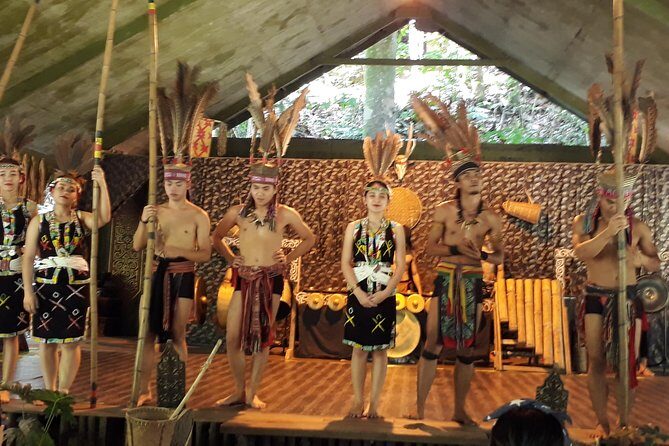
Add to that a live Borneo cultural dance performance, and your afternoon has a strong rhythm: learn, watch, taste, and reset. It’s also a good way to end the tour feeling satisfied, not hungry and rushed.
One thing to consider: if you’re picky about buffet foods, you may want to look for what’s familiar on the spread. The tour includes lunch for the 9am session and hi tea for the 1pm session, so your meal format differs by slot.
Price and value: what $90 is really buying you
At $90 per person, this isn’t a cheap “grab a ticket and go” activity. But the pricing starts to make sense when you count the included items:
- Hotel pickup and drop-off
- Air-conditioned transport by vehicle type based on group size
- Admission (including ticket for the main village stop)
- Meals (buffet lunch in one session; hi tea in another)
- Live cultural dance performance
- Demonstrations like blowpipe making and fire starting
- A guided approach that moves through multiple ethnic groups
The value sweet spot is for people who want a structured introduction to Sabah’s cultures without spending time planning routes or hunting down the right local sites. If you’re already the kind of traveler who loves independent exploration, you might find the fixed loop limits your time in any one longhouse. But if you’d rather leave the logistics to someone else, you’re paying for that convenience plus interpretation.
Also, with a maximum group size of 15, you’re not stuck in a huge crowd. That helps the guide keep explanations clear.
Who this tour is best for (and who should pick something else)
This half-day option is a strong match if you:
- Want culture and craft demonstrations in a short time
- Like guided context so the differences between Dusun, Rungus, Lundayeh, Bajau, and Murut actually make sense
- Prefer pickup over figuring out countryside transportation
It may be less ideal if you:
- Want hours to study architecture or specific crafts in depth
- Are extremely sensitive to schedules (because the tour is time-bound and session-based)
If your goal is to see Borneo cultures in a single afternoon, this checks many boxes. If your goal is deep research, you’ll likely want a longer, more focused program.
Tips to make the 4-hour loop feel unrushed
The tour is designed to work within about 4 hours, so you’ll enjoy it more if you plan like it’s a sprint, not a stroll.
- Keep your questions ready as you move between communities. The guide’s explanations tie together best when you ask while the story is fresh.
- If you’re traveling with limited time (cruise day), be upfront with your driver-guide team so they can align your experience to your port window. The operation has handled short timing situations smoothly before.
- Wear comfortable shoes. You’re moving between open-air areas and longhouse-style spaces.
On the guide side, the tour teams include friendly, organized people. In past experiences with this operator, drivers named Joe and Sam have been highlighted for keeping things smooth and explaining what to expect.
Should you book Mari Mari Cultural Village from Kota Kinabalu?
Book it if you want a guided, half-day sampler that still feels real: longhouses, farming and food stories, sea-life context, hunting history, and craft demonstrations—plus a meal and cultural dance. It’s also one of the more efficient ways to get countryside cultural context without needing a whole day.
Skip it (or look at alternatives) if your ideal trip is slow and self-directed, or if you strongly dislike time-boxed stops. The structure can feel quick, and there’s no escaping that short visits mean you’ll miss some details you might want.
If your schedule allows only one culture-focused outing from Kota Kinabalu, this is a practical choice with good value tied to what’s included.
FAQ
How long is the Half-Day Mari Mari Cultural Village tour?
It runs for about 4 hours (approx.).
What is included in the tour from Kota Kinabalu hotels?
Hotel pickup and drop-off are included, along with transport, a driver/guide, the main village admission ticket, a meal (buffet lunch for the earlier session or hi tea for the later session), and a live Borneo cultural dance performance.
Which cultures will I learn about during the tour?
You’ll learn about the Dusun, Rungus, Lundayeh, Bajau, and Murut cultures.
Are cultural demonstrations included?
Yes. The experience includes demonstrations such as blowpipe making and fire starting, and there is also tattooing included as part of the cultural explanations.
What kind of food should I expect?
You’ll have buffet lunch for the 9am session, or hi tea for the 1pm session, with bamboo cooking described as part of the lead-up to the meal.
Do I need to pay for admission?
Admission ticket is included as part of the Mari Mari Cultural Village stop.
Is pickup available for everyone?
Pickup and drop-off are included from Kota Kinabalu hotels, and transport is provided by air-conditioned vehicles based on group size.
What if I’m a cruise passenger?
For cruise schedules, the morning session starts at 10:00am and the afternoon session starts at 2:00pm.
How many people are on the tour?
The tour has a maximum of 15 travelers.
If you tell me your travel dates and whether you’re doing the 10:00am or 2:00pm session (cruise or not), I can help you pick the slot that best fits your day.