REVIEW · KOTA KINABALU
Kota Kinabalu: Mari Mari Cultural Village Tour with Lunch
Book on GetYourGuide →Operated by City MPV Travel & Tours Sdn Bhd · Bookable on GetYourGuide
Five Sabah tribes, one rainforest village day. At Mari Mari Cultural Village near Kota Kinabalu, a guide (often Eddie or Timmy) brings Sabah’s indigenous cultures to life with hands-on tasks, craft stations, and a dance show that you can join. It’s a 5-hour plan that turns a long drive into real context, not just a transfer.
I especially love the hands-on parts. The Congkak game at the Bajau House and the Kuih Jala snack demo feel small, but they’re exactly the kind of everyday culture you can actually picture at home.
I also love the fact that the day ends with participation, not just a sit-and-watch performance. One consideration: this is an outdoor village setting, so bring insect repellent and expect the usual jungle-company (mozzies) even if the schedule is relaxed.
In This Review
- Key highlights you’ll feel in your day
- Getting to Mari Mari Cultural Village from Kota Kinabalu
- Bajau House games and Kuih Jala snack-making you can actually try
- Dusun House bamboo cooking over open fire: food as tradition
- Rungus crafts and Murut Lansaran: two stops with real character
- Fire-making and blowpipe hunting practice: hands-on skill demo
- Cultural performance you can join: dance as the closing thread
- Traditional lunch in the middle of the day
- Price and time value: what you’re really paying for
- Who this tour fits best in your Sabah trip
- Booking verdict: should you choose it?
- FAQ
- FAQ
- How long is the Mari Mari Cultural Village tour?
- Where are the pickup locations in Kota Kinabalu?
- Do I need to pay upfront?
- What does the tour include?
- Which tribes/houses are visited?
- Is lunch included, and how long do I have?
- What activities can I take part in?
- What languages are the guides available in?
- What is the cancellation policy?
Key highlights you’ll feel in your day
- Five tribes, five home styles in one visit, so you get comparisons instead of a single-theme stop
- Congkak and Kuih Jala at the Bajau House, with a real try-and-learn rhythm
- Bamboo cooking over open fire at the Dusun House, where you see the method before you eat
- Rungus tree bark textiles and Murut Lansaran activities that go beyond photos
- Fire-making + blowpipe hunting practice with demonstrations you can join in
- Traditional dance performance with a chance to take part
Getting to Mari Mari Cultural Village from Kota Kinabalu
Most days start with a pickup from The Shore or Citadines Waterfront Kota Kinabalu. The guide meets you at Burger King, located at the same building, next to a convenience store called Orange. It’s a simple meeting point, and that matters when you’re starting a tour on day one.
From there, you’ll ride by van for about 20 minutes to the village area. Then the real experience begins with a photo stop and guided walk through the rainforest to the first homes. The walk isn’t just scenery—it helps you slow down and get used to the setting before the cultural stations start.
This is also why the tour feels well-paced. You’re not rushing between distant stops; you arrive, breathe, learn the context, and then move house to house with a guide explaining what you’re seeing.
A few more Kota Kinabalu tours and experiences worth a look

Bajau House games and Kuih Jala snack-making you can actually try
At the village, the guide leads you into the Bajau House experience. This is where I like that the tour doesn’t treat culture as a museum display. You’re invited to play and participate.
The star activity here is Congkak, a traditional game. You’ll get a chance to try it, which is a smart move—games are culture you can feel in your hands, not just facts you store in your head.
Next comes a snack-focused moment: you’ll watch how Kuih Jala (a local snack) is made. It’s a great contrast to the games: Congkak is slow and thoughtful; Kuih Jala is hands-on technique. Together, they give you a more complete picture of daily life.
Practical tip: wear shoes you don’t mind getting a little dirty. You’re in a village environment, and you’ll be moving around enough that slip-on sandals can feel annoying.
Dusun House bamboo cooking over open fire: food as tradition
From the Bajau House, you’ll shift to the Dusun House. This stop is about technique—how meals get prepared in ways that are older than modern kitchens.
You’ll see bamboo cooking, described as an ancient method where food is prepared over an open fire. The value here isn’t only the cooking itself; it’s the chance to understand why bamboo and open-fire methods fit the environment and resources of Borneo.
Even if you’re not a big “watching cooking” person, this part works because it’s tied to the surroundings you just walked through. The guide’s explanation helps you connect the food to the place.
If you’re the type who likes to ask questions, this is a good station to do it. The process is visual, and the guide has plenty to say about how the method fits local life.
Rungus crafts and Murut Lansaran: two stops with real character
The Rungus House is one of the more visual experiences. Here you’ll explore traditional crafts and see handmade tree bark textiles. The craft isn’t presented like a quick souvenir pitch; it’s a skill and a material story. You’ll come away thinking about labor and resources, not just the finished product.
Then comes the Murut House, which adds a fun cultural element you may not expect. You’ll experience the Lansaran, described as a trampoline-like platform used in Murut celebrations. It’s playful, but it’s also a reminder that communal events shape traditions as much as food and shelter do.
This Murut stop also includes activities mentioned for the day such as lang… (listed as part of the Murut celebrations experience), plus hena drawing and blow pipe related practice. The mix is what makes this house memorable: you can participate in multiple ways, so the time doesn’t feel repetitive.
My advice: when you switch houses, give yourself one minute to look around before jumping into the activity. The guide may point out details (materials, patterns, tools) that you’ll miss if you rush.
Fire-making and blowpipe hunting practice: hands-on skill demo
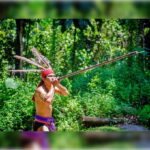
The day includes a fire-making demonstration, plus blowpipe hunting. These are big-ticket culture moments because they show technology and knowledge shaped by the environment.
You’ll watch a fire-starting demonstration first. Then you’ll have a chance to try your blowpipe skills as part of the activity. Even if you’re not naturally coordinated, the fact that you get a try matters. You leave understanding that these tools weren’t invented for show—they served a practical purpose.
Also, don’t underestimate how much energy these stations take. They’re active, and you’ll be standing, focusing, and moving through the area with your group. Build in some water breaks mentally, even if you don’t see long queues.
Safety note from my perspective as a practical travel writer: treat the blowpipe part like a guided activity only. Listen closely to the guide’s instructions and follow what they ask before you start trying anything.




Cultural performance you can join: dance as the closing thread
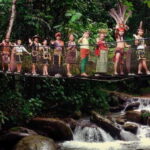
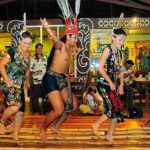
The tour’s final act is a cultural performance with traditional dance. This is where many cultural village visits either keep you at the edge of the stage—or actually bring you into it. This one is designed so you can even join in the dances.
The payoff is that you’ll recognize some of the earlier elements by the time the show starts. After seeing the houses, crafts, and activities, the performance stops being just entertainment. It becomes a final thread tying together celebration, skill, and community.
If you’re camera-happy, you’ll want to balance photos with participation. Watching people move to the music (and taking part if you want) gives you more lasting memory than another shot that you’ll scroll past later.
Traditional lunch in the middle of the day
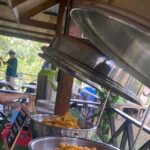
Lunch is included for about 30 minutes at Mari Mari Cultural Village. It’s a traditional meal, and the structure is buffet-style, which makes it easy to try more than one dish.
A useful detail for food planning: for at least one diner with gluten-free needs, the buffet was described as having ingredients clearly labelled. If you have a specific allergy, ask your guide on the day how the lunch choices work for you, especially if you don’t see labels that match your needs.
Timing-wise, lunch lands after the main house visits. That’s good pacing: you’ve already done active stations, so food feels like recovery, not a random break.
Price and time value: what you’re really paying for
At $67 per person for about 5 hours, you’re not just paying entry. You’re paying for guided structure across multiple tribe-style homes, plus hands-on activities, plus the performance, plus lunch.
If you tried to do this on your own, you’d likely face the same problem most people run into: you can see a site, but it’s hard to decode what everything means without a guide. Here, the guide is the engine that connects each house and each activity to context.
You also get a neat “variety in one go” advantage. You’re not forced to choose between crafts, cooking, or a show. You get all of them—Congkak, bamboo cooking, tree bark textiles, Lansaran, fire-making, and blowpipe practice—within one outing. That kind of bundled value is especially helpful if your Kota Kinabalu time is tight.
The main trade-off is simple: it’s a set schedule. If you want to linger in one station for much longer than planned, this isn’t the kind of tour that bends into hours of optional wandering.
Who this tour fits best in your Sabah trip
This tour is ideal if you want hands-on culture rather than a quick photo stop. The structure works well for people who learn by doing—playing a game, trying a tool, tasting snacks, and joining in a dance.
It also makes sense if you’re traveling with kids or mixed-interest groups. Not everyone will care about blowpipes or textiles, but almost everyone will find one activity that clicks. And because you visit multiple houses, the energy doesn’t flatten into repetition.
Solo travelers may appreciate this setup too. Some single travelers have called out how the tour worked well for them when other options were harder to manage. Even without knowing your exact group size, the guided format reduces the stress of “what do I do next?”
Booking verdict: should you choose it?
I’d book this if you want a focused cultural day that mixes houses, crafts, demonstrations, and participation—without turning the trip into a logistics puzzle. The best reason to pick it is simple: the day is built around understanding, not just visiting.
Skip it or consider an alternative if you hate active participation or you need lots of free time to roam slowly at your own pace. It’s structured, it moves, and it’s outdoors—so pack smart and be ready to participate.
If you do book, go in curious. Ask the guide questions as you move between houses, and spend your energy where you’ll remember the details: Congkak, Kuih Jala, tree bark textiles, and that closing dance moment you can join.
FAQ
FAQ
How long is the Mari Mari Cultural Village tour?
The tour duration is listed as 5 hours.
Where are the pickup locations in Kota Kinabalu?
Pickup is offered from The Shore, Citadines Waterfront Kota Kinabalu (meet the guide at Burger King, next to the Orange convenience store in the same building).
Do I need to pay upfront?
This activity offers Reserve now & pay later, meaning you can reserve your spot and pay nothing today.
What does the tour include?
The price includes entry, a guided tour, visits to the traditional houses of 5 indigenous tribes, live demonstrations (fire-making, blowpipe hunting, bamboo cooking, etc.), a cultural performance, hands-on activities (Congkak, Lansaran, tree bark craft, and more), and a traditional meal.
Which tribes/houses are visited?
The tour includes the Bajau House, Dusun House, Rungus House, and Murut House, plus experiences covering 5 Sabah tribes overall.
Is lunch included, and how long do I have?
Yes, lunch is included and the lunch time is 30 minutes.
What activities can I take part in?
You can join hands-on activities such as Congkak, Lansaran, tree bark craft, hena drawing, and blowpipe practice, plus you’ll watch demonstrations like fire-making and bamboo cooking.
What languages are the guides available in?
The tour guide is listed as available in English and Chinese.
What is the cancellation policy?
The tour offers free cancellation up to 24 hours in advance for a full refund.