REVIEW · KOTA KINABALU
PADI Advanced Open Water Course Kota Kinabalu
Book on Viator →Operated by Go Aquatic · Bookable on Viator
Six training sessions in two days sounds intense.
This PADI Advanced Open Water course in Kota Kinabalu with Go Aquatic is built for focused skill-building, not a long cruise. You start at Jesselton Point, head out on a boat right away, and spend two days working through the underwater tasks that earn your AOW certification.
I really like the small-group setup: one PADI instructor teaches up to four participants at a time. I also like that you use original PADI learning materials, including the manual and theory DVD, taught by instructors with PADI teaching licenses.
The main thing to consider is time and prep. You’ll need to show your Diver Card at registration, and the schedule runs long days (boat departs 9:10 AM, back around 3:30–4:00 PM), so you should plan your energy accordingly.
In This Review
- Key things I’d zero in on
- PADI Advanced Open Water in Kota Kinabalu: What You’re Really Buying
- Jesselton Point Morning: Registration, Medical Checks, and What to Bring
- Boat Schedule and the Rhythm of Six Underwater Training Sessions
- How the Five Elective Specialties Work (and Why They’re Worth Your Attention)
- Night Water Session: The Fun Option With a Headcount Condition
- Equipment, Instructors, and the “Okay, I Got It” Moment
- What Your Days Look Like: Beyond the Clock
- Price and Value: Is $407.34 a Good Deal?
- Who This AOW Course Suits Best (and Who Might Rethink It)
- Should You Book Go Aquatic’s PADI Advanced Open Water in Kota Kinabalu?
- FAQ
- FAQ
- Where does the PADI Advanced Open Water course start?
- What time does the boat leave and return?
- How long is the course?
- How many underwater training sessions do I do?
- Do I need to bring anything for registration?
- Do I have to choose elective specialties?
- Is a night water session included?
- What’s included in the price?
- What happens if weather cancels the experience?
- What is the cancellation policy?
Key things I’d zero in on
- One instructor per max four students: more feedback, less waiting around.
- Original PADI manual + theory DVD: you’re not learning from shortcuts.
- 6 underwater training sessions across two days: one refresher plus five that count toward certification.
- You choose 5 elective specialties: you can steer the course toward your interests.
- Night water session is optional: it only starts if there are at least four participants.
- Close to Jesselton Point: you’re walking distance to the jetty, about 2–4 minutes on foot.
PADI Advanced Open Water in Kota Kinabalu: What You’re Really Buying
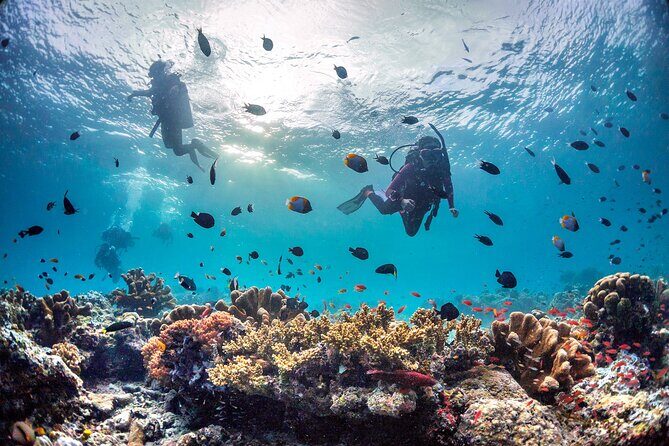
The PADI Advanced Open Water course is about becoming a more capable, more confident scuba diver. In Kota Kinabalu, you get that training tied to real water conditions and real sites, while Go Aquatic keeps it structured: a refresher, then a run of skills you practice while you’re out on the boat.
At the heart of this experience is small-group coaching. That matters because AOW isn’t just about checking boxes. It’s about learning how to manage buoyancy, control yourself, and apply skills during different underwater scenarios. When your instructor has fewer students, you usually get quicker correction and calmer learning.
This course also feels practical because Go Aquatic is set up near the water. You register at Jesselton Point, then the team guides you to the jetty by a short walk. If you hate rushing across town before a course starts, you’ll appreciate how local and straightforward this is.
And yes, the coaching staff names show up in the way people describe their experience: Zarul for patient, careful teaching; On Jai for clear instruction; Jenson and Din for friendly, steady guidance. Different personalities, same goal: you leave feeling like you learned something you can use.
You can also read our reviews of more tours and experiences in Kota Kinabalu.

Jesselton Point Morning: Registration, Medical Checks, and What to Bring
Your day starts with registration at 8:45 AM at Jesselton Point Ferry Terminal (Jln Haji Saman). The course uses a simple flow:
- You arrive and verify you as a certified diver by showing your Diver Card.
- You fill out a registration form and answer a basic medical questionnaire.
- You receive the course PADI Advanced Open Water manual book and a Multi Purpose Data Carrier.
- When paperwork is done, the crew guides you to the jetty.
A couple of practical notes that make this smoother:
- Bring your Diver Card. If you forget it, you’ll lose time at the start.
- Wear something you don’t mind getting damp or salty. You’re going to be moving from land to a boat and back.
Go Aquatic’s team speaks English, Chinese, and Malay, which helps if you’re not fully comfortable in English. The more you understand during the safety briefing and skills explanations, the less “guessing” you’ll do later underwater.
Boat Schedule and the Rhythm of Six Underwater Training Sessions
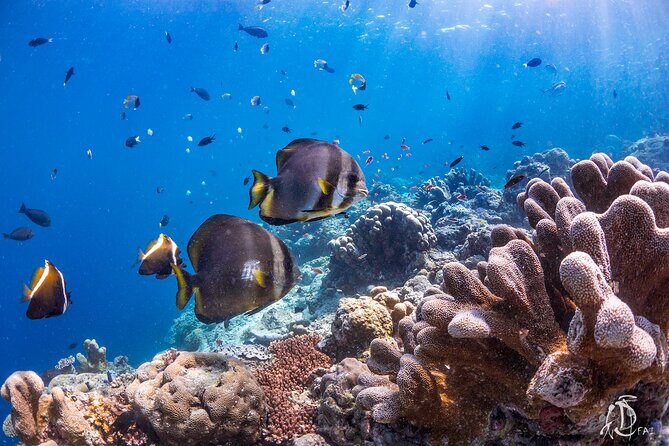
The boat departs at 9:10 AM and returns around 3:30–4:00 PM. Across two days, you complete 6 underwater training sessions total: one refresher plus five course sessions that count toward certification.
That refresher matters. It’s not just “wake up and go.” It’s there so you and your instructor can see how you’re controlling your gear and your body in the water, then tighten up what needs tightening before the skills that earn your AOW card.
What you’ll likely feel during the course is a steady rhythm:
- Short blocks of instruction and practice
- Re-checks before you go down for the next task
- Lots of repetition with feedback
Small-group coaching is what makes this tolerable. If you’ve ever been stuck watching a group wait while the instructor corrects one person at a time, you’ll understand why the max four students per instructor rule is a big deal.
Also, the course structure gives you a mental anchor: you’re not just taking scenic swims. Every session supports the five required training outcomes.
How the Five Elective Specialties Work (and Why They’re Worth Your Attention)
To complete the AOW course, you choose 5 elective specialties. Your instructor discusses the options with you at the start of the course, and you also complete the Knowledge Review questions in your manual.
This part is where you can make the course feel like it’s “about you.” Instead of finishing with skills you don’t care about, you can pick what matches how you want to dive next. If you already know you want to explore deeper waters later, or you’re interested in navigation and planning skills, your selections can steer you there.
Here’s the practical advantage: once you choose your specialties, the training sessions stop feeling random. You’ll understand why you’re practicing certain tasks, and you’ll be more likely to remember how to do them properly.
One more detail: plan to read and work through the manual questions. Even though a lot happens on the boat, the course isn’t only hands-on. If you treat the Knowledge Reviews as homework you can finish quickly at the end, you’ll likely feel rushed on day two.
Night Water Session: The Fun Option With a Headcount Condition
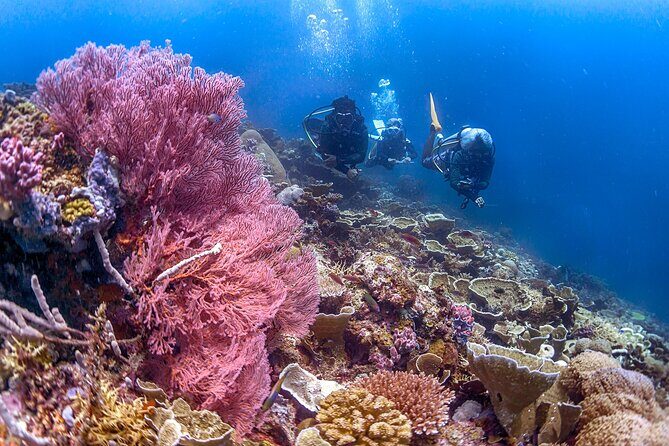
Go Aquatic offers a night water session option during the course, but it’s not automatic. They need at least four participants to start it.
So if night feels like a must-do for you, do two things:
- Go into the course ready to say yes if the timing works.
- Bring the expectation that it may depend on group numbers.
If it runs, night sessions can add a new layer of awareness. Everything feels different in low light: buoyancy control becomes more important, and your ability to watch what’s happening around you matters more than usual.
Even if the night session doesn’t happen, you still finish with the required five sessions plus the refresher, so your certification plan stays intact.


Equipment, Instructors, and the “Okay, I Got It” Moment
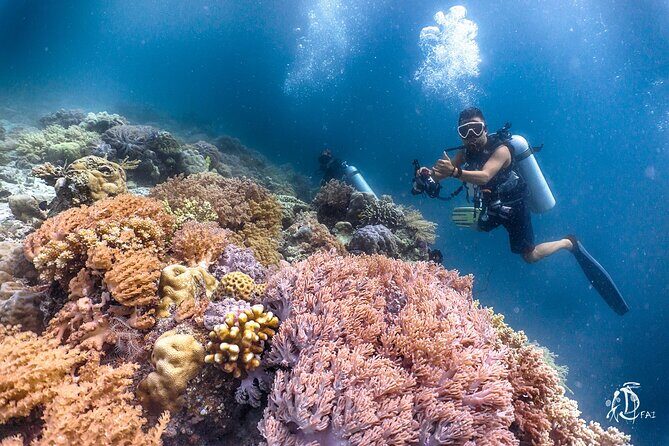
This course includes use of scuba equipment, plus lunch and bottled water. Equipment condition is one of the things people tend to notice in good scuba schools, and Go Aquatic is described as using quality gear and running a clean boat.
What I like most in their teaching approach is the pairing of structure and flexibility. Go Aquatic uses original PADI materials and instructors who hold the professional teaching license needed for PADI Open Water Scuba Instructor-level instruction. That combination tends to produce a learning experience that follows the course standard, while still allowing your instructor to adjust explanations for your comfort level.
In the field, you’ll likely feel this in the kind of feedback you get. People describe instructors like Zarul as patient and careful, On Jai as patient and funny with clear instruction, and Din as friendly and steady even for newer divers. That’s the style you want for skill training: calm coaching, not frantic corrections.
Language support helps too. When you can ask a question in English, Chinese, or Malay, the gap between instruction and understanding shrinks. And that gap matters underwater.
What Your Days Look Like: Beyond the Clock
On paper, the course is listed as around 8 hours of activity, but the real shape is two long days. You’re out on a boat for roughly 9:10 AM to 3:30–4:00 PM, and that’s a lot of time to practice and think about skills.
Here’s what that means for you:
- You should eat the lunch they provide and keep your body fueled.
- Drink the bottled water and don’t treat hydration as optional.
- Expect to be tired at the end. That’s normal after repeated training tasks and buoyancy practice.
Also, think about comfort. Dry towel is not included, so you’ll want to bring what you need for post-session comfort on the boat and back at the meeting point.
Price and Value: Is $407.34 a Good Deal?
At $407.34 per person, this isn’t the cheapest way to spend a couple of days in Kota Kinabalu. But value-wise, it covers several big cost items:
- The course training itself
- Use of scuba equipment
- Lunch
- All fees and taxes
- Bottled water
What’s not included:
- Pick up/drop off service
- Accommodation
- Dry towel
So where does the value come from? It’s the mix of certification structure and included essentials. Many “cheap” options start cutting items later—equipment, day meals, fees, or training support. Here, the pricing is built around the course experience rather than forcing extra purchases after you commit.
The small-group teaching is also part of the value. Up to 16 travelers overall with a maximum of four students per instructor means you’re paying for more instructor time, not just access to a boat.
Who This AOW Course Suits Best (and Who Might Rethink It)
This course is a strong fit if:
- You already hold open water certification and want the next step in scuba capability.
- You prefer structured training with feedback over doing random check-outs.
- You like the idea of picking your 5 elective specialties so the course matches your dive goals.
It may be less ideal if:
- You want a short, relaxing day.
- You’re not ready for long hours on the boat and the mental work of Knowledge Review questions.
- You need full flexibility on schedules. The experience requires good weather to operate.
If you’re doing this while traveling around Sabah, Kota Kinabalu is a practical base because the meeting point is easy to reach and Go Aquatic’s location is near the jetty (about a 2–4 minute walk).
Should You Book Go Aquatic’s PADI Advanced Open Water in Kota Kinabalu?
I’d recommend booking it if you want a real AOW training experience that’s organized, not chaotic. The small-group coaching, original PADI materials, and structured two-day schedule make it easier to learn and easier to track progress.
Before you book, just be honest with yourself about your calendar and your energy. Two days, six underwater training sessions, and Knowledge Reviews aren’t a casual add-on. If you show up ready to practice, ask questions, and work through the manual, you’ll get exactly what AOW is meant to deliver: better skills, stronger control, and a certification you can build on next.
FAQ
FAQ
Where does the PADI Advanced Open Water course start?
Registration starts at 8:45 AM at Jesselton Point Ferry Terminal, Jln Haji Saman, Pusat Bandar Kota Kinabalu, 88000 Kota Kinabalu, Sabah, Malaysia.
What time does the boat leave and return?
The boat departs at 9:10 AM and comes back around 3:30–4:00 PM.
How long is the course?
It is a two-day course with a total of about 8 hours of activity time listed for the experience overall, with daily boat hours around 9:10 AM to 3:30–4:00 PM.
How many underwater training sessions do I do?
There are 6 underwater training sessions in total: 1 refresher session and 5 course sessions that are required for certification.
Do I need to bring anything for registration?
Yes. You must bring your Diver Card for verification. You’ll also complete a basic medical questionnaire and registration form.
Do I have to choose elective specialties?
Yes. To complete the course, you must choose 5 elective specialties, discussed with your instructor during the start of the course.
Is a night water session included?
A night water session option is available, but it needs at least 4 participants to start.
What’s included in the price?
Included are lunch, use of scuba equipment, all fees and taxes, and bottled water. Dry towel, pick up/drop off, and accommodation are not included.
What happens if weather cancels the experience?
If the experience is canceled due to poor weather, you’ll be offered a different date or a full refund.
What is the cancellation policy?
The experience is non-refundable and cannot be changed for any reason. If you cancel or ask for an amendment, the amount you paid will not be refunded.