REVIEW · KOTA KINABALU
(3 Days) PADI Open Water Diver Course Kota Kinabalu
Book on Viator →Operated by Go Aquatic · Bookable on Viator
Learning to scuba, fast and safely. This 3-day PADI Open Water Diver course in Kota Kinabalu is built for first-timers who want a clear path from classroom to certification in a real marine area. You’ll train in a set schedule, then put the skills to work in the water near the city.
I especially like that they keep the logistics simple: scuba equipment is provided, and you don’t need to hunt down rentals or figure out what’s compatible. And every training day comes with lunch on you—so you’re not trying to power through practice while underfed.
One thing to plan for: pickup and drop-off aren’t included, and even a dry towel isn’t provided. So you’ll want to arrange your own way to the meeting point and bring what you’ll need for post-training comfort.
In This Review
- Quick takeaways
- Price and what you actually get for $437.93
- Meeting at Go Aquatic in the city center (and why it matters)
- Day 1 classroom: the 10:00 AM to 3:45 PM theory session
- Day 2 confined-water training near Sapi Island
- Day 3 open water dives (3 and 4) plus the final exam
- The small-group coaching that makes or breaks training
- Lunch every day, and why that’s surprisingly important
- Equipment and comfort: what’s handled vs what you bring
- Timing, weather, and the one risk you can’t control
- Who this course is best for (and who should think twice)
- Should you book this PADI Open Water Diver course in Kota Kinabalu?
- FAQ
- What time does the course start?
- How long is the theory day?
- Which dives do I need to complete to earn certification?
- Is scuba equipment included?
- Is lunch included?
- Do they include pickup and drop-off?
Quick takeaways
- PADI theory runs 10:00 AM to 3:45 PM in the training room
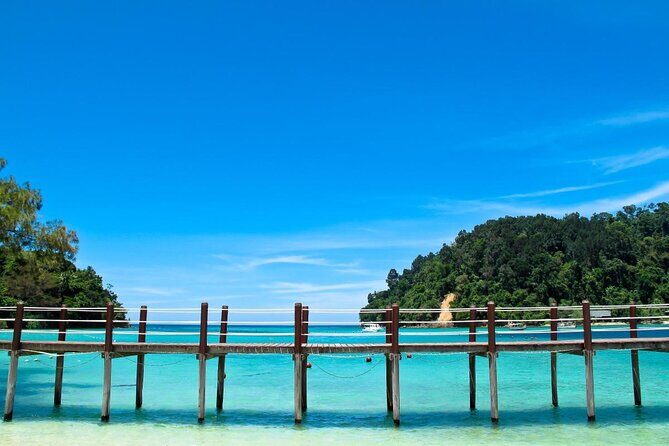
- Confined-water practice happens near Sapi Island’s beach area
- Maximum 4 students per instructor for hands-on coaching
- You complete Open Water Dives 1 through 4 plus a final exam
- Lunch is included daily, plus bottled water (500ml) on the boat
- This runs as a small group course capped at 16 travelers
Price and what you actually get for $437.93
At $437.93 per person, this isn’t just “a try-it session.” It’s a structured, 3-day PADI Open Water Diver course with certification as the goal—meaning you’re doing the classroom piece, multiple skill-focused training sessions, and four required training dives.
Where the value shows up is in what’s included:
- Scuba equipment is provided (so you avoid rental hassle and unknown gear quality)
- Lunch is included every day, served fresh at an island restaurant
- Bottled water (500ml) is provided during scuba activity
- All fees and taxes are covered in the course price
What’s not included is also important for your budgeting and planning:
- Pick-up and drop-off
- Accommodation
- Dry towel
If you’re comparing costs, those “extras” can sneak up on you with other training providers. Here, the package keeps your day-to-day needs covered, so your money goes toward the actual training.
A few more Kota Kinabalu tours and experiences worth a look
Meeting at Go Aquatic in the city center (and why it matters)
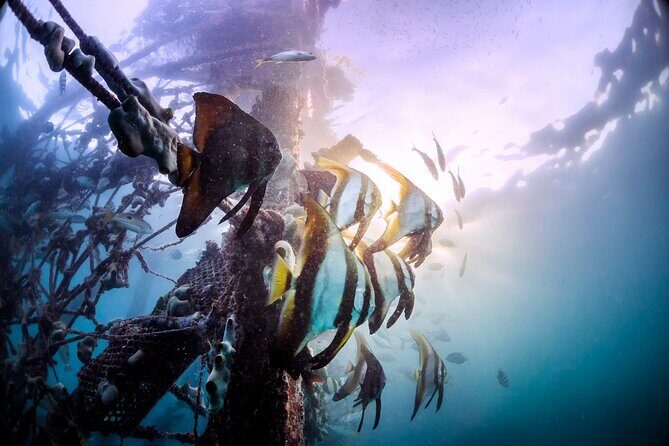
You start at Go Aquatic, Lot G30, Ground Floor, Wisma Sabah, Jln Haji Saman, Pusat Bandar Kota Kinabalu, 88000. The activity starts at 10:00 AM, and it ends back at the same meeting point.
For me, this is a practical setup because it means you’re not dependent on complicated transfers just to begin. But the trade-off is on you: pickup and drop-off are not included, so arrive ready to get yourself there.
Also note the course is near public transportation. If you’re staying centrally, you can usually build an easy routine around it rather than adding extra taxi legs to each day.
Finally, the group is capped at 16 travelers, and the instructor ratio is set so learning doesn’t turn into a crowd-management exercise.
Day 1 classroom: the 10:00 AM to 3:45 PM theory session
Day 1 is a focused theory block in the training room, running from 10:00 AM to 3:45 PM. For a first-time diver, this kind of timing helps in two ways:
- You’re not trying to learn concepts at the same moment you’re dealing with equipment and water conditions.
- You can absorb the core ideas before your practical sessions begin.
What you’re training toward is not just memorizing facts—it’s building the understanding you’ll use on dives later. Since the course includes a final exam, this day is where the “why” becomes clear, not just the “how.”
If you prefer structure, this is the right pacing. It also gives you time to ask questions while the whole group is still together before you split into your hands-on flow.
Day 2 confined-water training near Sapi Island
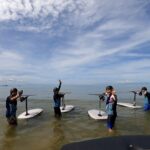
On Day 2, you move into practical, hands-on training with your instructor. The course structure keeps the group small: one instructor teaches a maximum of 4 students, which matters a lot when you’re learning buoyancy control, breathing habits, and safety procedures.
You’ll start in a confined water area near the beach in the Sapi Island area. That’s described as only about 15 minutes from the jetty in the city center, which is a nice convenience for a training day. Short transfer time can mean less waiting and more actual repetitions.
This is also where you’ll complete:
- Open Water Dive 1
- Open Water Dive 2
Those dives are your bridge from theory to real-world control. In this stage, you’re still learning how to manage your breathing and positioning while staying calm and task-focused. Even if the open water calls to you, the confined-water practice is where you build the confidence that makes later dives feel more manageable.
A small practical note: bottled water is provided during the scuba activity, but the course includes lunch on you—so plan to use that break for real energy recovery.
Day 3 open water dives (3 and 4) plus the final exam
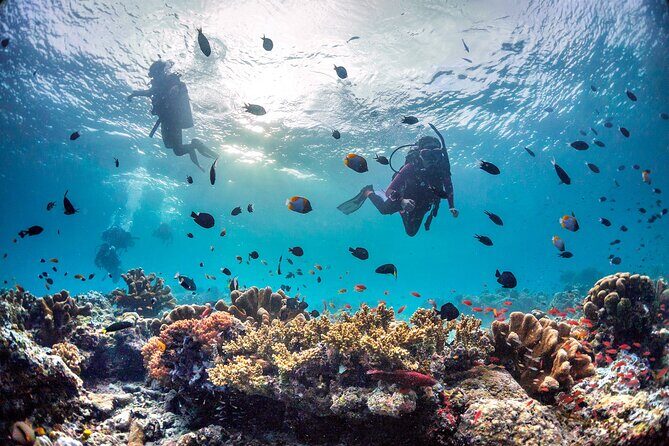
Day 3 is when it all comes together. You’ll have more practical hands-on training with your instructor, and this is described as the last day of the course.
By the end, you need to complete:
- Open Water Dive 3
- Open Water Dive 4
- A final exam
This day is typically where first-time divers either feel confident and proud—or get overwhelmed. The course’s small instructor ratio is one reason the program works for beginners: you’re not stuck figuring it out alone while adjusting gear and trying to remember steps.
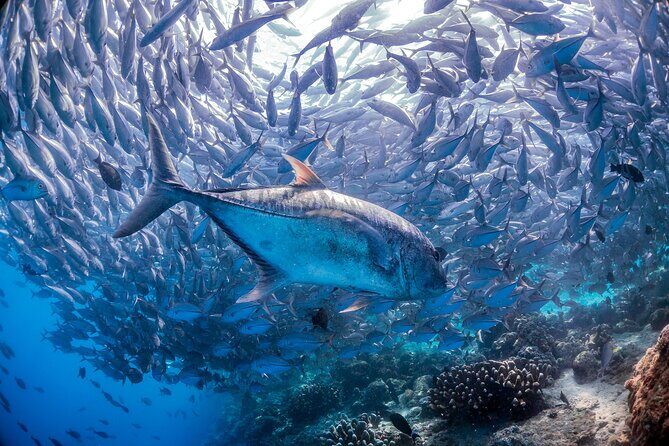
You’ll also be working within the broader Kota Kinabalu marine setting. The itinerary includes stops like Tunku Abdul Rahman Marine Park and Jesselton Point, which are both part of the local dive geography. So while the course is about training, you’re not stuck only in a “practice pond” either—you’re moving toward the real dive environment that PADI certification is meant to prepare you for.
After the exam, if you pass and complete all required dives, your instructor will certify you as a new PADI Open Water Diver. The course notes that your diving license or PADI Diver ID will arrive after a few days.
That follow-up matters. It’s the difference between a one-day experience and a credential you can build on.


The small-group coaching that makes or breaks training
The best part of this program is also the most unglamorous: the coaching structure. With a maximum of 4 students per instructor, you get frequent feedback and correction.
That’s a big deal in scuba training because tiny issues can snowball:
- breathing becomes rushed
- buoyancy drifts
- tasks get skipped under stress
When an instructor can actually see what each student is doing, you get quick course-correcting. And based on real course experiences people shared, the support style matters just as much as the lesson content—especially if you’re nervous at first or need more time to practice skills safely.
So if you’re the type who learns better through steady repetition and patient guidance, this setup fits the way you likely want to learn.
Lunch every day, and why that’s surprisingly important
This course includes lunch every day, served fresh at an island restaurant. On a scuba training itinerary, food isn’t just comfort—it’s maintenance.
Your body is working hard: you’re learning new tasks, managing gear weight, and doing physical breathing control. If you skip meals or eat something that doesn’t agree with you, the day can feel harder than it needs to be.
Here, you also get bottled water (500ml) on the boat during scuba activity. That may sound like a small detail, but staying hydrated helps you focus and reduces that sluggish, off-balance feeling some people get when they’re under-fueled.
One thing I’d keep in mind: lunch is a la carte, so your exact plate choices may depend on what’s on the menu that day. Either way, at least you’re not paying out of pocket just to keep your energy steady.
Equipment and comfort: what’s handled vs what you bring
This is one of the cleaner parts of the package. Use of scuba equipment is included, and all fees and taxes are covered.
That means you can focus on learning rather than comparing gear brands or wondering if the wetsuit fit is “good enough.” For first-timers, the less you have to worry about, the more you can pay attention to breathing, positioning, and safety steps.
Two small items you should plan for:
- Dry towel is not included
- Pickup and drop-off service is not included
So, if you want to feel comfortable after the water sessions, bring a towel for drying off. And if you’re staying farther out, map your route to the meeting point before the first day so you’re not rushing at 9:30 AM.
Timing, weather, and the one risk you can’t control
This experience requires good weather. If it’s canceled due to poor weather, you’ll be offered a different date or receive a full refund.
In practice, that means you should keep your schedule flexible around your course dates. Scuba is always weather-dependent, but here the important point is that the operator plans for the possibility and gives you a clear outcome: reschedule or refund.
Also, keep an eye on booking timing. On average, this course is booked 26 days in advance, which suggests it’s popular. If you know your travel window, lock in early.
Who this course is best for (and who should think twice)
This course is described as suitable for most travelers, and it’s not recommended for travelers under 10 years of age.
Here’s who I’d say it fits particularly well:
- You want the full PADI Open Water Diver path, not a taster
- You like structured training with a clear classroom day and practical skill days
- You want a small instructor-to-student ratio for hands-on coaching
- You prefer that equipment and daily meals are already handled
If you hate the idea of exams, keep in mind there is a final exam at the end. The good news is that the course starts with theory and focuses on safe, thorough training—so the exam is based on the work you’ve already done.
Should you book this PADI Open Water Diver course in Kota Kinabalu?
If you want a straightforward route to certification in Kota Kinabalu, I think it’s a solid choice. The value comes from the “boring” logistics being taken care of: equipment included, lunch included, and a training setup built around small groups. That’s exactly what first-time divers need.
Book it if:
- you’re comfortable arranging your own transport to Go Aquatic in central Kota Kinabalu
- you want a structured 3-day schedule ending in certification
- you value close instructor attention (max 4 students per instructor)
Skip it (or ask more questions) if:
- you need guaranteed transport because pickup isn’t included
- you hate exam pressure, since a final exam is required to certify you
For many people, the real win is that by the end of Day 3 you’re not just saying you tried scuba—you’re set up to be a newly certified diver with dives completed and training done the way the PADI Open Water Diver course is designed.
FAQ
What time does the course start?
The course starts at 10:00 AM, and it begins at the Go Aquatic meeting point in Kota Kinabalu.
How long is the theory day?
Day 1 classroom theory runs from 10:00 AM to 3:45 PM in the training room.
Which dives do I need to complete to earn certification?
You need to complete Open Water Dive 1 and Dive 2 on Day 2, then Open Water Dive 3 and Dive 4 on Day 3, plus a final exam.
Is scuba equipment included?
Yes. The course includes the use of scuba equipment.
Is lunch included?
Yes. Lunch is included every day, served fresh at an island restaurant. Bottled drinking water (500ml) is also provided during scuba activity.
Do they include pickup and drop-off?
No. Pick-up and drop-off service is not included, so you’ll need to handle getting to and from the meeting point.