REVIEW · KUALA LUMPUR
Batik Coloring Workshop by myBatik
Book on Viator →Operated by TMS Art Marketing Sdn Bhd · Bookable on Viator
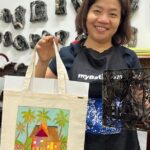
Batik is one of Malaysia’s most recognizable art forms, and this short class makes it practical. I like the way the session is hands-on from start to finish, and I also love that you bring home your own finished piece. You’re not stuck watching—there’s real painting involved and you get help if you need it.
One thing to consider: you only have about 45 minutes, so the goal is creating a small, satisfying result—not producing a giant, highly detailed artwork. If you like slow, careful craft time, plan for a fast pace and go in with simple color ideas.
In This Review
- Key things to know before you go
- Batik Workshop Center near the Twin Towers: why this is worth your time
- Meeting point and getting there from central KL
- What batik coloring really means here: wax-resist in practice
- Your workshop timeline: from pre-waxed pattern to finished cloth
- The teaching style: what “patient and friendly” looks like in real craft time
- The stop after class: café and batik gallery time
- Price and value: why $16 makes sense for what you get
- Family-friendly details that matter for adults too
- What to bring, what to wear, and how to avoid color stress
- Should you book a myBatik batik coloring workshop?
- FAQ
- How long is the batik coloring workshop?
- What is included in the ticket price?
- Can I take my batik home?
- Are food and drinks included?
- What are the opening hours and last entry time?
- Is this workshop suitable for children?
Key things to know before you go
- Wax-resist dying, explained in plain steps: start with pre-waxed, patterned fabric and learn how the process works.
- You choose the colors: either follow a design or mix primary colors to create secondary shades.
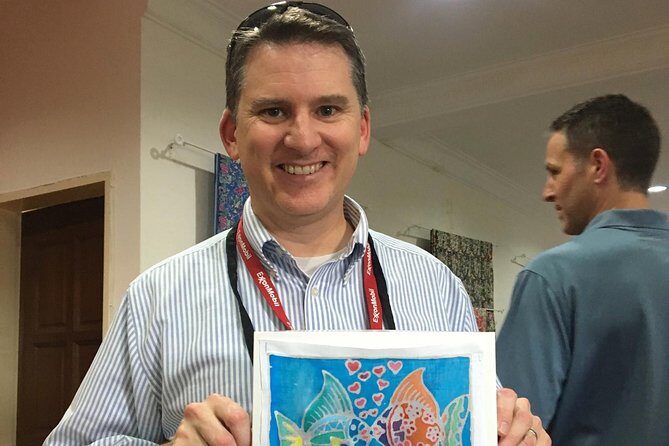
- You’ll take something home: a square cloth around 7.8 inches (20 cm) across.
- Private feel for your group: only your group participates, so it’s easier to ask questions.
- Guide support is part of the value: the experience has a strong reputation for patient, friendly teaching and even photo/video help.
- A full mini stop after class: access to a garden café area plus a batik gallery right nearby.
Batik Workshop Center near the Twin Towers: why this is worth your time
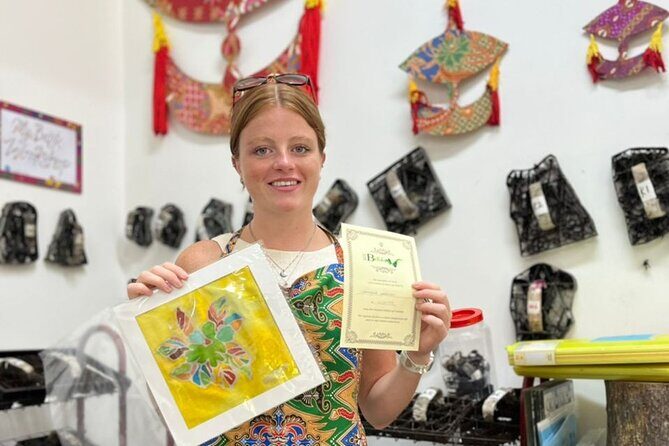
Kuala Lumpur can feel like a blur of big sights and fast-moving schedules. This is a different way to spend time—hands-on cultural learning that fits neatly into a busy day. The workshop is set up as a short creative session focused on one clear outcome: you learn the batik method and you leave with your own painted batik cloth.
What makes it especially good value is the balance between instruction and participation. You get the basics of Malaysian batik and then you actually do the coloring. That matters, because batik looks complex, but the workflow is teachable in a short timeframe.
Also, it’s family-friendly in a real way. Kids who are old enough can participate meaningfully, and adults get to do something creative instead of just observing.
A few more Kuala Lumpur tours and experiences worth a look



Meeting point and getting there from central KL
The activity starts at Embun/Emery @ Kemensah, on Jln Tiara Kemensah 3 in Ampang (Selangor). The workshop center itself is described as being a short distance from the Kuala Lumpur Twin Towers, plus close to downtown attractions and transport.
That combination is useful: you can reach it without a long, stressful commute, but it still feels like you’re going somewhere specific for a local craft. If you’re doing the Twin Towers area anyway, this is an easy add-on. If you’re staying farther out, you’ll likely want to plan transit so you arrive with enough time to settle in before the class starts.
The good news: it’s listed as near public transportation, and you’ll get a mobile ticket. That keeps the day simple.
What batik coloring really means here: wax-resist in practice
Batik in Malaysia is known for wax-resist dying, a method that’s been practiced for hundreds of years across Southeast Asia. The key idea is simple: wax resists dye. So the areas where the wax covers the fabric won’t absorb the color, creating crisp patterns once the dyeing and wax handling are done.
In this workshop, you don’t start from scratch with wax carving. Instead, you begin with a piece of fabric that’s already pre-waxed with a pattern. That’s a huge practical advantage for a short class. It means you can focus on the part that most people find fun: choosing colors and filling them into a design.
You also learn how Malaysian batik tends to differ in colors and patterns compared with batik traditions elsewhere in the region. That context helps your artwork feel more intentional, because you’re not just painting—you’re making choices inside a real cultural process.
Your workshop timeline: from pre-waxed pattern to finished cloth
Plan on roughly 30 to 40 minutes (and about 45 minutes in the overall class framing). That’s not a lot of time, but it’s enough to create a clear result if you follow the steps and keep your colors straightforward.
Here’s how the class experience is structured:
- Step 1: Start with the patterned fabric
You’re given an undyed fabric piece that already has the pattern pre-waxed. This means your job is to color within a defined layout.
- Step 2: Learn the basics as you go
You’ll get the basics of how batik works and follow the process from start to finish. You’ll also understand how the wax-resist approach shapes the final look.
- Step 3: Pick your colors
You’ll choose from available designs and colors. The class also covers mixing primary colors to create secondary hues, so you can go beyond basic color choices if you want to experiment.
- Step 4: Paint and finish
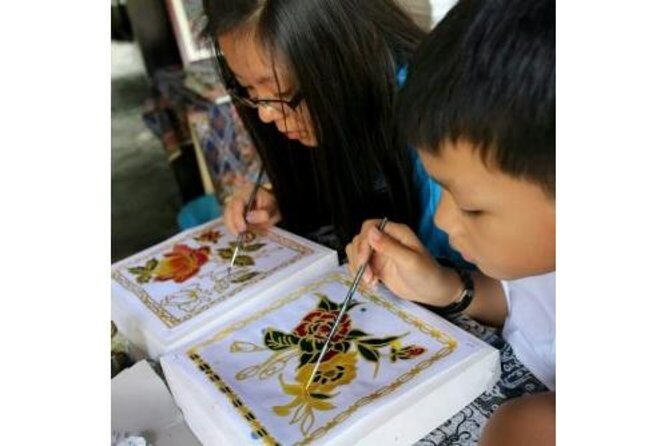
The practical portion is the painting/coloring itself. You fill in the design and learn the right approach while you work, rather than trying to figure it out alone.
- Step 5: Bring it home
After the workshop, you can take home your creation: a square cloth about 7.8 inches (20 cm) across. It’s small enough to be feasible for a 45-minute session, but big enough to be a real souvenir.
Because the class is short, I suggest you decide your color direction early. If you show up with a simple plan—like 2 to 3 main tones—you’ll finish feeling proud, not rushed.
The teaching style: what “patient and friendly” looks like in real craft time
The workshop’s reputation is unusually strong for one simple reason: you get real human support during the creative work. In particular, Emilia is specifically mentioned in reviews as incredibly patient, warm, and funny, and that matters more than people expect.
In a batik coloring class, patience isn’t just a personality trait—it directly affects your outcome. If the instructor helps you at the right moments, you’ll make fewer mistakes, waste less time, and walk away with a cleaner, more confident result. Reviews also highlight that the guide helps with photos and videos so you can remember the process.
If you’re the type who likes a calm pace (even within a short session), this style makes the experience feel easy. If you’re traveling with kids, it’s even more important. A short craft lesson can go sideways if the teaching isn’t flexible, but the class is designed as a guided activity, not a test of skill.






The stop after class: café and batik gallery time
The workshop isn’t just a drop-in paint session and then out the door. After you finish, you’ll have access to a nearby garden café and batik gallery area.
That add-on is practical. You’ll likely have a bit of downtime after finishing your cloth—time to cool off, grab a drink, and look at more batik examples before you head back out into the city. It turns the day from a single activity into a small cultural mini-moment.
Also, the workshop center has a café on site. The center is described as offering coffee and tea plus all-day breakfast, lunch, and tea-time options. Food and drinks aren’t included in the workshop price, but at least you don’t have to hunt around immediately after finishing.
There’s also a handmade gift shop at the center. Even if you don’t plan to buy anything, it’s nice to browse while you’re waiting for the day’s next step.
Price and value: why $16 makes sense for what you get
The price is $16.00 per person, and all materials are included—plus local taxes. In real terms, that means you’re paying for two things:
1) the teaching and guidance to make sure you can complete the process, and
2) the supplies/tools used during the workshop.
That’s the big value point. Craft workshops often sneak costs in later through extra tools, materials, or fees. Here, it’s clearly stated that there are no hidden costs for materials during the workshop.
What’s not included is food and drink, and transportation to and from attractions. That’s normal, but it helps you budget: add your preferred meal or snack before or after class, and plan transit like you would for any downtown activity.
Also consider your time value. The session length is short, and it runs multiple times throughout the day. If you’re visiting Kuala Lumpur and want one solid cultural activity that doesn’t eat your whole afternoon, this price-to-time ratio is hard to beat.
Family-friendly details that matter for adults too
This is aimed at families, but adults benefit too. Kids get hands-on time creating something they can take home, and adults get a low-pressure way to learn a traditional craft technique.
The key rule: children aged 7 and above must be accompanied by an adult. If you’re traveling with younger kids, you’ll want to reconsider or check with the provider for the best fit—your planning needs to match the listed age requirement.
Since the workshop is private for your group, family groups can move at a comfortable pace and ask questions without blending into a larger crowd. That private feel is one of the reasons people tend to rate this kind of workshop highly.
If you’re a solo traveler, you’ll also likely appreciate the focused attention. Craft learning is simpler when the instruction isn’t diluted across many unrelated participants.
What to bring, what to wear, and how to avoid color stress
The listing says all materials are included, so you don’t need to bring tools. But you still want to think about comfort and mess management.
A few practical tips that will help:
- Wear something you don’t mind getting stained. Batik dye/color work can be unpredictable even when guided carefully.
- Plan for a short travel window afterward. You’ll be carrying your finished 20 cm square cloth, so keep it protected from dirt and dust.
- Decide on a few color preferences ahead of time. If you want to play with mixing primary colors into secondary hues, be ready for some experimentation—but don’t try to design a full color palette in one sitting.
Also, the workshop last call is 1pm, and it runs from 8am to 3pm. So if you’re touring late in the day, schedule it earlier rather than hoping for a last-minute slot.
Should you book a myBatik batik coloring workshop?
If you want a cultural experience you can actually do with your hands, I’d book this. The strong draw is the combination of short format + real instruction + a take-home result. For a relatively low price, you get a guided introduction to wax-resist batik and a souvenir that feels personal.
Book it especially if:
- you’re visiting KL and want something more meaningful than another photo stop,
- you’re traveling with kids age 7+,
- you like guided crafts where you’re helped step-by-step, and
- you want a souvenir that’s connected to a traditional technique.
Skip it or rethink your expectations if:
- you want a long, slow, detailed art project (this is intentionally compact), or
- you’re only interested in observing rather than painting.
Overall, this workshop hits a sweet spot: it’s family-friendly, guided, and structured so most people can complete it successfully.
FAQ
How long is the batik coloring workshop?
The duration is listed as approximately 30 to 40 minutes, with the workshop described as a hands-on class around 45 minutes.
What is included in the ticket price?
All materials, tools, and supplies needed for the workshop are included, along with local taxes. There are no hidden material costs.
Can I take my batik home?
Yes. After the workshop, you may take home your painted creation: a square cloth about 7.8 inches (20 cm) across.
Are food and drinks included?
No. Food and drinks are not included. You’ll have access to a nearby café area after the workshop.
What are the opening hours and last entry time?
The center is open from 8am to 3pm every day, including public holidays. Workshop last call is 1pm.
Is this workshop suitable for children?
Children aged 7 and above can participate, but they must be accompanied by an adult.