REVIEW · KOTA KINABALU
Mari Mari Cultural Village
Book on Viator →Operated by TYH Borneo Tours and Travel SDN BHD · Bookable on Viator
A short trip, big cultural hands-on time. Mari Mari Cultural Village turns a day out of Kota Kinabalu into a 3-hour sampler of traditional dance showcase moments, living village demonstrations, and real Sabah rhythms, all tied together with a pickup and drop-off routine that keeps you from wrestling with transport. I especially like the practical, do-it-yourself feel of the activities, from campfire tricks to toy-like skills you can watch and try in a group setting.
Two things I’d highlight fast: the variety of interactive demonstrations in the tribe houses and the included meal setup that keeps the day from feeling rushed or snack-only. One drawback to keep in mind: pickup issues can happen, so I strongly suggest you double-check your pickup details and build in a small buffer for waiting time.
In This Review
- What makes this tour feel worth it
- Key things to know before you go
- From Kota Kinabalu to the Village: The Ride and the Setup
- Tribe Houses and Living Demonstrations: What You’ll Actually See
- Campfire Without a Lighter, Blow-Pipe Shooting, and Warrior-Vest Craft
- The Murut Connection: Magunatip Bamboo Dance in Action
- Rice-Wine Tasting and Traditional Treats: Food as Culture
- Live Entertainment and Group Energy: How the Show Fits the Day
- Price and Value: Is $100 a Good Deal?
- Who This Tour Suits Best (and Who Might Skip It)
- Booking Tips to Avoid Pickup Headaches
- Should You Book Mari Mari Cultural Village?
- FAQ
- How long is the Mari Mari Cultural Village tour?
- What does the tour cost?
- Is pickup and drop-off included?
- Are there extra charges for pickup at outskirt hotels?
- What’s included in the tour?
- Is a traditional lunch provided, or is it snacks only?
- What kind of performances are included?
- Do I need a passport for booking?
- How soon will I get confirmation after booking?
- What is the cancellation policy?
What makes this tour feel worth it
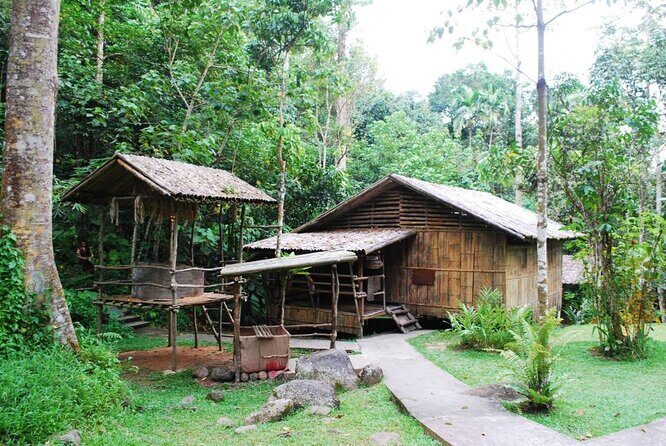
This is a small-group experience (maximum 15 travelers) with an expert local guide and an air-conditioned vehicle, which matters when you’re doing a lot in a short window. You’ll travel out along roads framed by greenery, then spend most of your time inside the cultural village, moving house to house and watching live entertainment at a comfortable pace.
Key things to know before you go
- Small group size (up to 15) means you’re more likely to get personal attention from the guide
- Live performances include traditional dance showcases and an ethnic dance segment
- Hands-on demonstrations range from practical craft to skill-based activities
- Included lunch plus coffee/tea saves you the mental math during the day
- Outskirt pickup fee applies for areas beyond Kota Kinabalu city and the 1 Borneo area
- Mobile ticket makes it simple to show up once you have confirmation
You can also read our reviews of more tours and experiences in Kota Kinabalu.


From Kota Kinabalu to the Village: The Ride and the Setup

The day starts with an air-conditioned vehicle picking you up and getting you out of the city. The drive itself is part of the experience: you’ll move through long roads lined with greenery under big skies, so the tour doesn’t feel like you’re skipping straight to an attraction. It’s a gentle shift from city noise to a more relaxed pace.
Because this is a 3-hour tour, the schedule is built to keep things moving. You’re not meant to wander for half a day on your own. Instead, you’ll get guided context as you pass through the village areas and sit through performances, then you’ll wrap with a return transfer back to your accommodation area.
Here’s the practical point: confirm exactly where you’re being picked up (and which part of town counts as city area vs outside). The tour includes pickup and drop-off outside your accommodation, but there can be extra charges for outskirt hotels.
Tribe Houses and Living Demonstrations: What You’ll Actually See
Mari Mari is set up like a cluster of tribe homes. Each house has its own cultural display, plus interactive demonstrations that help you move from watching to participating. You’re not just looking at static objects. You’re seeing how daily life and traditions get presented through activities, stories, and hands-on moments.
I like that the guide acts like a translator between cultures, not a lecturer. The village format makes it easier to ask questions while you’re standing right there. And because the tour is designed for families and most travelers, the pacing stays readable. You won’t need special athletic skills, but you should be comfortable being close to performance spaces and demonstration areas.
Expect movement. You’ll likely bounce between huts, and some parts lean more toward watching while others invite your turn. Keep your camera ready, but also plan on enjoying the moment with your eyes first, because the guide will be explaining what you’re seeing as you go.
Campfire Without a Lighter, Blow-Pipe Shooting, and Warrior-Vest Craft
Some cultural tours stop at show-and-tell. This one gives you skills you can recognize as practical, even if you’re not mastering them. One standout is learning how to start a campfire without a lighter, using natural tools. It’s one of those demonstrations that makes you slow down, because you can tell it’s built on method, patience, and attention to materials.
You’ll also see blow-pipe shooting. It’s entertaining, but it’s more than a trick. It connects to traditional hunting technology and the idea of accuracy and breath control. Even if you only watch, you’ll understand why this style of tool matters.
Another fascinating moment is the craft of cutting tree barks to make traditional warrior vests. That activity is a good reminder that many cultural items start with work you wouldn’t guess from a finished product. You’re seeing the process behind the look, which makes the village feel more human and less like a museum set.
If you want a fun, low-pressure challenge, you may get the chance to jump for a prize on the Lansaran, a traditional trampoline-like floor built into one of the tribe houses. Even if you don’t go for it, watching the energy around that moment is part of the experience.
The Murut Connection: Magunatip Bamboo Dance in Action
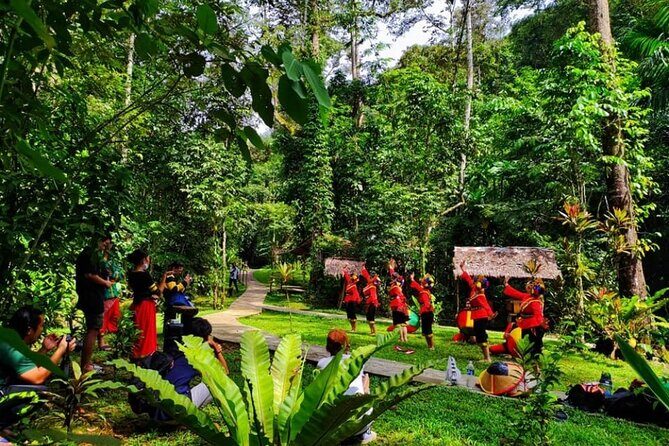
Music and movement are a big part of the day here. One of the highlights is the chance to see Magunatip, a bamboo dance belonging to the Murut Tribe. Bamboo dances have their own rhythm and group timing, and the performance makes it feel like the music is happening at two levels: the people and the instruments.
If you’re the kind of traveler who enjoys cultural performances more than craft talk, you’ll likely appreciate how the tour schedules dance at a moment when your energy is still high. There’s also a broader traditional dance showcase included, so you get a sense of Sabah’s dance variety rather than one style only.
Practical tip: wear shoes that handle uneven ground. You’ll be standing and moving around village areas, and bamboo-dance viewing spots can involve stepping around people and equipment.



Rice-Wine Tasting and Traditional Treats: Food as Culture
Food isn’t just a break here. It’s part of how the village story gets told. You may be offered rice-wine tasting, plus traditional treats that are presented as part of daily life and community identity.
The tour also includes a buffet spread for lunch, with dishes that fit Sabah’s cultural identity. You’ll be eating while surrounded by nature, which helps the lunch feel like part of the outing, not an add-on. Coffee and/or tea come with the meal as well.
Now, a reality check for picky eaters: with buffet-style food in a cultural setting, you’ll likely see unfamiliar items and flavors. The upside is that you’ll also get familiar “anchor” foods, because they include enough variety to serve a mixed group of visitors. If you’re sensitive to spice, go slow at first and ask the guide what’s mild.
The goal isn’t to “rate” the food like a restaurant review. It’s to notice how the meal supports the cultural pacing of the day.
Live Entertainment and Group Energy: How the Show Fits the Day
Because this is a guided village tour, entertainment isn’t a random stage stop. It’s built into the flow of walking through the tribe houses. You’ll watch live ethnic dance performance moments, then move back into the demonstration areas.
I like tours like this when they keep energy steady. There’s enough action to avoid boredom, but it’s not nonstop. The group size cap of 15 also helps. Smaller groups can keep performances from feeling chaotic, and it’s easier for the guide to manage timing without leaving you behind.
If you’re traveling with family, this format works well: younger folks can enjoy the action and try activities like the Lansaran challenge, while adults can focus on craft demonstrations, tool-based skills, and dance context.
Price and Value: Is $100 a Good Deal?
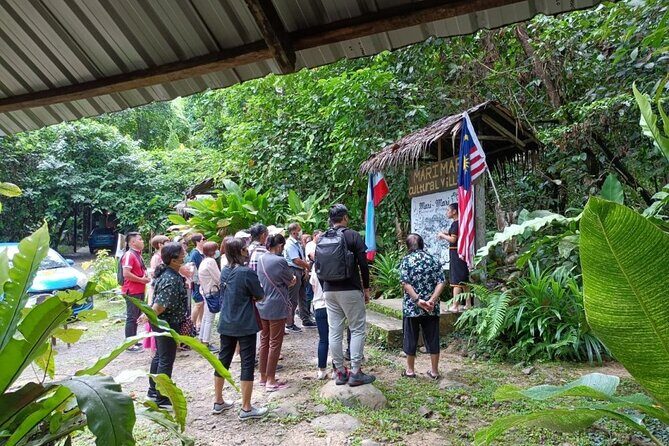
At $100 per person for about 3 hours, the question is value for your time. Here’s how I’d judge it: you’re paying for transportation with air-conditioning, a local guide, live entertainment, and an included meal with coffee/tea. You’re also paying for a curated flow through multiple tribe-home demonstrations instead of piecing together separate activities on your own.
There are two real “value boosters” built in:
- Pickup and drop-off reduces friction, especially if you don’t want to deal with taxis on a tight schedule.
- Lunch plus snacks means you’re not managing your budget mid-day when you’re hungry and hot.
Group discounts are listed as part of the offering, so if you’re traveling with friends, it can get even better. Also, the tour being commonly booked about 7 days in advance suggests it’s popular but not so scarce that you need to book months ahead.
The only time the price might feel steep is if you strongly prefer independent travel and hate structured schedules. Otherwise, for a compact cultural day with multiple elements, it’s fairly priced.
Who This Tour Suits Best (and Who Might Skip It)
This tour is a strong match if you want to get out of Kota Kinabalu for nature-and-culture time without committing to a full day. You’ll enjoy it if you like interactive demonstrations, dance performances, and a clear plan that keeps you from guessing what to do next.
You should consider a different option if you dislike being in a guided group format or if you prefer quiet, self-paced museum-style viewing. The village experience has movement and performance energy.
I also think it suits travelers who want cultural context more than a checklist of photos. The guide’s role matters here because you’re learning what each demonstration connects to.
Booking Tips to Avoid Pickup Headaches
One review included a painful pickup miss: a morning tour reservation didn’t result in pickup, the person waited over an hour, then had to contact a tourism office and switch to an afternoon tour. The good news is that the company did respond and arrange an alternate time, but it’s still a reminder that you should take pickup details seriously.
So here’s how you can protect yourself:
- Confirm your pickup time and the exact pickup point the day before.
- Keep your message thread open with the provider so you can respond fast if there’s an update.
- If you’re staying near the city core, pickup is included as part of the service. If you’re farther out, remember there can be an extra MYR30 per person pickup charge for outskirt hotels beyond Kota Kinabalu city area and outside the 1 Borneo area.
A missed pickup isn’t common, but your best defense is simple preparation.
Should You Book Mari Mari Cultural Village?
Yes, if you want a compact 3-hour cultural outing that mixes practical skill demonstrations, live dance performance, and a real meal in a village setting outside Kota Kinabalu. I’d book it for the hands-on activities and the guided flow through multiple tribe homes, because that’s where the experience becomes more than a photo stop.
Book it sooner rather than later if your schedule is tight. And when you do, take pickup details seriously and set yourself up to avoid waiting around.
If you’re looking for a thoughtful, guided taste of Sabah’s indigenous culture with transportation and lunch handled, this tour earns its strong recommendation rate.
FAQ
How long is the Mari Mari Cultural Village tour?
It runs for approximately 3 hours.
What does the tour cost?
The price is $100.00 per person.
Is pickup and drop-off included?
Yes, pickup and drop-off are offered from outside your Kota Kinabalu accommodation area.
Are there extra charges for pickup at outskirt hotels?
Yes. Additional charges of MYR30 per person apply for outskirt hotels pickup, including hotels outside Kota Kinabalu city area and outside the 1 Borneo Shopping mall area.
What’s included in the tour?
Included items are lunch, a local guide, live entertainment, air-conditioned vehicle transport, and coffee and/or tea. Meal is also listed as included.
Is a traditional lunch provided, or is it snacks only?
A buffet lunch is included, along with snacks.
What kind of performances are included?
The tour includes live entertainment, including traditional dance showcase and an ethnic dance performance, with bamboo dance Magunatip also mentioned.
Do I need a passport for booking?
Yes. You’ll need the passport name, number, expiry date, and country for all participants at the time of booking.
How soon will I get confirmation after booking?
Confirmation is received at the time of booking, unless you book within 1 day of travel. In that case, confirmation is received as soon as possible subject to availability.
What is the cancellation policy?
This experience is non-refundable and cannot be changed for any reason. If you cancel or request an amendment, the amount paid is not refunded.
If you tell me your travel dates and where you’re staying (near city center or closer to 1 Borneo), I can help you think through the pickup charge risk and which time slot usually makes the most sense.