Market smells beat any cookbook. This small-group Malaysian cooking class starts at the TTDI Wet Market and uses what you see to drive what you cook. You get culture with your apron, not just recipes.
I especially like the small-group size (up to 14), because questions don’t get lost in the shuffle. The format is hands-on and step-by-step, so even if you’ve never cracked an egg in a wok, you’ll still feel in control.
One thing to consider: hotel pickup and drop-off aren’t included, and that can change the real price if you expected transfers to be part of the deal.
Key things to know before you go
- TTDI Wet Market tour at Pasar Besar Taman Tun Dr. Ismail (TS37) is the warm-up for your cooking session
- Max 14 people means you’ll actually get coaching, not just watching
- You cook core Malaysian favorites: char kway teow, nasi lemak, and roti canai
- Lunch is included and is what you prepare during the class
- Classes run Tuesdays through Saturdays, typically 8:30am to 1:30pm
- Vegetarians and vegans can join with ingredient substitutions
In This Review
- Kuala Lumpur’s TTDI Wet Market: where your ingredients start
- Cooking class basics: hands-on stations, English instruction, and pacing
- The dishes you’ll cook: char kway teow, nasi lemak, roti canai
- The meal you’ll eat: communal lunch, conversation, and results
- Price and logistics: what $149.96 really buys you
- Who this is for: beginners, food lovers, and diet-friendly learners
- Practical tips to make the morning smoother
- Should you book this cooking class?
- FAQ
- Where does the experience start?
- What time does it start and when does it end?
- How long is the cooking class with market tour?
- What days do classes run?
- Is the class taught in English?
- What’s included in the price?
- Is hotel pickup or drop-off included?
- Can vegetarians or vegans join?
- How big is the group?
- What if I need to cancel?
Kuala Lumpur’s TTDI Wet Market: where your ingredients start
The day begins at Pasar Besar Taman Tun Dr. Ismail (TTDI Wet Market). You’ll meet at TS37, and the class officially starts at 8:30am—but you should plan to arrive around 8:15am. The sooner you’re there, the more time you have to settle in and get your bearings.
This market stop matters because Malaysian cooking is ingredient-driven. You’re not just learning names; you’re learning what different herbs, sauces, and produce do in real meals. One reason people come back to this style of tour is that the market tour feels like a guided shortcut to understanding flavor.
If you’ve ever tried to cook Malaysian food at home from a recipe with a long list of items you’ve never seen, you’ll appreciate what you’re doing here. You’ll see the raw ingredients up close, and that helps you connect the cooking steps later in the kitchen.
In at least one class experience, the market tour was led by Sally, and the focus was on traditional herbs and how to use them. Even if you only catch pieces of the explanation, seeing the ingredients in context gives you a better mental map. You’ll leave less confused at the grocery store—and more confident.
A small caution: markets move fast. Wear shoes you don’t mind getting a little dusty, and keep your plan flexible. If you get tense about timing, arrive early and watch what’s going on first.
Cooking class basics: hands-on stations, English instruction, and pacing
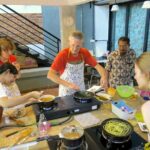
After the market tour, you shift into the cooking school portion of the experience. The format is totally hands-on, with step-by-step teaching at your own kitchen station. You’ll also get a health and safety briefing first, which is especially useful if you’re not used to hot equipment and unfamiliar utensils.
One of the biggest practical wins here is the pacing. The description is built for both beginners and people who already cook. That means you’re not forced to keep up with a single fast “one-size-fits-all” demonstration. You can learn at your own speed while still working as a group.
The class runs in English, which makes it easier to ask questions and follow instructions without decoding. When the instructions are clear and you can understand what the instructor is saying, you make fewer mistakes—and you get more satisfaction from the process.
Group size plays a role too. With a maximum of 14 people, you’re far more likely to get direct help when something doesn’t go right. That support can be the difference between feeling like you’re participating versus feeling like you’re just standing around.
This is also a good option if you’re cooking with someone who has a different comfort level. You can both learn the basics without slowing the whole experience down too much.
You can also read our reviews of more shopping tours in Kuala Lumpur

The dishes you’ll cook: char kway teow, nasi lemak, roti canai
Your menu is built around Malaysian comfort food—meals people actually eat often, not just fancy tourist dishes. The class includes dishes such as:
- Char kway teow (fried noodles)
- Nasi lemak (coconut rice)
- Roti canai (flaky Indian bread)
Even without going deep into technical minutiae, these dishes give you a well-rounded taste of Malaysian cooking styles. Nasi lemak teaches the idea of coconut-based richness. Char kway teow shows how fried noodles become a full meal with the right balance of ingredients. Roti canai gives you the bread-and-dipping side of Malaysian food culture.
What makes this valuable for you is transferability. These are dishes you can reasonably recreate later because the class doesn’t treat them like mystery techniques. You learn process, not only outcomes.
You’ll likely get tips that help you troubleshoot. For example, if your noodles don’t look right at first, a good instructor will show you how to adjust your approach rather than leaving you stuck. In one experience, the cooking teacher was Irene, described as brilliant and fun, and that matters because encouragement helps you stay focused when something takes a bit longer than you expected.
Also, because you’re cooking at your station, you’re building muscle memory. That’s the kind of learning you don’t get from watching a cooking video and calling it practice.
If you’re planning what to do after this, remember you’ll be cooking and eating until the end of the session, typically around 1:30pm. Don’t schedule a long travel day right before unless you can handle the morning start.
The meal you’ll eat: communal lunch, conversation, and results
Lunch is included, and it’s the food you prepare during the class. That’s a key difference from many cooking demos where you watch a chef and only sample a small plate. Here, you’re part of the production—and then you get to enjoy the outcome.
The tour description also emphasizes communal dining and conversation. In practical terms, that means you’re not just eating; you’re comparing what you made with what others made. If one station’s dish looks different, you can ask why. That kind of peer learning is often more useful than listening to a lecture.
One more benefit: when you eat the dishes you cooked, you understand how they should taste in the context of a full meal. That makes it easier to remember what to adjust next time.
If you’re vegetarian or vegan, this is where substitutions come in. The experience notes that vegetarian and vegan participants are welcome and that ingredients can be substituted. You’ll still get the structure of the class and a proper lunch—just adapted to your diet.
In Malaysian food, substitutions can shift flavor slightly, so ask questions early. If you’re strict vegetarian or vegan, clarify your needs before cooking begins so your substitutions stay consistent across dishes.
Price and logistics: what $149.96 really buys you
The price is $149.96 per person, and it’s commonly booked around 10 days in advance. That gives you two signals:
1) people plan ahead for the session, and
2) availability can run out if you wait.
So is it good value? For me, value comes from three places: real instruction, real cooking, and included food.
You get:
- the market tour (as part of the experience),
- a hands-on cooking class with equipment and ingredients provided,
- and lunch at the end (food you made).
That’s a lot more than a “cookbook tasting.” You’re paying for learning time plus the meal output, not only for a single guided walk.
However, logistics can quietly affect value. Hotel pickup and drop-off are not included, and that means you’ll want to budget time and transit. If you prefer door-to-door convenience, you should confirm exactly what transfer options exist when you book—because added transportation can change the total cost.
Also, note the tour runs with a minimum of 4 people and has a maximum of 14. If the schedule is important to you, don’t plan this as a last-minute idea.
If you’re comparing prices, compare apples to apples: included market tour, included lunch, and included cooking class materials. If one option includes only the cooking portion and another includes both market and lunch, the difference can look small at checkout but feels huge at the table.
Who this is for: beginners, food lovers, and diet-friendly learners
This class is designed for both beginners and experienced cooks. That’s great if you’re traveling with a mix of cooking confidence. You won’t be forced into a single pace.
It’s also a strong fit if you:
- want an authentic Malaysian food experience beyond restaurant eating,
- enjoy learning ingredients and herbs,
- like small-group activities where you can ask questions.
It’s especially good for people who learn by doing. You won’t just hear about nasi lemak or roti canai—you’ll handle ingredients and see how the steps connect.
Diet flexibility is another plus. Vegetarians and vegans can join, with ingredient substitutions. If you follow a plant-based diet, you often worry about being treated as an afterthought. Here, the experience explicitly welcomes you, which is a reassuring detail.
Where it might not fit: if you’re short on time, because it’s about 5 hours in total. The session is also anchored to a specific start time and meeting point in TTDI, so it’s not a “drop in whenever” kind of activity.
If you hate markets or feel anxious navigating crowds, you might find the market portion stressful. But if you can tolerate a morning market walk, you’ll likely enjoy the way it sets up your cooking session.
A few more Kuala Lumpur tours and experiences worth a look


Practical tips to make the morning smoother
A few things will help you get more out of the experience without overthinking it.
First, arrive early. You’ll be asked to be at the meeting point at least 15 minutes prior to start time. That small buffer gives you time to check in calmly and start the day without rushing.
Second, bring your appetite mindset. You’re not only cooking—you’re eating what you make. Eating at the end is included, and lunch is part of why the experience feels complete rather than token.
Third, plan your transport around ending at the meeting point. The experience ends back at the same meeting point, and hotel drop-off is not included. If you want to go straight to another place afterward, check your route ahead of time so you’re not guessing midday.
Fourth, lean on the instructors. English instruction is provided, and the group is small enough to ask for help. If something isn’t working, ask rather than waiting. That’s how you turn a possible cooking hiccup into a learning moment.
Finally, if you have dietary needs, flag them clearly. The experience states that vegans and vegetarians can be accommodated with substitution. Early clarity helps your meal match your expectations.
Should you book this cooking class?
I’d book it if you want a hands-on Malaysian food experience that goes beyond eating. The market tour plus cooking plus lunch combo is what makes it feel like real learning, not just a ticket to a kitchen.
You should also book if you value small-group instruction. With a maximum of 14 people, your questions have a better chance of getting answered, and your cooking station gets more attention.
Don’t book it blindly if you’re depending on hotel transfers for convenience. Hotel pickup and drop-off aren’t included, and if you end up paying extra for transportation, it can change the overall value quickly. Confirm what’s actually included for your final total before you commit.
If you want to understand Malaysian ingredients, cook iconic dishes like char kway teow, nasi lemak, and roti canai, and eat your results at 1:30pm, this is a solid, efficient way to spend a morning in Kuala Lumpur.
FAQ
Where does the experience start?
It starts at Pasar Besar Taman Tun Dr. Ismail TS37, at TTDI Wet Market (Pasar Besar Taman Tun Dr. Ismail) in Kuala Lumpur.
What time does it start and when does it end?
The class starts at 8:30am, and you should be ready by 8:15am. It ends back at the meeting point at about 1:30pm.
How long is the cooking class with market tour?
The duration is about 5 hours.
What days do classes run?
Classes run regularly Tuesday through Saturday.
Is the class taught in English?
Yes, the class instruction is conducted in English.
What’s included in the price?
Included are the market tour, all ingredients and equipment for cooking, and lunch (the food you prepare during the class).
Is hotel pickup or drop-off included?
No. Hotel pickup and drop-off are not included, and the activity ends back at the meeting point.
Can vegetarians or vegans join?
Yes. Vegetarians and vegans are welcome, and ingredients can be substituted.
How big is the group?
The class has a maximum size of 14 travelers and requires a minimum of 4 pax to operate.
What if I need to cancel?
This experience is non-refundable and cannot be changed. If it’s canceled because the minimum number of travelers isn’t met, you’ll be offered a different date/experience or a full refund.