REVIEW · KUALA LUMPUR
Batu Caves & Putrajaya City Tour
Book on Viator →Operated by RIYAS ADVENTURE TIME · Bookable on Viator
Temple air meets modern city shine in half a day. This Batu Caves & Putrajaya tour strings together limestone Hindu cave temples and some of Malaysia’s most distinctive late-20th-century architecture, with quick photo stops built around famous landmarks.
I especially love the 272 steps up to the main cave temple, and I like how Putrajaya focuses on clear, recognizable set pieces like the pink Putra Mosque and the green-domed Perdana Putra complex.
One drawback to plan around: pickup is geared to Kuala Lumpur city areas. If you’re starting from Port Klang on a cruise, expect an additional pickup surcharge.
In This Review
- Key Points That Matter Before You Go
- A Smart Half-Day Mix: Caves, Mosques, Bridges, and Craft
- Batu Caves: The 272 Steps Are the Main Attraction
- How to handle the climb
- What makes it special visually
- Seri Wawasan Bridge and Putrajaya Lake: Where the City Shows Its Style
- Perdana Putra and Putra Mosque: Pink Dome Meets Government-Grade Presence
- Perdana Putra (the big green dome)
- Putra Mosque (the pink, rose-colored granite look)
- Masjid Besi, Millennium Monument, and the Moroccan Pavilion Stops
- Masjid Tuanku Mizan Zainal Abidin (Masjid Besi)
- Millennium Monument
- Moroccan Pavilion Putrajaya
- The Optional Putrajaya Lake Club Cruise (What’s Included vs Not)
- Batik Chong: A Craft Stop That Breaks Up the Architecture Run
- Driver-Led Day Trips: How the No-Guide Format Plays Out
- Price and Value: Why This One Works for Many Budgets
- Who This Tour Fits Best
- Should You Book This Batu Caves & Putrajaya Tour?
- FAQ
- Is hotel pickup and drop-off included?
- How long is the Batu Caves & Putrajaya City Tour?
- Do I need a tour guide?
- Are tickets included for the main sights?
- Is the Putrajaya Lake cruise included?
- What is the group size limit?
Key Points That Matter Before You Go
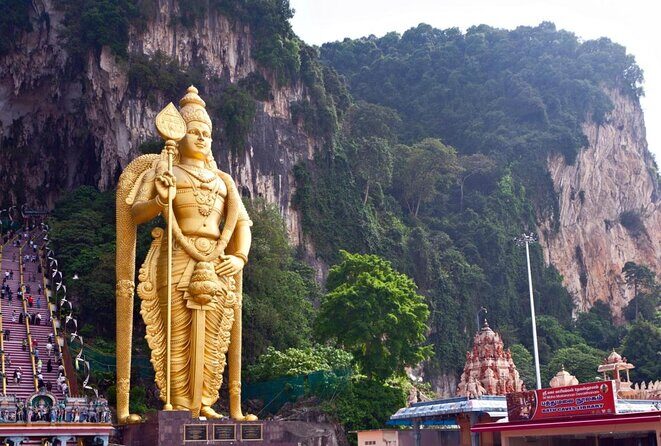
- 272 steps at Batu Caves: the climb is the main event, so wear grippy shoes and plan your pace
- Putrajaya in tight time blocks: you get lots of iconic stops without sitting on a bus all day
- Most stops are admission-free: the big optional add-on is the Putrajaya Lake Club cruise
- A driver runs the day: English-speaking driver is included, and in some groups the narration can be excellent
- Max 15 travelers: small-group feel, which usually helps with timing and photo breaks
- Pickup rules can affect cruises: Port Klang pickup is extra, while Kuala Lumpur hotel pickup is standard
A Smart Half-Day Mix: Caves, Mosques, Bridges, and Craft

This tour works because it gives you two very different sides of Malaysia in one outing. Batu Caves is all about the physical experience—climb those steps, see the ornate shrine spaces, and enjoy the dramatic cave setting. Putrajaya, on the other hand, is a design-forward city plan: wide viewpoints, lake views, and a lineup of buildings in recognizable materials and color tones.
The price is also the selling point. At about $39.98 per person, you’re paying mostly for transport and time-efficient sight routing. The structure matters: an air-conditioned vehicle, hotel pickup & drop-off, and a group size that stays small (up to 15 travelers) makes it feel more like a guided day trip than an all-day scramble.
Do note the format: there’s no dedicated tour guide included. That said, you may still get great storytelling from an English-speaking driver on some departures—people have singled out drivers by name (like Richard and Nami) for being knowledgeable and flexible with time.
You can also read our reviews of more city tours in Kuala Lumpur


Batu Caves: The 272 Steps Are the Main Attraction
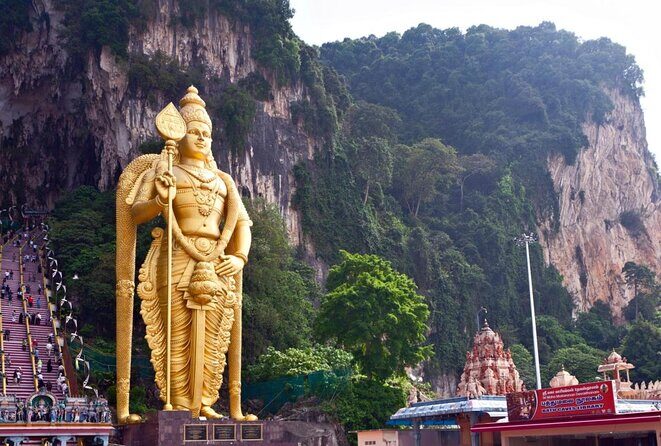
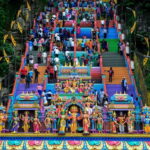
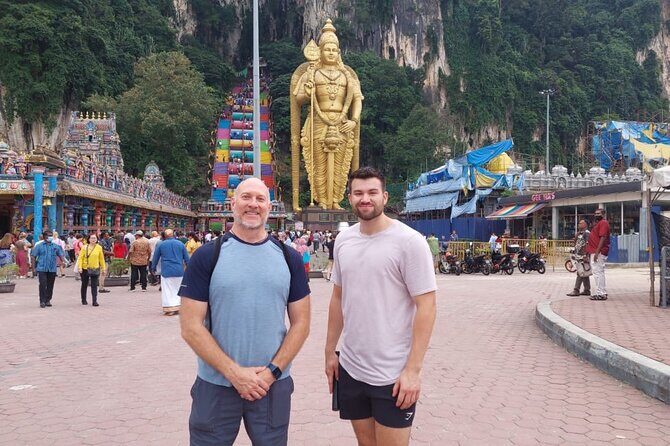
Batu Caves sits in a limestone outcrop and is built around cave temple spaces. There are three big caves, with the main cave housing ornate Hindu shrines. The big reason people show up is the climb: you’ll tackle 272 steps to reach the temple.
How to handle the climb
This isn’t the kind of stop where you rush in, snap a picture, and leave. Even when you have a planned time block (you’ll have about 45 minutes at Batu Caves), you need a rhythm:
- Start slower than you think you should. The steps are the physical peak of the day.
- Bring shoes you can trust on stone surfaces.
- Plan for photo pauses, because that’s when the cave and shrine details really land.
If you’re expecting an easy, flat sightseeing stop, you’ll be disappointed. If you’re okay with a short but real climb, it’s worth treating as the highlight.
What makes it special visually
Even from the approach, Batu Caves has that high-contrast look: gray limestone textures, colorful shrine elements, and big temple spaces that feel different from outdoor city sightseeing. It’s not just “a temple stop.” The cave environment changes how the whole place feels.
And timing matters. You typically won’t have enough time to wander everywhere like you would on a personal visit, so what you want from Batu Caves is exactly what the tour delivers: the essentials, with enough time to climb and still enjoy the view once you’re up there.
Seri Wawasan Bridge and Putrajaya Lake: Where the City Shows Its Style
After Batu Caves, you head to Putrajaya for quick, focused architecture and water views. The first stop is Seri Wawasan Bridge, one of the bridges in the city plan. It’s about 240 meters and designed with a futuristic form that borrows the shape of a sailing ship. It’s quick to see, but it’s one of those structures that looks better the closer you get, so don’t treat it as a photo-from-a-mile-away moment.
Next up is Putrajaya Lake, a 650-hectare man-made lake designed to act as a cooling system for the city and also as a recreation area (including fishing and water sports). For a lot of visitors, this is the “aha” stop. Putrajaya feels modern partly because the water and open spaces make the city look planned, not crowded.
These two stops are short—around 20 minutes each—but they work as the visual reset between caves and mosque architecture.





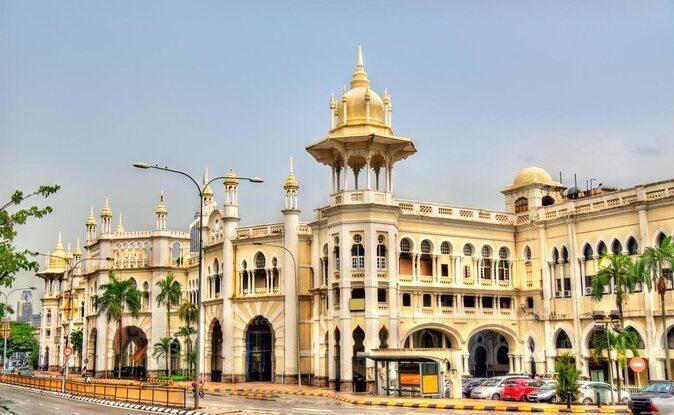
Perdana Putra and Putra Mosque: Pink Dome Meets Government-Grade Presence
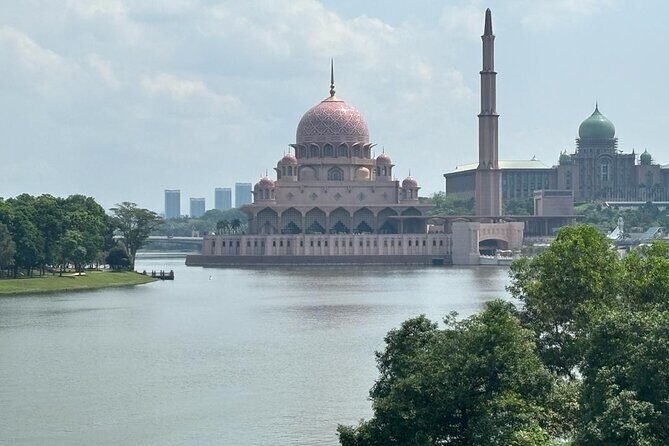
Putrajaya’s most famous skyline moments show up around the central-government zone.
Perdana Putra (the big green dome)
You’ll visit Perdana Putra, a monumental complex set atop a hill. The highlight here is the green-domed look and the sense of imposing scale. It’s described as a prime minister’s office complex, blending Islamic and modern architecture.
This is where you feel the city’s late-20th-century planning character. It’s not “old town charm.” It’s clean lines, deliberate symmetry, and building forms meant to be seen from multiple angles.
Putra Mosque (the pink, rose-colored granite look)
Then comes Putra Mosque, built in 1997 and known for its rose-tinted granite and distinctive pink dome. It’s right by the lake setting, and that matters—light hits the stone and dome in a way that feels almost like color-coded signage for the city. You’ll get about 20 minutes here.
If you’ve ever wanted one mosque stop that’s more about architecture and photos than a long museum-style visit, this fits. The time is short, but the visual pay-off is strong.
Masjid Besi, Millennium Monument, and the Moroccan Pavilion Stops
The later part of the tour keeps moving through landmarks that each bring a different design flavor. You’re not just doing one “big sight.” You’re sampling what Putrajaya is, block by block.
Masjid Tuanku Mizan Zainal Abidin (Masjid Besi)
This is the Iron Mosque, built primarily from steel with a “wire mesh” look and arcing forms. Even if you don’t know every architectural term, you’ll notice the material shift. It feels less like traditional stone-and-marble and more like modern structure-meets-religious design.
Millennium Monument
The Millennium Monument was designed in 2005 to usher in the new millennium. There’s a walkway that wraps around it, and you’ll see panels explaining Malaysia’s history. It’s a compact stop, but it’s the kind of place that works for a quick mental bookmark—something you can point to later when you remember the city.
Moroccan Pavilion Putrajaya
Then there’s the Moroccan Pavilion, designed to symbolize diplomatic ties between Malaysia and Morocco. It’s famous for detailed craftsmanship and an eye-catching appearance that’s easy to photograph. Time here is around 20 minutes, so come ready to focus on the exterior details rather than expecting a long walkthrough.
The Optional Putrajaya Lake Club Cruise (What’s Included vs Not)

Here’s the one part of the day that has a clear “optional, pay if you want” feel: Putrajaya Lake Club.
You’ll have a stop (about 45 minutes) that can include a sightseeing cruise on an air-conditioned boat with a capacity of 76 people. Gondola-style boat rides are also mentioned as an option. The key point: the cruise entrance is not included in the tour price.
If you hate the idea of paying extra, treat this as an “if the timing feels right” add-on. If you want a slower, more relaxed way to see the lake and city edges from the water, this is the best place to spend a little extra.
Batik Chong: A Craft Stop That Breaks Up the Architecture Run

Before the tour wraps up, you’ll stop at East Coast Batik Sdn Bhd (Batik CHONG). The idea is simple: after so many architecture photos, you get something tactile and cultural.
This is described as one of the oldest batik and handicrafts centres in the Klang Valley, established in 1974. At this stop, you can visit the gallery and learn that batik isn’t just cloth with patterns—it’s a craft with design thinking and process behind it.
Time here is short (about 20 minutes), so don’t expect a full workshop experience. But it’s a nice break from mosques and monuments, and it can help you bring home something that feels tied to the region.
Driver-Led Day Trips: How the No-Guide Format Plays Out
Because a tour guide isn’t included, your experience depends on what your English-speaking driver focuses on. The good news: several people have praised drivers for being knowledgeable and for giving enough time at each stop.
Two names have come up in standout ways:
- Richard, noted for being very knowledgeable and giving plenty of exploration time.
- Nami, noted for kindness and flexibility, and for working with time needed at Batu Caves.
What this means for you: you should go in ready to use the ride time for questions. If you’re the kind of traveler who likes context, ask what you should look for at each building. The best day trips are two-way.
Also, understand timing expectations. Even though the day trip is listed at about 4–5 hours, you may spend closer to the upper end depending on the route and round-trip travel time from central areas.
Price and Value: Why This One Works for Many Budgets
At $39.98 per person, the big value is that you’re not just paying for the “must-see.” You’re paying for:
- Air-conditioned transport
- Pickup and drop-off in Kuala Lumpur areas
- A route that hits Batu Caves plus multiple Putrajaya landmarks
- A structure where many stops have free admission (except the lake cruise)
The “watch-out” for value is that the only clearly stated paid add-on is the Putrajaya Lake Club cruise entrance. If you do the cruise, your total cost rises. If you skip it, you can keep the day close to the base price.
For travelers who want one organized outing instead of piecing together buses and ride-hailing across city zones, this price-to-time ratio is a strong fit.
Who This Tour Fits Best
This is a good match if:
- You want a half-day plan with minimal planning on your end.
- You’re okay with lots of quick stops and photo windows.
- You’d like to see Batu Caves and Putrajaya in one trip rather than splitting them across separate days.
- You want some structure but still enjoy walking at your own pace inside the time blocks.
It may be less ideal if:
- You need fully guided commentary at every stop (no dedicated guide is included).
- You have mobility limitations that make step climbs hard, since Batu Caves includes the 272-step climb.
Should You Book This Batu Caves & Putrajaya Tour?
I’d book it if your priority is efficient sightseeing with a manageable time commitment, and if you’re comfortable with a real stair climb at Batu Caves. The route is strong: Batu Caves for the iconic climb, then a lineup of Putrajaya design landmarks—bridges, lake views, major mosques, a few signature monuments, and a craft stop to round it out.
I’d think twice if you’re starting from Port Klang. Pickup is standard for Kuala Lumpur city areas, and cruise-port pickup costs extra. If that surcharge affects your budget, you might prefer transport options that give you full control of timing.
If you go, go with a simple mindset: Batu Caves is the body-work part of the day, Putrajaya is the architecture-and-views part, and the rest is about picking up a few memorable details that you’ll actually remember.
FAQ
Is hotel pickup and drop-off included?
Yes. The tour includes hotel pickup and drop-off, and it’s offered for Kuala Lumpur city areas.
How long is the Batu Caves & Putrajaya City Tour?
It runs about 4 to 5 hours (approx.).
Do I need a tour guide?
A tour guide isn’t included. You’ll have an English-speaking driver and you can use that time for questions.
Are tickets included for the main sights?
Admission is listed as free for stops like Batu Caves, the bridge, the lake, and the mosques/monuments. The Putrajaya Lake Club cruise entrance is not included.
Is the Putrajaya Lake cruise included?
No. The stop at Putrajaya Lake Club is included, but the cruise entrance is not included in the tour price.
What is the group size limit?
The tour has a maximum of 15 travelers.