REVIEW · KUCHING
Kubah’s Nocturnal Wonders Nighttime Frog Safari
Book on Viator →Operated by Nighttime Frog Safari: Explore Kubah's Nocturnal Wonders! · Bookable on Viator
Rainforest at night is a whole different world. This Kubah National Park frog safari turns up the volume on everything you normally miss, guiding you along streams and ponds while you scan for moving specks of life. I love the way the guide (often folks like Danny, known for spotting hidden frogs fast) helps you notice frogs you’d never spot on your own, and I love the practical kit like head lamps/flash lights and a disposable raincoat that makes night walking easier. One drawback: wildlife sightings are never guaranteed, so go for the experience of searching, not a promised list of frogs.
Timing matters here. Expect about 4 hours total with driving time included, and about 2 hours inside the park during the darker evening window (the tour runs in the 7:00 PM to 10:30 PM range). It’s also a private setup, so it’s just your group, which keeps the pace calmer and the frog-spotting more focused.
In This Review
- Key things to know before your night safari
- Kubah at Night: what you’re really signing up for
- The torch-lit loop: how the 2-hour park time feels
- What you can spot: frogs first, but the night has extras
- The guide factor: why Danny’s spotting style matters
- Price and value: $75.69 and what you’re getting for it
- Timing and the Kuching drive: when your night starts
- Comfort and logistics: walking, rain, and who should skip it
- What to bring and how to get the most out of the search
- Should you book Kubah’s Nocturnal Wonders Frog Safari?
- FAQ
- How long is the Kubah nighttime frog safari?
- What time does the tour run?
- Is hotel pickup included?
- What gear is provided for nighttime walking?
- Is food or drinks included?
- Are frog sightings guaranteed?
- Is this a private tour?
Key things to know before your night safari
- Wildlife isn’t guaranteed: you’re going to listen, look, and search, not expect a guaranteed checklist.
- You get the night gear: head lamps/flash lights are provided, plus a disposable raincoat.
- About 2 hours in the park: the rest of the time is mainly the drive to and from Kubah.
- Expect more than frogs: the search often turns up insects, reptiles, and sometimes mammals in the area.
- Private means your pace: it’s only your group, so you can slow down for sightings.
- Plan for walking at night: it’s not a long trek, but there can be uphill sections and uneven ground.
Kubah at Night: what you’re really signing up for
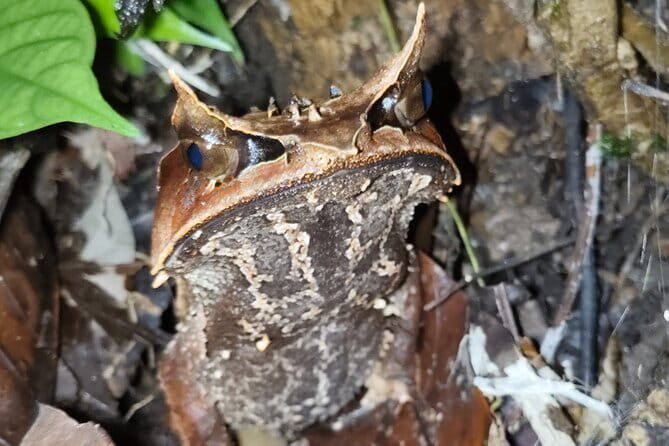
Night safari sounds simple until you actually do it in your head. Kubah changes after dark: the rainforest shifts from “quiet background” to a living soundtrack, with calling frogs and lots of small nighttime movement. You’re essentially learning how to read the forest with your eyes and your ears, using light from your head lamp instead of the full-moon fantasy that never happens on schedule.
The best part for me is the search style. This isn’t just a quick walk past a pond. You move along trails where frogs hide close to streams and ponds, and the guide helps you connect what you hear with what you’re trying to see.
The second reason I like it so much is the range of creatures. Even if frogs take center stage, the rainforest at night often throws in spiders, reptiles, and other animals when conditions are right. That’s why people come back feeling like the whole outing was a win, even when the frog count isn’t perfect.
You can also read our reviews of more tours and experiences in Kuching.
The torch-lit loop: how the 2-hour park time feels
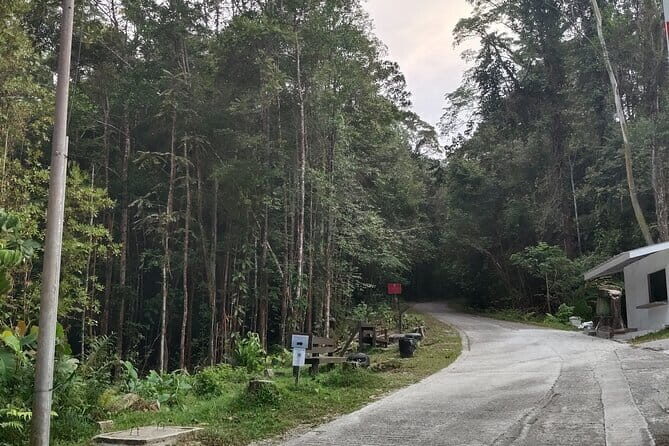
Here’s the rhythm you should expect: you’ll be picked up (there’s an air-conditioned vehicle) and you’ll drive to Kubah, then spend about 2 hours inside the park with a guide leading the walk. That inside time is the heart of the experience, so it’s worth mentally treating it like a focused nighttime hike, not an all-day sightseeing tour.
Once you’re in, the experience is about slow scanning and short stops. You’ll be guided along the paths with torches/flash lights, and the group pauses when something interesting appears. That matters because night sightings don’t work on a “walk faster, see more” plan.
You should also know the terrain is real enough to matter for your body. The walk to pond areas can include uphill sections, and night visibility makes footing more important. If you’re traveling with knee issues or long-walking limits, this one may be uncomfortable.
What you can spot: frogs first, but the night has extras
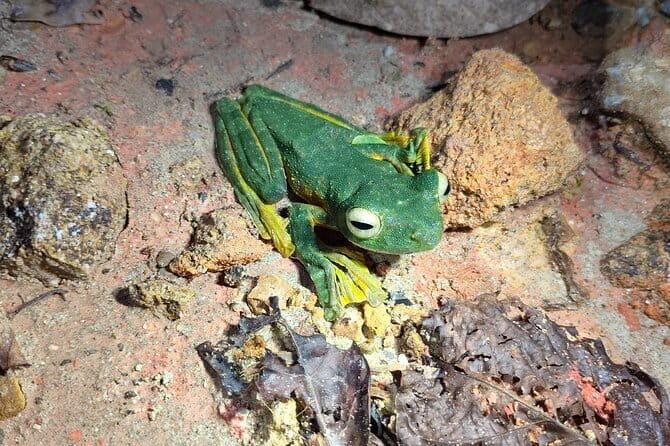
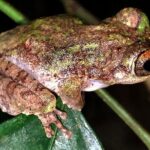
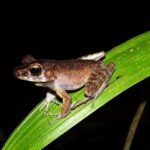
Frogs are the headline for a reason. Kubah is known for having a wide variety of frogs, and the guides focus the search around places where frogs breed, rest, or hunt near water.
From the kinds of sightings described by previous visitors, you can reasonably expect a mix that may include:
- Multiple frog species in a single night (people have reported counts like 10+ and up to the high teens).
- Other nocturnal wildlife such as lizards and snakes.
- Spiders and other rainforest insects, sometimes including impressive web-builders and large hunters.
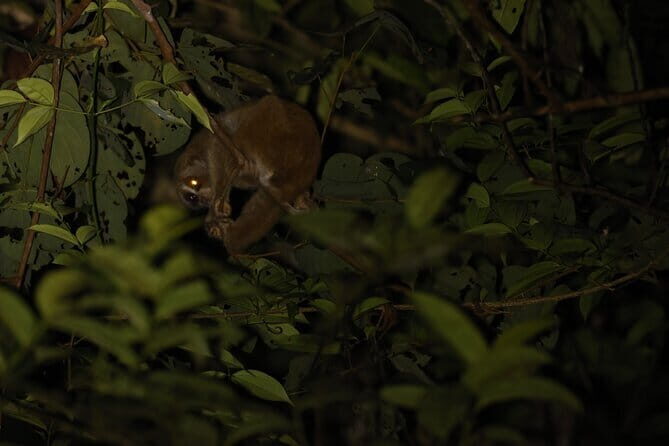
- On lucky nights, mammals that are more about spotting than capturing in a photo.
Specific examples that show up in recorded experiences include the Bornean Long-nosed Horned Frog and Wallace’s Flying Frog. People also report other critters like civets (high in trees), fruit bats, and shrews, plus snakes such as a viper. On the insect and spider side, visitors have mentioned huntsman spiders and scorpion-tailed orb weavers.
Let’s make this practical: how do you increase your odds in the moment? The biggest trick is not straining to see everything at once. When the guide points something out, pause, take it slow, and let your eyes adjust to the light. At night, your vision improves in stages, not instantly.
Also remember the tone of the promise. Even though Kubah’s frog diversity is well-known, wildlife is never guaranteed, and that’s not a sales trick. Weather, timing, and nighttime activity patterns all shape what you’ll see.
The guide factor: why Danny’s spotting style matters

The quality of this safari tends to hinge on the guide. The best outings share one theme: the guide’s eye keeps finding movement and camouflage that would otherwise go unnoticed. Names like Danny come up again and again in visitor reports, and the pattern is clear—he’s described as energetic, professional, and quick to spot frogs even when they’re hard to see.
In practical terms, a strong guide helps you in three ways:
- They know where to look (streams, ponds, and the spots frogs prefer).
- They know how to look with headlamp timing and “stop-and-scan” technique.
- They can sort what you’re seeing so you don’t just catch random flashes in the dark.
I like that this tour includes an in-person guide rather than leaving you to wander. Night wildlife is easy to miss, and having someone who can read the forest makes the whole thing feel more like a guided lesson than random searching.
If you care about learning names, you’ll likely appreciate a guide who can identify what you find. Even when the exact species is hard to confirm in the dark, the guide’s explanations can turn the night into a story you’ll remember.
Price and value: $75.69 and what you’re getting for it
At $75.69 per person, this safari sits in a “not cheap, but not inflated” zone for a specialized nighttime wildlife experience. The value comes from what’s included, which is more than a ticket and a walk.
You get:
- Entrance fee to Kubah National Park
- Air-conditioned vehicle (pickup is offered)
- Head lamps/flash lights for night visibility
- A disposable raincoat
- An in-person guide
- A mobile ticket (helpful for smooth check-in)
What you don’t get is also important: no food or drinks are included. That means you should eat before you go, or at least plan a snack and water strategy on your own. Night walking can make you hungrier than you expect, especially after a driving-heavy start.
For me, the best way to think about the price is simple: you’re paying for guided night access, the park entry, and the gear that keeps the experience comfortable and safer after dark. If you’ve ever tried to do wildlife spotting on your own without lamps or a guide, you’ll understand why those pieces matter.
Timing and the Kuching drive: when your night starts
This tour is built for evening. The park access runs in the 7:00 PM to 10:30 PM window, and your outing is about 4 hours total when you include the drive.
There are two driving segments to factor in:
- Pickup to destination: about 1 hour
- Return to hotel area: about 1 hour
That means you’re not just buying time in the forest. You’re also buying an evening plan that eats up a good chunk of your night. If your schedule is packed with other Kuching stops, this one needs a clean slot.
The upside: because it’s focused on night wildlife, you’re not competing with day crowds or daytime heat. The trade-off is that you’ll be operating when it’s dark and you’ll want to be rested enough to enjoy the slower pace of searching.
Comfort and logistics: walking, rain, and who should skip it
This safari is for people who can handle night walking with occasional uphill sections. It’s not recommended for travelers with knee problems or long walking challenges. That’s not a “you might be uncomfortable” warning. It’s a clearer heads-up that the physical side of the walk could be a problem.
Rain is also part of the picture. You’ll receive a disposable raincoat, which helps keep the evening from turning into a wet, cold stop-and-go ordeal. That’s smart because night temperatures and weather swings can make you feel colder faster than you’d expect.
One more practical detail: because this is a night outing, your sense of distance and time can feel off. Bring patience and expect frequent stops. The goal is sightings, not speed.
If you’re comfortable with that style of travel, you’ll likely have a great time. If you prefer daytime “cover lots of ground” trips, you might find this slower than you expect.
What to bring and how to get the most out of the search
The tour supplies key essentials like head lamps/flash lights and the raincoat, but you still want your personal comfort covered.
Plan around the fact that you’ll be walking at night and scanning carefully. That means you’ll do best with clothing you can move in and with an attitude that says, I’m okay stopping often. Night wildlife doesn’t show up on a tight itinerary.
Also, since food and drinks aren’t included, eat beforehand. Night critters are great, but a low-energy stomach can steal your attention. Bring water if that fits your plan, even though it’s not part of the tour.
Finally, give the guide your full focus during spotting moments. The whole experience improves when you pause, listen, and adjust rather than reaching for photos immediately.
Should you book Kubah’s Nocturnal Wonders Frog Safari?
Book it if you want a night-focused wildlife experience in Sarawak and you like being guided through the details of rainforest life. This is especially appealing if you’re the type who enjoys “watching carefully” travel—listening for calls, scanning near water, and learning how to see what’s in front of you. People often come away talking about the sheer number of frog species and the surprise extras like snakes, bats, civets, and standout spiders.
Skip or reconsider if walking uphill at night is tough for you, or if you’re hoping for guaranteed frog sightings. The tour itself is clear about wildlife not being guaranteed, and that matters more here than on a standard attraction.
If you’re flexible, go with the group rhythm, and treat the rainforest as the main character, this safari can be one of your most memorable evenings in Kuching.
FAQ
How long is the Kubah nighttime frog safari?
It’s about 4 hours total, including roughly 1 hour of driving each way and about 2 hours inside Kubah National Park.
What time does the tour run?
The activity runs daily within the opening hours of 7:00 PM to 10:30 PM.
Is hotel pickup included?
Yes. Pickup is offered, and the tour includes an air-conditioned vehicle.
What gear is provided for nighttime walking?
You’ll be given head lamps/flash lights for visibility during the walk, plus a disposable raincoat.
Is food or drinks included?
No. The tour does not include any food or drinks.
Are frog sightings guaranteed?
No. Wildlife spotting can’t be guaranteed in a natural environment, even though Kubah is known for frog diversity.
Is this a private tour?
Yes. It’s private, meaning only your group participates.