REVIEW · KUCHING
Semenggok Wildlife Centre
Book on Viator →Operated by Tour & Incentive Travel · Bookable on Viator
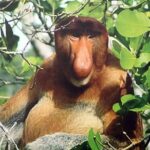
Seeing orangutans outside a zoo is special. This tour takes you to Semenggoh Wildlife Centre, where rescued Borneo orangutans are trained to live in the surrounding forest reserve. It’s the kind of wildlife experience that can feel both moving and thought-provoking, all in a tight 3-hour block.
I like that the visit focuses on rehabilitation in natural enclosures, not just sightseeing. If you’re lucky, you’ll catch the emotional highlight of an orangutan mother with a baby returning around feeding time. I also appreciate the logistics: hotel pickup and drop-off in Kuching, plus an English-speaking guide and admission included.
One thing to consider: some visitors are uneasy about what they see at the centre, especially close-up areas that can look overly confining. And sightings can never be guaranteed, so go in with flexible expectations about seeing the orangutans every time.
In This Review
- Quick take: what makes Semenggoh worth your morning
- Kuching pickup and the morning timing that helps you see orangutans
- Semenggoh Wildlife Centre: what semi-wild really means
- Walking the grounds and spotting a mother with a baby
- What your guided visit teaches about orangutan rescue and conservation
- Price and value: is $68 for 3 hours a fair deal?
- Group size, tour pace, and what to pack for a rainforest visit
- Ethical notes: what if you’re worried about enclosures?
- Should you book Semenggoh Wildlife Centre from Kuching?
- FAQ
- FAQ
- What time does the tour start?
- How long is the Semenggoh Wildlife Centre visit?
- Where is the tour located?
- Is hotel pickup included?
- Will there be an English-speaking guide?
- Is the admission ticket included?
- Is lunch included?
- How many people are in a group?
- Is a minimum number of travelers required?
- Are orangutan sightings guaranteed?
- What happens if weather is bad?
- Can I cancel for a full refund?
Quick take: what makes Semenggoh worth your morning
- Semi-wild orangutans, not staged tricks: The goal is survival in the forest reserve, with regular returns to feeding time.
- Hotel pickup saves daylight: You’re not spending your morning figuring out transport from Kuching.
- A realistic time window: About 3 hours total makes it easy to pair with other Kuching plans.
- Good odds for a mother and baby: Feeding time is when a mother with a young baby is more likely.
- Small group size: Maximum 15 travelers helps the experience feel less chaotic.
- One ethical watch-out: Some areas at the centre may not sit well with sensitive viewers.
Kuching pickup and the morning timing that helps you see orangutans
This starts early, with pickup and a 8:30 am start time. From Kuching, the drive to Semenggoh Wildlife Centre takes about 45 minutes, so you’re getting there in time for a key part of the day when orangutans often return to the centre for feeding.
The value of that early start is simple: orangutans are wild enough that timing matters. The centre’s routines are designed around what the animals do in their rainforest space, so being on schedule gives you the best shot at a real sighting rather than an empty platform and a long wait.
Also, you’ll travel with an English-speaking guide and a small group (max 15). That matters more than it sounds. When you’re waiting for wildlife, you want a guide who can keep the experience meaningful while you look, rather than a group that spreads out or loses track of what’s happening.
A few more Kuching tours and experiences worth a look
Semenggoh Wildlife Centre: what semi-wild really means
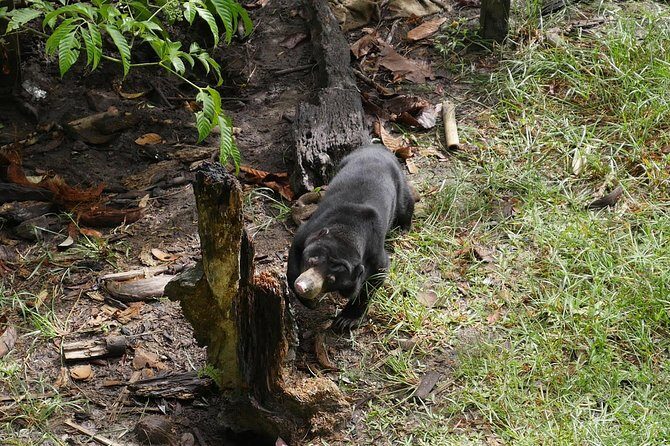
Semenggoh is known for one clear idea: rescued orangutans are being trained to survive outside captivity. These are semi-wild animals, and the centre works toward giving them the skills they need to live in the surrounding forest reserve.
At the centre, you’ll see rehabilitated animals in enclosures designed to feel closer to how they would live in the rainforest. The big difference from many wildlife stops is the purpose behind what you’re seeing. This isn’t just about viewing. It’s about understanding rescue and rehabilitation—why animals end up here, and what the centre is trying to achieve over time.
Still, keep expectations grounded. You may see orangutans at different times and in different areas of the grounds. Sightings aren’t guaranteed, even if you do everything right. That unpredictability is part of why wildlife experiences can feel so real, but it’s also why you should plan this as a chance to observe, not a sure thing.
Walking the grounds and spotting a mother with a baby
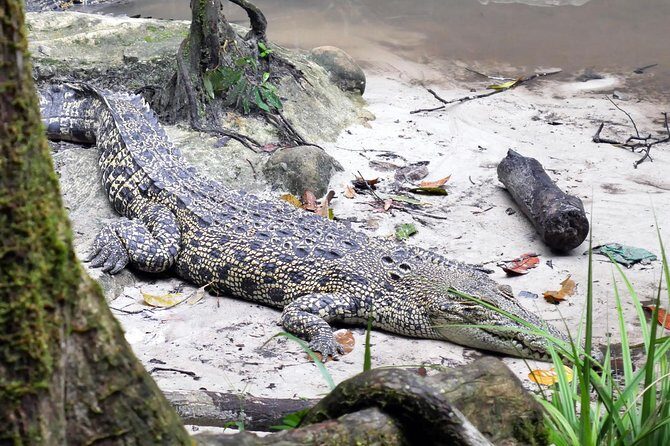
The best moment at Semenggoh often comes around feeding time. The centre’s feeding routine tends to bring orangutans back toward the facilities, which increases your odds of seeing them up close.
One of the most heartwarming possibilities is the one you’ll hope for when you arrive: an orangutan mother with a baby. The idea is straightforward—mothers and infants are often easier to spot when animals move closer during a routine like feeding. If that happens for you, it can turn your whole visit into something you remember for years.
Here’s how to make your chance count:
- Stay alert during the waiting periods. Wildlife viewing isn’t one long stare; it’s scan, pause, look again.
- Be ready for movement. Orangutans can shift positions quickly, especially when they’re deciding whether to come closer.
- Don’t assume the first sighting is the main event. At centres like this, you may get a tease first, then a stronger showing later.
One more practical note: this tour asks for moderate physical fitness. That likely means some walking on uneven ground and time outdoors. You don’t need to be an athlete, but wear footwear that can handle wet or rough patches and keep your pace steady.
What your guided visit teaches about orangutan rescue and conservation
The guide is there for a reason. You’re not just watching. You’re learning how rescue and rehabilitation fit into Borneo orangutan conservation.
The centre’s story is built around a cycle: orangutans rescued from captivity get training and time in semi-natural conditions, with the long-term aim of living in the forest reserve. When you’re standing there, you can connect what you’re seeing—movement in and out of enclosures, behavior during the day—to what the centre is trying to do for the animals’ future.
This is where the experience becomes more than a wildlife photo stop. You start asking better questions, like:
- Why rehabilitation matters for animals that can’t go back to their old life
- How “natural” behavior is encouraged through training and space
- What conservation looks like when it’s not just about protecting a forest on paper
If conservation topics make your trip feel more meaningful, you’ll probably enjoy this angle. And if you prefer straight-up wildlife watching, the guide still adds value by explaining what you’re seeing and why the centre’s routine matters.
Price and value: is $68 for 3 hours a fair deal?
At $68 per person, you’re paying for a focused morning experience: pickup, drop-off, an English-speaking guide, and admission are included. Lunch isn’t included, so you’ll likely need to plan a meal either before you go or after you return to Kuching.
To judge value, I look at what’s doing the heavy lifting here:
- The drive time is built in (about 45 minutes each way).
- The centre entry is included, so you’re not hunting tickets or dealing with extra costs.
- The guide helps with timing and understanding what you’re seeing, which can matter when wildlife sightings are unpredictable.
- The group stays small (up to 15), so you don’t lose your view to overcrowding.
For $68, you’re buying convenience and interpretation as much as you’re buying animal viewing. If you already have transport and you’re comfortable doing the centre independently, you might question the guided premium. But most visitors benefit from being picked up and handled smoothly, especially when it’s a short 3-hour window.
In practical terms, it’s a good use of a Kuching morning if you want orangutans without turning your day into a long slog.
Group size, tour pace, and what to pack for a rainforest visit
This is a short tour, and that affects everything. You’re moving through the day quickly, with limited time at the centre compared to longer day trips. The upside is you’re not stuck out in the heat and humidity all afternoon. The downside is that if sightings are slow, you can’t exactly wait indefinitely.
Your best strategy is to come prepared for outdoors time. Even though the tour is only around 3 hours, you’ll still be in rainforest conditions at the centre:
- Wear breathable clothing and closed-toe shoes with grip.
- Bring rain protection. The experience is weather dependent, and it can be canceled due to poor conditions.
- Use sunscreen and plan for sun breaks between heavier cloud or light showers.
Also, keep in mind that the tour uses a mobile ticket. That’s handy: you’ll want to have your phone charged and ready at the centre.
Finally, since this is a maximum 15-person group, you’ll likely get more personal attention than you would with bigger tours. Still, stand where you can see without crowding. When animals appear, calm spacing helps everyone get a decent look.
Ethical notes: what if you’re worried about enclosures?
This is the part some people struggle with. The core idea of Semenggoh is rehabilitation and semi-wild life in a forest reserve, and the centre is designed around that mission. But that doesn’t erase the reality that you’re visiting a facility where animals have different levels of access to open space.
Some visitors feel uncomfortable about how confining certain areas can look. If animal welfare is a top concern for you, I’d treat that as a valid check. You can still appreciate the conservation work while admitting that the setting can feel complicated, especially when you’re standing close to holding areas.
The key is to balance the mission with what’s physically in front of you. The centre’s stated goal is clear: getting rescued orangutans ready to survive in the wild. Your experience will likely be most powerful when you watch the animals’ natural-looking behavior and movement patterns, rather than fixating on the facility design.
Should you book Semenggoh Wildlife Centre from Kuching?
Book it if you want a morning focused on rescued, semi-wild orangutans, with the chance to see a mother and baby around feeding time. It’s a practical choice if your schedule is tight and you’d rather have pickup, English guidance, and admission handled than manage logistics yourself.
Skip or think twice if you know you’re very sensitive to anything that feels confining, or if you need a guarantee of animal sightings. Because orangutan sightings are never certain, you’re also choosing a wildlife experience with some natural unpredictability.
If you do book, I’d go with the right mindset: show up early, stay patient during waits, and use the guide’s conservation framing so your time feels worthwhile even if the orangutans keep distance.
FAQ
FAQ
What time does the tour start?
It starts at 8:30 am.
How long is the Semenggoh Wildlife Centre visit?
The tour is about 3 hours (approx.).
Where is the tour located?
The tour is in Kuching, Malaysia, visiting Semenggoh Wildlife Centre.
Is hotel pickup included?
Yes. Hotel pickup and drop-off are included from selected city hotels in Kuching.
Will there be an English-speaking guide?
Yes, the tour includes an English-speaking guide.
Is the admission ticket included?
Yes. Entrance fee/admission is included.
Is lunch included?
No. Lunch is not included.
How many people are in a group?
The tour has a maximum of 15 travelers.
Is a minimum number of travelers required?
Yes. A minimum of 2 adults per booking is required.
Are orangutan sightings guaranteed?
No. Sightings are not guaranteed, though you may be able to see an orangutan mother with a baby.
What happens if weather is bad?
The experience requires good weather. If it’s canceled due to poor weather, you’ll be offered a different date or a full refund.
Can I cancel for a full refund?
Yes, you can cancel up to 24 hours in advance for a full refund.