A morning ride beats a tired walk. This Kuching bike-and-cook tour goes past the usual sights and into Malay kampongs along the Sarawak River, then turns that fresh market stop into a practical cooking lesson.
I like two things most: you get real time on two wheels in places you’d skip if you only stayed near the waterfront, and you leave with a recipe you can actually repeat at home. The format is also very straightforward: ride, shop, cook, eat, return.
One drawback to think about: the cooking portion doesn’t seem equally satisfying for everyone. Some people love the class structure and pace, while at least one guest felt the cooking side didn’t match what the photos described.
In This Review
- Key things I’d highlight before you go
- Why this Kuching bike-and-cook works when others feel too basic
- Getting to the start: timing, meeting point, and how the day flows
- The rural ride: Malay kampongs along the Sarawak River
- The market stop: collecting ingredients for a farm-to-table style meal
- Cooking Sarawak laksa chicken: hands-on, not just eating
- Lunch and snacks: eating what you helped make
- Guides, language, and how well the experience is paced
- Bikes, helmets, rain gear, and what to wear
- Price and value: is $106.58 a fair deal for 6 to 6.5 hours?
- Who should book this tour, and who might want to skip it
- Should you book Kuching Bike & Cook?
- FAQ
- FAQ
- How long is the Kuching Bike & Cook tour?
- What time does the tour start?
- Where does the tour start and end?
- What is the price per person?
- Is hotel pickup included?
- What’s included in the tour price?
- Is a mobile ticket used?
- How many people are in the group?
- Are children allowed?
Key things I’d highlight before you go
- Rural-to-city comparison on one half-day, not just a loop around town
- Market ingredient shopping you can use later, not a passive demo
- Hands-on Sarawak cooking focused on laksa chicken, with lunch included
- Small group size (max 15), which helps with questions and pacing
- Raincoat + helmet included, so bad-weather isn’t an instant deal-breaker
Why this Kuching bike-and-cook works when others feel too basic
Kuching is easy to tour by foot, but foot travel only shows you what’s right on the pavement. This tour uses a bike to get you closer to everyday Sarawak life—especially along the Sarawak River where Malay kampongs sit just minutes from the city center.
What makes it more than a novelty is the pairing. You ride in the morning, then you switch modes and cook with ingredients you collect from a local market. That means the sights and flavors connect. Instead of seeing food markets as background, you treat them like a supply stop for your own kitchen.
The tour also has a practical promise: you’re not only eating Sarawak laksa chicken. You’re learning what you need to recreate it later. That’s a big difference from many food experiences that end once the dish hits the table.
You can also read our reviews of more cycling tours in Kuching
Getting to the start: timing, meeting point, and how the day flows
The tour runs about 6 to 6.5 hours and starts at 8:00 am in Kuching. It ends back at the starting point, so you avoid the stress of planning a return route. If you’re staying in the city, this morning start is useful because you’ll beat some of the heat and crowds.
One logistics point that matters: there’s no hotel pickup or drop-off. You’ll need to make your own way to the meeting location in Kuching. The good news is the tour uses a mobile ticket, so you don’t have to hunt for paper or worry about printing.
Group size is capped at 15 travelers. That’s large enough to feel social, but small enough for a guide to keep things moving and not vanish into a crowd.
The rural ride: Malay kampongs along the Sarawak River
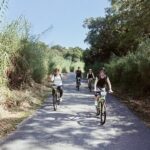
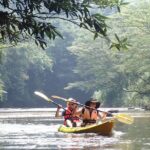
The core of the morning is a ride that heads from city life to rural outskirts, especially the Malay Kampongs along the Sarawak River. This stretch is described as idyllic and close-in to the center—so you get the feeling of being out in Sarawak without a long transfer first.
You’ll see how close daily life is to the river system. Old settlements, homes, and the rhythms of local streets are all part of the experience. The point isn’t to race through photos. It’s to slow down enough to notice how neighborhoods work—where people gather, how they move around, and how food culture fits into regular routines.
It’s also where the rural-versus-urban theme becomes real. You start in a more familiar city setting, then the ride carries you into older village life. That contrast is one of the headline reasons I think this tour is stronger than a typical walk.
Safety is a big deal on any bike tour. Helmets are provided, and the tour includes rain gear, which matters in Kuching where sudden showers can happen.
The market stop: collecting ingredients for a farm-to-table style meal
One of the most useful parts of this experience is the ingredient collection. Instead of watching a cook work in silence, you gather some of your own ingredients from a local market. It’s the kind of step that helps you understand what drives Sarawak flavors: fresh aromatics, recognizable staples, and the building blocks of laksa.
This is where I think the value clicks. You’re not just paying for a meal. You’re buying the ability to shop and choose ingredients later. Even if you can’t source everything exactly the same at home, the experience gives you a framework for what to look for and how cooks think about flavor.
It also gives you context for the dishes you’ll make. Sarawak cuisine is built on specific combinations of aromatics, pastes, and seasonings. When you’ve picked ingredients yourself, those choices make more sense during the cooking class.
Cooking Sarawak laksa chicken: hands-on, not just eating
The cooking class is the second half of the day, and it’s built around Sarawak laksa chicken. The tour doesn’t position this as a lecture where you take notes. It’s hands-on: chopping, blending, and stirring like a local.
This matters because “how” is often missing from food tourism. A bowl of laksa teaches you how it tastes, not how to reproduce it. Here, the goal is skill transfer—so you can take what you learned and bring it back to your kitchen.
In a group setting, you may not be doing every single step alone, but you should expect active participation. The included items list also makes it clear this isn’t a BYO-cook situation: the tour includes the cooking class, all food and drinks, lunch, snacks, and bottled water.
One note to keep expectations realistic: one review mentioned a cooking class mismatch compared to what was advertised in detail, so the structure may vary depending on the class flow and group size. If cooking is your top reason for booking, arrive mentally ready to treat it as a shared workshop, not a private chef lesson.


Lunch and snacks: eating what you helped make
Lunch is included, along with snacks and bottled water. That’s a big comfort factor on a morning ride, because you’re fueling up after time on the bike.
What I like about pairing the meal with the class is that you can connect flavor choices to steps you just practiced. After you stir and blend, the final bowl doesn’t feel like a random restaurant dish. It feels like a result you earned.
Also, the tour includes “all food and drinks,” which usually means you’re not scrambling for cash halfway through. You can plan your day around the half-day schedule.
Guides, language, and how well the experience is paced
A local English-speaking guide runs the tour. In the reviews, guides like Ayra and Farhah come up with praise for being friendly, helpful, and strong on communication. Others mention guides who manage traffic and safety well during the ride, which is important when you’re on bikes near cars and busy streets.
Pacing seems to be a real part of the success. The tour blends a moving activity (cycling) with a still activity (cooking). Good guides keep both from feeling rushed. They also help you translate what you see—like village life and market ingredient choices—into practical takeaways.
If you care about learning in a human way, not just ticking boxes, this is the kind of tour that tends to deliver. The small group size supports that, too.
Bikes, helmets, rain gear, and what to wear
You get a bike and helmet included. That removes the biggest friction point of self-guided cycling in an unfamiliar place. You also get a raincoat included, which is a comfort when weather shifts quickly.
What you should wear: light clothes you can move in, closed-toe shoes with decent grip, and something that won’t mind getting a little dusty or damp. Since you’re both biking and cooking, avoid super delicate fabrics. Kuching morning humidity can also make “fresh and dry” harder than you’d expect, even when the day starts sunny.
Bring a small bag for personal items if you have one. Most of your day will be managed by the tour, but it helps to have somewhere safe for phone, wallet, and sunscreen.
Price and value: is $106.58 a fair deal for 6 to 6.5 hours?
At $106.58 per person, this isn’t the cheapest thing you can do in Kuching. But it’s also not trying to be bargain-basement tourism.
Here’s why I think it can still feel good value:
- You’re paying for guided biking plus the equipment (bike, helmet).
- You’re paying for a hands-on cooking class with ingredients and instruction.
- Lunch, snacks, and bottled water are included, so you’re not adding extra meal costs.
- The tour includes boat fees and a raincoat, which are small line items that add up on their own.
The only situation where the price might feel steep is if you mainly want sightseeing and you don’t care about the cooking format. If you love local food and want an actionable skill, the cost is easier to justify.
Who should book this tour, and who might want to skip it
This tour is a strong match if you:
- want more than a city-walk and like the idea of seeing rural kampongs
- enjoy cooking or at least enjoy learning enough to cook at home later
- like market experiences where you pick ingredients, not just browse
It may be less ideal if you:
- hate cycling in mixed road conditions and prefer only walking
- expect a totally individualized cooking session (this is a group workshop)
- are mainly there for the cooking and worry the class structure might not match your expectations
For families, it’s possible—children just must be accompanied by an adult. Since the tour is about 6 to 6.5 hours, plan for a calm child pace and bring patience for the schedule.
Should you book Kuching Bike & Cook?
I’d book it if you want a day that connects three things that usually stay separate: movement (bike), context (market and rural life), and a real food outcome (laksa chicken you can make later). The included meals and drinks make it easier to justify, and the small group size helps the experience feel personal.
If your priorities are purely sightseeing with minimal effort, or you’re unsure about cooking participation, you might consider whether a simpler bike or food-only option fits you better. Also, because at least one guest felt the cooking experience was disappointing compared to expectations, I’d go in with the attitude of a shared class: you’ll learn, you’ll eat, and you’ll probably come away with a useful starting point—just not necessarily a perfect Hollywood version.
FAQ
FAQ
How long is the Kuching Bike & Cook tour?
It runs about 6 hours to 6 hours 30 minutes.
What time does the tour start?
The start time is 8:00 am.
Where does the tour start and end?
It starts in Kuching, Sarawak and ends back at the meeting point.
What is the price per person?
The price is $106.58 per person.
Is hotel pickup included?
No. Hotel pickup and drop-off are not included, so you’ll need to get to the meeting point yourself.
What’s included in the tour price?
You get a local English-speaking guide, bike, helmet, raincoat, boat fees, the cooking class, all food and drinks, lunch, snacks, and bottled water.
Is a mobile ticket used?
Yes. The tour includes a mobile ticket.
How many people are in the group?
The tour has a maximum of 15 travelers.
Are children allowed?
Yes, but children must be accompanied by an adult.